
What Is a Vertical Boring Machine Used For?

A Vertical Boring Machine is used to machine large, heavy components whose diameter is often greater than their height. The workpiece sits on a horizontal rotating table, while a cutting tool removes material as it moves across or into the part. In a machine shop, this setup can handle pump housings, turbine casings, wheels, valve bodies, and large gear blanks. Typical operations include boring internal diameters, turning outside surfaces, facing flat ends, and cutting grooves. Some machines also support drilling or milling, depending on their tooling and configuration. That distinction matters.

The vertical arrangement supports bulky parts close to the table, which can make setup and handling more practical. Operators still need to check table capacity, clamping, tool reach, and required accuracy before choosing a machine. An uneven casting, for example, may need careful leveling and secure fixtures before cutting begins. Small setup errors can cause runout, chatter, or a poor finish. Not every machine performs every operation equally well. Capacity varies by model.

For buyers, machinists, and maintenance teams, understanding the machine’s purpose helps match it to a job. Review the drawing, material, dimensions, tolerances, and production volume, then compare them with documented machine limits. The key question is not simply, “Can it cut this part?” It is whether it can do so safely and repeatably, without unnecessary setup time. The answer depends on the machine, tooling, and operator experience. There is no shortcut around a sound setup.
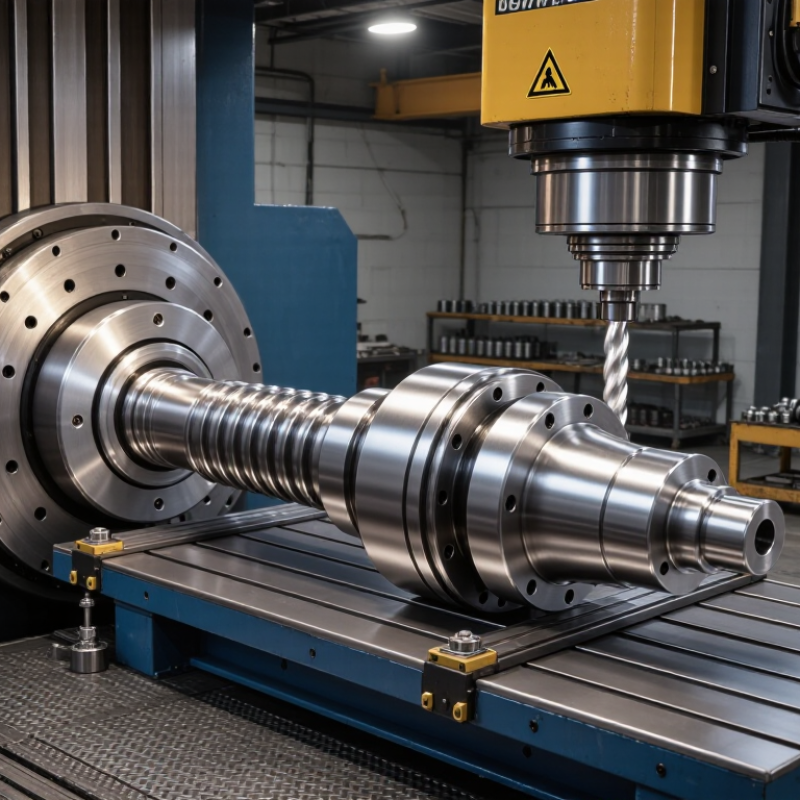
What Is a Vertical Boring Machine Used For?

What Is a Vertical Boring Machine and How Does It Work?

A vertical boring machine, often called a vertical turning machine, cuts large workpieces mounted upright on a horizontal table. The table rotates the part beneath a cutting tool. A vertical ram moves the tool up or down, while a cross-rail can position it across the face. This arrangement lets operators machine wide, heavy components that are awkward to rotate horizontally, such as turbine housings, wheel hubs, and large castings.

The cutting process is direct. The operator secures and centers the workpiece, selects a speed and feed, then guides the tool across its face or into a bore. A small setup error matters. It can leave uneven walls or a poor fit. ISO 230-2:2014 provides a test method for measuring positioning accuracy and repeatability on numerically controlled machine-tool axes. Those measurements help check whether the ram and cross-rail return reliably to commanded positions. They do not, by themselves, guarantee a precise finished part.

On the shop floor, operators also check clamping, tool wear, and heat buildup. A heavy table may take time to settle. Even a carefully programmed cut can need adjustment after a test pass. Vertical boring is powerful, but setup still matters.


What Is a Vertical Boring Machine Used For?

A vertical boring machine—also called a vertical turning lathe—machines large, heavy workpieces that are mounted on a horizontal rotating table. The tool moves vertically and radially to machine faces, outside diameters, and internal bores.

How to read the chart: The shaded area represents a simplified workpiece cross-section. Lines show typical tool paths for facing, outside-diameter turning, and internal boring. Positions are relative and the drawing is not to scale.

Key Components and Their Functions

A vertical boring machine is built around a heavy base and a large horizontal table. The workpiece sits on this table and rotates beneath the cutting tool. This arrangement suits wide, heavy parts that are difficult to mount on a conventional horizontal lathe. The column supports the crossrail, which can move up or down to match the workpiece height. A rigid structure matters: vibration can leave visible marks on a machined surface.

The spindle drives the tool head, while the tool head positions the cutting edge against the rotating part. Depending on the machine, it may carry a boring bar, facing tool, or other cutter. The table drive controls workpiece rotation; feed mechanisms control how quickly the tool advances. Bearings help the table turn steadily, and the control system coordinates speeds and movements. Coolant can reduce heat, while guards and chip-management features help contain debris. Not every setup feels straightforward. A slightly off-center part can complicate alignment.

Tips: Clean the table before loading a part. Check clamping points and alignment with suitable measuring tools. Begin with a cautious test cut, then inspect the surface and dimensions before increasing feed. Listen for unusual vibration; it can signal a loose setup, worn tooling, or an unsuitable cutting condition.

Workpieces and Machining Operations

Vertical boring machines are suited to large, heavy workpieces that are awkward to rotate on a horizontal lathe. Common examples include pump housings, valve bodies, large rings, gears, and turbine casings. The workpiece sits upright on a broad table, secured with clamps or a fixture, while the table rotates beneath the cutting tool. This arrangement handles wide diameters and relatively short heights. It can also simplify loading when a crane is needed to move the part. That matters.

Typical operations include boring internal diameters, turning outside surfaces, facing flat ends, and cutting grooves or shoulders. Drilling and tapping may also be possible, depending on the machine and tooling. Several features can often be machined in one setup, which reduces repositioning errors. But setup still demands care: chips can obscure a surface, clamps may distort thin sections, and an off-center casting can vibrate. Reality varies. A rough casting may need extra material for cleanup, and a careful first pass can reveal that the drawing assumptions were optimistic. Tool reach, table capacity, workpiece balance, and required tolerances should all shape the machining plan.

Industries That Use Vertical Boring Machines

Vertical boring machines serve industries that machine large, heavy parts with round features. The workpiece sits on a rotating table while cutting tools shape its face, bore, or outer diameter. This setup is useful when a component is too heavy or wide to turn easily on a horizontal lathe.

Power-generation facilities use them for turbine housings, generator parts, and large valve bodies. These components often need accurately aligned bores and flat mounting faces. Good access matters. Operators can inspect the cut and adjust tooling as the table turns, though setup still takes time.

Oil and gas equipment manufacturers machine large valve bodies and pressure-control components on vertical boring machines. Mining and construction equipment shops use them for gear housings, wheel hubs, and other bulky parts. Shipyards may machine propeller hubs and large flanges. In each case, the machine’s table supports the part’s weight while it rotates. Clamping and alignment remain critical; a small setup error can affect concentricity across a wide diameter.

Rail and heavy-vehicle suppliers also use these machines for brake drums and wheel-related components. Not every part fits. Smaller components may be faster and less costly to machine elsewhere, so shops weigh part size, batch volume, and required accuracy before choosing this process.

How to Choose the Right Machine for a Job

A vertical boring machine is suited to large, heavy, round parts that are awkward to rotate horizontally. It can bore, face, and turn components such as bearing housings, valve bodies, and turbine casings. Choosing one starts with the actual workpiece, not the machine’s headline capacity. Measure the largest part’s diameter and height, then check table load and swing clearance. Fit comes first.

Next, match spindle torque, speed range, and ram travel to the material and cut. Cast iron may need steady torque; finishing a narrow bore demands control and rigidity. Check required tolerances against the machine’s documented accuracy, and ask how that accuracy holds after warm-up. The wrong fixture can spoil a good specification. Setup matters.

Consider the work mix, too. A shop making one-off repair parts may value flexible tooling, while repeat production may justify faster changeovers and automation. Grand View Research estimated the global machine-tools market at USD 84.3 billion in 2023, with a projected 6.1% compound annual growth rate through 2030. That broad market figure signals varied demand, not a buying prescription. I would still test a representative part under real cutting conditions; brochures rarely show every awkward setup.

What Is a Vertical Boring Machine Used For? — How to Choose the Right Machine for a Job
Job or Workpiece What the Machine Does Useful Machine Features Selection Checks
Large-diameter, short cylindrical parts Turns outside diameters and faces on components that are awkward to support or rotate on a horizontal lathe. Vertical workholding, a table sized for the part, and sufficient turning capacity. Check the maximum workpiece diameter, height, weight, and table load against the actual job.
Flanges and large circular plates Machines faces, outside diameters, and—when the machine is equipped for it—internal diameters. A suitable tool station and workholding arrangement; CNC control can support repeatable multi-operation machining. Confirm the required facing and boring tool travel, as well as clearance for clamps and tools.
Rings, bearing housings, and large bores Produces or finishes internal cylindrical surfaces with a boring tool. A boring bar or boring head with adequate reach, rigidity, and clearance. Compare bore diameter and depth with tool reach; consider tool deflection and chip removal for deep bores.
Heavy castings and forgings Turns heavy, bulky workpieces while the part is held on a horizontal table. A table and clamping system rated for the workpiece, with suitable guarding and chip handling. Include the weight of fixtures and clamps when checking table capacity; verify the part can be loaded safely.
Components needing several turning operations Can combine facing, external turning, and internal boring without repeatedly repositioning the workpiece. Multiple tool stations or CNC-controlled tooling can reduce tool changes and support consistent setups. Match the number and type of tool stations to the process plan, tolerances, and production volume.
One-off or repair work Machines large components that may be impractical to move between several smaller machines. Accessible setup, flexible tooling, and enough adjustment range for the part and fixture. Prioritize usable work envelope, setup time, operator access, and compatibility with existing tooling.
Repeated production of similar parts Performs recurring turning cycles with repeatable positioning and tool paths. CNC control, suitable automation options, and reliable workholding can improve repeatability. Assess cycle time, setup frequency, required tolerances, and integration with loading and inspection processes.
General machine selection Provides vertical-axis turning for parts whose diameter, weight, or shape make vertical workholding advantageous. Available configurations include manual, CNC, single-column, and double-column designs. Compare work envelope, table load, cutting forces, spindle and table performance, accuracy, floor space, and service requirements.
Go to Top