Top TFT LCD Display Suppliers for Global Buyers
Choosing reliable TFT LCD Display suppliers requires more than comparing prices or browsing factory photographs. Buyers must examine panel quality, production stability, testing systems, delivery records, and regional support. A bright 10.1-inch panel may look excellent on a sample table, yet fail after vibration, heat, or repeated touch use.
Industry data supports careful supplier evaluation. Omdia’s 2024 Display long-term demand analysis confirms that LCD technology remains highly important across televisions, automotive systems, industrial equipment, medical devices, and consumer electronics. DSCC’s 2024 display industry outlook also highlights continuing pressure from capacity cycles, pricing changes, and regional competition. These conditions make supplier resilience especially important. Demand is uneven.
Ross Young, co-founder and CEO of Display Supply Chain Consultants, has described the display business as “a very cyclical industry.” This observation matters to global buyers because panel prices and lead times can change quickly. A low quotation today may not remain competitive tomorrow. Buyers should therefore compare manufacturing capacity, defect-control procedures, ISO certifications, glass availability, customization experience, and warranty response.
This guide examines leading TFT LCD Display suppliers for international procurement teams. It considers technical capability, application coverage, export experience, and communication reliability. Reports from Omdia, DSCC, and established supply-chain research firms provide useful market context, but independent verification remains necessary. No ranking is perfect. A supplier with impressive equipment may still offer weak after-sales support, while a smaller manufacturer may provide faster engineering cooperation. Careful sampling, factory audits, and written performance requirements can reduce these risks.
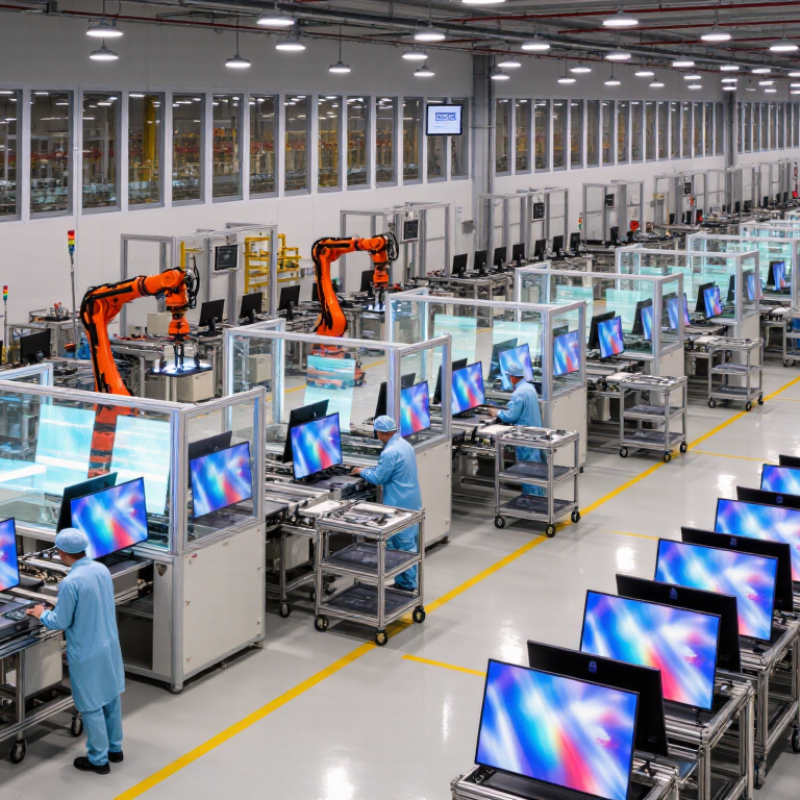
TFT LCD Display Technology and Its Main Applications
Top TFT LCD Display Suppliers for Global Buyers
TFT LCD technology uses an active matrix to control each pixel independently. This structure produces sharper images and faster response than older passive-matrix displays. A backlight illuminates the liquid crystal layer, while color filters create red, green, and blue subpixels.
Panel performance depends on more than resolution. IPS panels usually provide wide viewing angles, while TN panels can offer faster response and lower cost. VA panels often deliver deeper contrast. Buyers should compare brightness, operating temperature, lifetime, interface type, and touch compatibility. A 5-inch screen may suit a handheld meter, while a 15.6-inch panel fits a control terminal. Small details matter.
Real applications show these differences clearly. Medical equipment needs stable brightness and consistent grayscale performance. Factory displays require vibration resistance and readable images under harsh lighting. Vehicle systems may need wide temperature ranges, anti-glare glass, and reliable sunlight visibility. Retail kiosks often prioritize touch accuracy and long operating hours.
Supplier evaluation should include sample testing, not only datasheet reviews. Check dead pixels, color consistency, viewing angles, connector quality, and startup behavior. Request test records for temperature, humidity, and continuous operation. Compliance documents should match the destination market. No panel is perfect. Higher resolution may increase power use, and stronger brightness can shorten backlight life. Engineers sometimes overlook these trade-offs. A careful supplier explains them instead of promising everything at once.
Leading TFT LCD Supplier Categories by Market and Capability
TFT LCD suppliers serve different markets, and their strengths are rarely identical. Consumer electronics suppliers often focus on high-volume panels, slim profiles, and competitive pricing. Industrial suppliers usually emphasize long product life, stable brightness, and wide temperature operation. Automotive suppliers must manage vibration, sunlight readability, and strict traceability. Medical display suppliers require consistent color, clean documentation, and dependable quality control. These categories help global buyers compare capability before discussing price.
Capability matters more than a catalog image. Check the supplier’s panel sizes, interface options, touch integration, optical bonding, and customization limits. For outdoor equipment, ask for sunlight-readable performance and tested viewing angles. For factory equipment, request temperature reports and lifecycle forecasts. A sample should be evaluated inside the real enclosure, not only on a meeting-room desk. That small detail is often missed. I have seen teams approve a bright display, then discover glare problems during field installation. Specifications can look complete, yet practical testing may expose weaknesses.
Tips: Ask for a sample, inspection records, and change-notification procedures. Compare response time, dead-pixel controls, and replacement support. Do not rely on one successful prototype. Suppliers may excel in one market but lack the process discipline needed for another. Recheck assumptions after pilot production. That step feels slow. It can prevent expensive redesigns.
Quality, Customization, and Production Standards to Compare
Top TFT LCD Display Suppliers for Global Buyers
Quality starts with measurable controls, not attractive samples. Omdia’s 2024 display research identifies automotive and industrial applications as major drivers of display-area demand. Buyers should therefore compare brightness, contrast, viewing angle, lifetime, and touch accuracy under operating conditions. Ask for uniformity maps, dead-pixel limits, and temperature-cycle records. A screen that looks sharp indoors may fail beside a hot machine.
Customization also requires production discipline. Check whether the supplier can control glass size, connector position, backlight design, firmware, and protective coatings. ISO 9001 certification supports documented processes, but it does not guarantee excellent panels. Request recent process-capability data, such as Cpk results, incoming inspection rates, and final-test records. The IPC-9592 approach to reliability testing can help evaluate power and thermal risks, although it was not written only for TFT modules.
Production standards deserve equal attention. The 2024 World Semiconductor Trade Statistics forecast continued electronics demand growth, increasing pressure on component capacity and delivery schedules. Compare quoted lead times with actual shipment history. Review traceability from glass substrate to packed module. Keep a sample from every approved batch. That sounds excessive. It can prevent costly field replacements. No supplier is perfect, and my own evaluation would revisit failure data after six months, not just after a successful first order.
How Global Buyers Can Select the Right TFT LCD Supplier
Choosing the right TFT LCD supplier requires more than comparing unit prices. Omdia’s 2024 Display long-term demand forecast places annual global display-area demand above 200 million square meters. LCD still holds the largest share across many large-panel applications. That scale rewards suppliers with stable glass sourcing, tested production lines, and documented quality controls.
Ask for measurable evidence. Request three years of defect rates, delivery performance, and customer complaint data. Check whether the supplier can maintain brightness, contrast, viewing angle, and uniformity across production batches. A sample may look excellent under showroom lighting. It may fail after heat, vibration, or 1,000 hours of continuous operation. Specify these tests before signing.
Production capacity also needs careful verification. A factory’s claimed monthly output may include every product family, not your required model. Confirm capacity by line, panel size, and shift pattern. Review ISO 9001 records, change-control procedures, and traceability from glass input to final inspection. Intertek’s 2023 quality-management research notes that documented process control reduces variation, but paperwork alone proves little. That point is easy to miss.
Communication matters too. Can the engineering team explain a color shift without hiding behind vague language? Can they provide firmware, connector, and tooling support? A slightly cheaper quotation can become expensive after redesigns, delays, and rejected batches. Even experienced buyers sometimes overtrust a polished sample. A factory audit remains imperfect, but it exposes details that spreadsheets cannot.