
What Are the 2026 Top Railway Wagon Axle Manufacturers?

Choosing the leading Railway Wagon Axle manufacturers for 2026 requires more than comparing production volume or company size. Axles carry repeated loads through harsh service conditions, from freezing yards to dusty freight corridors. A dependable manufacturer must demonstrate controlled steel quality, accurate forging, reliable heat treatment, and consistent machining. Surface inspection matters. So does the evidence behind it.

This guide examines manufacturers through practical engineering and purchasing criteria. These include axle fatigue performance, ultrasonic testing, dimensional control, coating protection, traceability, and delivery capability. Factory certifications can support confidence, but certificates alone do not prove long-term field performance. Real experience matters. Maintenance records, customer references, and documented failure analysis can reveal more. Railway operators and wagon builders should also examine how each supplier manages design changes, batch testing, and replacement support.

The market is not perfectly transparent. Some manufacturers publish detailed technical data, while others disclose very little. That limitation deserves attention. Rankings may change when regional capacity, approved product lists, or new 2026 projects are considered. For this reason, the article does not treat one simple metric as decisive. It compares visible evidence and identifies areas requiring further verification.

Expect a practical overview rather than promotional claims. The discussion focuses on manufacturers that appear capable of meeting demanding railway supply requirements. It also considers consistency, engineering depth, and accountability after delivery. Small details matter, such as readable heat numbers on an axle or a clear inspection report. Those details can protect an entire wagon fleet.
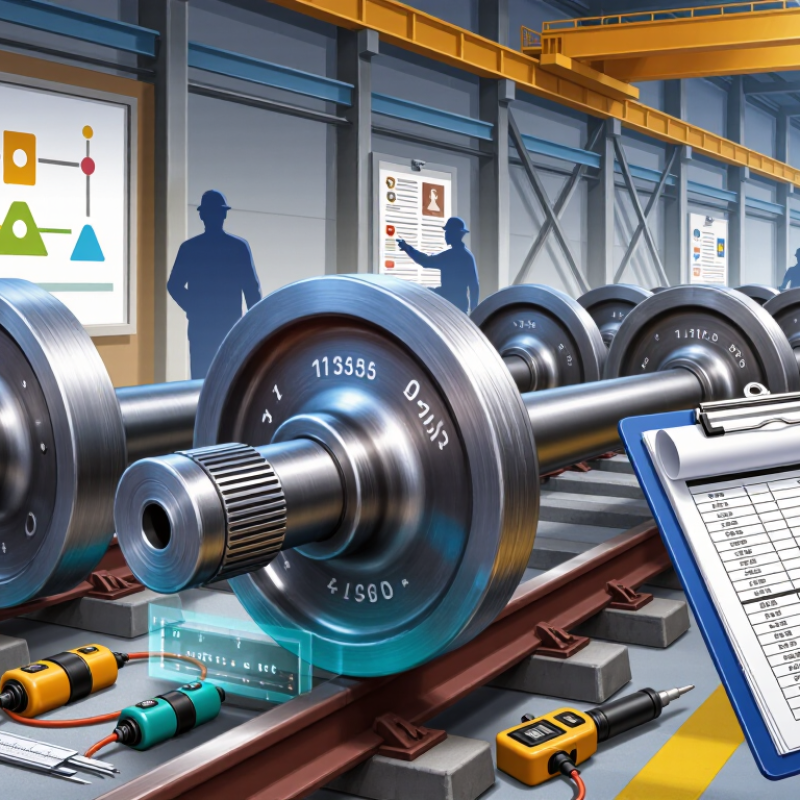
What Are the 2026 Top Railway Wagon Axle Manufacturers?

What Makes a Leading Railway Wagon Axle Manufacturer in 2026?

A leading railway wagon axle manufacturer in 2026 must combine proven engineering with visible production discipline. Axles face repeated loads, vibration, temperature changes, and harsh track conditions. Small defects can grow under millions of wheel rotations. Experienced manufacturers therefore control steel chemistry, forging pressure, heat treatment, and machining tolerances at every stage.

Quality evidence matters. Each axle should carry traceable records, from billet inspection to final ultrasonic testing. Independent laboratories can verify fatigue performance, hardness, straightness, and dimensional accuracy. Compliance with applicable railway standards is essential, but paperwork alone is not enough. Engineers should compare test results with field data from wagons operating across different climates and axle loads.

Digital tools are becoming useful, too. Sensors and production software can reveal unusual temperature patterns or repeated process variation. Still, technology cannot replace skilled inspection. A trained technician may notice a faint machining mark that a checklist misses. That human judgment matters.

No factory gets everything right. A reliable manufacturer admits process weaknesses and corrects them openly. It reviews returned components, investigates near failures, and updates training before problems repeat. Environmental performance also deserves attention, including efficient furnaces, recyclable machining waste, and responsible material sourcing. Buyers should examine delivery consistency, technical support, repair guidance, and long-term testing records. The strongest supplier is not simply the one offering the lowest price. It is the one that can explain how every axle was made, tested, and improved.


Key Standards and Technologies Used in Railway Wagon Axle Production

In 2026, leading railway wagon axle manufacturers will be judged by process control, not factory size.

The UNIFE World Rail Market Study 2024 projects rail supply demand to grow by about 2.7% annually through 2027. This expansion increases pressure on axle producers to deliver consistent steel quality, traceability, and shorter inspection cycles. Serious suppliers normally align designs with EN 13261, which defines requirements for railway wheelset axles. Freight applications may also follow AAR M-101 requirements, depending on the operating region.

Material control begins with vacuum-degassed alloy steel and controlled forging. Grain flow must remain stable around the wheel seat and journal. Heat treatment then balances strength, toughness, and residual stress. It is not only about hardness.

Modern plants use automated ultrasonic testing to detect internal flaws, while magnetic-particle inspection checks surface cracking. CNC turning maintains tight journal dimensions, and coordinate-measuring systems verify final geometry. Digital records connect each axle to its heat, forging batch, inspection results, and machining history.

Traceability matters.

The European Union Agency for Railways reported more than 1,500 significant railway accidents across the European Union in 2022, although most were not axle-related. That figure still shows why failure prevention deserves attention. I would question any supplier relying only on end-of-line inspection.

Process data can drift between checks. Fatigue testing, statistical process control, and independent certification provide stronger evidence.

Yet standards cannot remove every risk. Field feedback must continue refining axle designs, especially as heavier freight loads and higher speeds expose weaknesses earlier.

Top Railway Wagon Axle Manufacturers by Global Market Presence

What Are the 2026 Top Railway Wagon Axle Manufacturers?

Top Railway Wagon Axle Manufacturers by Global Market Presence

In 2026, leading railway wagon axle manufacturers are judged by more than production volume. Their global presence depends on certified plants, stable steel sourcing, and reliable delivery across major freight corridors. Manufacturers with facilities in Europe, Asia, and North America often serve more markets efficiently. This reduces shipping delays and supports regional maintenance programs.

Technical strength remains essential. Experienced producers use controlled forging, ultrasonic testing, heat-treatment records, and dimensional inspection. These steps help axles withstand heavy loads, repeated braking, and severe temperature changes. Public certifications and traceable quality data also build trust with railway operators. However, market leadership can shift quickly. A strong factory may still face energy costs, port congestion, or limited raw-material access.

Tips: Compare axle fatigue ratings, inspection methods, delivery history, and after-sales support. Ask for test records, not broad promises. Check whether replacement parts are available near your operating region.

In practice, the best supplier depends on route conditions and wagon design. An axle suited to high-speed service may not fit demanding mineral freight. Procurement teams should review wheelset compatibility, maintenance intervals, and local approval requirements. Site visits can reveal details that brochures miss, such as storage conditions or inspection discipline. One useful lesson is simple: global reach matters, but it should never replace measurable engineering evidence.

How Major Manufacturers Compare in Quality, Capacity, and Innovation

In 2026, leading railway wagon axle manufacturers are judged beyond purchase price.

Quality begins with controlled steel chemistry, accurate forging, and stable heat treatment. Inspectors examine journals, wheel-seat dimensions, surface finish, and fatigue-prone transitions. Ultrasonic testing can reveal internal flaws before an axle enters service. Traceability matters too. Each axle should carry a reliable production record, from billet preparation to final inspection.

Capacity is not simply a factory’s annual output.

It includes tooling flexibility, heat-treatment consistency, machining availability, and dependable delivery during demand peaks. Larger producers often manage complex orders more smoothly, but scale can reduce responsiveness. Smaller specialist facilities may provide closer engineering support. That difference matters when wagon designs change.

Automated dimensional checks, digital process records, and predictive maintenance systems are becoming practical innovations.

Some manufacturers also test lower-carbon steel routes and energy-efficient machining. The results are promising, though not yet uniform.

Maintenance teams should compare failure data, inspection methods, certification records, and field support before choosing a supplier. A polished factory tour proves little. Sample testing and production audits reveal more.

Ask how rejected axles are isolated, how process changes are approved, and how quickly technical issues receive a documented response. No supplier is flawless. Even strong manufacturers can face delays, inconsistent subcontracting, or software integration problems.

That is where honest reporting becomes more valuable than impressive marketing. A reliable axle is not merely well made; it must remain traceable, repairable, and predictable throughout its service life.

Factors to Consider When Selecting a Railway Wagon Axle Supplier

What Are the 2026 Top Railway Wagon Axle Manufacturers?

Factors to Consider When Selecting a Railway Wagon Axle Supplier

Selecting a railway wagon axle supplier for 2026 requires more than comparing catalog prices. The strongest manufacturers show proven production control, qualified engineers, and documented results from demanding rail applications. Ask about axle steel chemistry, heat-treatment records, forging methods, and machining tolerances. These details influence fatigue resistance, wheel-seat accuracy, and service life. A polished website is not evidence.

Request recent inspection samples, material certificates, and traceability from billet to finished axle. Reliable suppliers can explain ultrasonic testing, magnetic-particle inspection, dimensional checks, and corrective-action procedures. Their quality system should match the required railway standards and your route conditions. Heavy freight, frequent braking, winter exposure, and sharp curves create different stresses. Do not accept vague claims. A factory audit can reveal more than a sales presentation. Observe storage areas, calibration labels, operator training, and rejected-part controls.

Delivery capability matters when fleet schedules cannot tolerate missing components. Review capacity, lead times, packaging, spare-part support, and communication during design changes. Compare total ownership cost, not only the initial quotation. A cheaper axle may demand more inspections or create costly downtime. I have seen technical evaluations focus heavily on price and overlook response speed. That decision looked efficient at first. It was not. Suppliers should provide clear drawings, test reports, and realistic maintenance guidance. If a manufacturer admits a limitation and proposes a control, that honesty deserves serious attention. Still, every claim needs independent verification before approval.

Go to Top