Top Commercial Carpet Cleaner Machines for Global Buyers
Choosing the right commercial carpet cleaner machine is rarely about power alone. Global buyers must examine cleaning performance, water recovery, mobility, maintenance, and long-term operating costs. A compact extractor may suit hotel corridors, while a larger machine may handle airports, schools, or busy retail floors more efficiently. The best choice depends on carpet density, stain frequency, floor area, and available drying time.
Real-world details matter. Can one worker fill and empty the tanks without assistance? Does the recovery tank leave dirty water behind? Are brushes, hoses, and seals easy to replace? These questions often reveal more than impressive product photographs. Reliable suppliers should provide clear specifications, operating instructions, safety information, warranty terms, and accessible spare parts. Regional voltage, plug types, shipping conditions, and local service support also deserve careful attention.
No machine wins every site. That matters.
This guide compares leading options for international buyers using practical purchasing criteria rather than marketing claims alone. It considers cleaning results, noise, maneuverability, water consumption, construction quality, and ownership support. Independent testing is valuable, but published specifications may not reflect daily use on heavily soiled carpets. Even experienced buyers can overlook storage space or operator training. A careful review should leave room for uncertainty, questions, and site-specific trials. The goal is not to select the most expensive model, but to identify dependable equipment that performs consistently, remains serviceable, and fits the working realities of different markets.
What Commercial Carpet Cleaner Machines Are
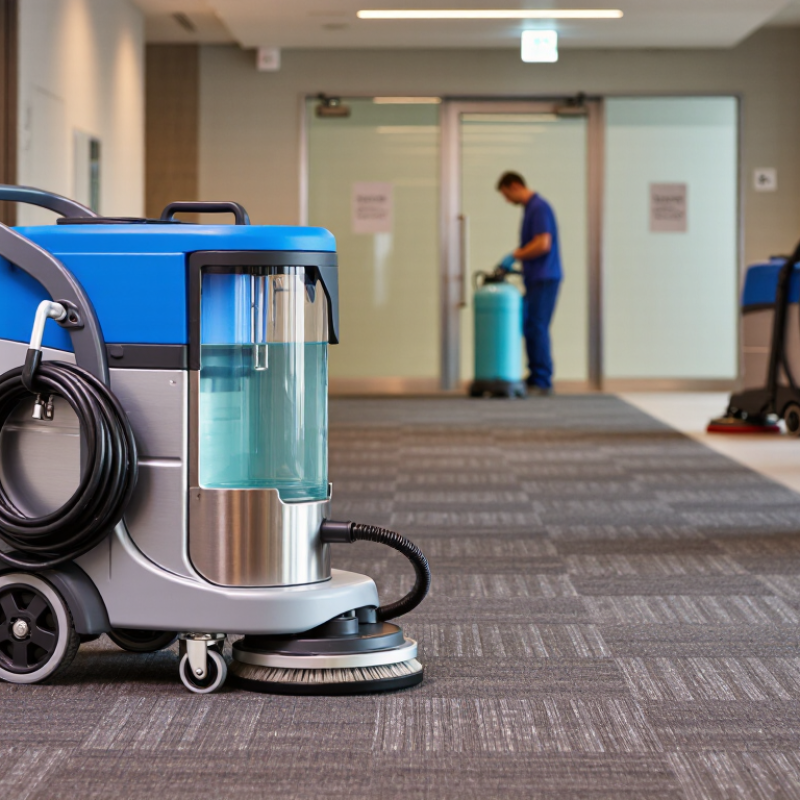
Commercial carpet cleaner machines are powered cleaning systems designed for large, frequently used floor areas. They are common in hotels, offices, schools, healthcare facilities, and public buildings. These machines inject water and cleaning solution into carpet fibers, then recover the dirty liquid. Unlike household vacuums, they combine spraying, brushing, agitation, and extraction. A typical unit includes solution tanks, recovery tanks, pumps, hoses, and adjustable cleaning heads. Some models use rotating brushes, while others depend mainly on strong water extraction. The right structure depends on carpet thickness, traffic levels, and drying conditions.
Operators usually pre-vacuum the carpet before applying controlled moisture. Then they make slow, overlapping passes across the surface. Recovery performance matters greatly. If too much water remains, carpets may develop odors or require long drying periods. I have found that practical handling often matters as much as motor power. Small test areas help reveal color bleeding, weak fibers, or uneven drying. The process is not always neat.
For global buyers, electrical specifications require careful checking. Voltage, frequency, plug standards, and local service support can affect daily reliability. Tank capacity influences productivity, but larger tanks may increase weight and operator fatigue. Noise ratings matter in occupied buildings. Durable hoses, sealed connections, replaceable brushes, and clear maintenance instructions can reduce downtime. Training should cover chemical dilution, wastewater handling, and safe operation. A powerful machine is not automatically the better machine. Sometimes, easier control produces more consistent results. That trade-off deserves honest evaluation before purchase.
Top Commercial Carpet Cleaner Machines for Global Buyers — What Commercial Carpet Cleaner Machines Are
Commercial carpet cleaner machines use water, cleaning solution, agitation, and powerful extraction to remove embedded dirt from carpets. The chart compares representative specifications across common machine categories. Actual specifications vary by configuration and market.
Portable extractors suit spot cleaning and smaller areas, while walk-behind, self-contained, and ride-on machines provide progressively greater coverage and capacity for large commercial facilities.
How Commercial Carpet Cleaner Machines Work
Commercial carpet cleaner machines work through a controlled cycle of spraying, agitation, and extraction. A pump sends water mixed with measured detergent into the carpet. Rotating brushes or counter-rotating brushes loosen soil trapped between the fibers. Some machines use heated water, which can soften greasy residues and improve cleaning performance. However, excessive heat may affect delicate fibers or weaken certain dyes.
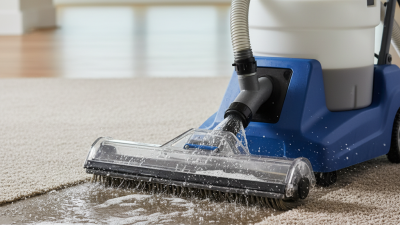
The recovery system then lifts dirty moisture from the carpet. A powerful vacuum motor creates airflow through a floor tool or cleaning head. This airflow carries water, loosened soil, and detergent into a separate recovery tank. Proper extraction matters because soaked carpet can develop odors, shrinkage, or slow drying. I have found that a second, slower pass often removes more moisture than a hurried first pass.
Operators should inspect the carpet before cleaning. Fiber type, backing material, stain age, and moisture sensitivity all influence the correct settings. Pre-vacuuming removes dry grit before water reaches the surface. It is a small step. Yet it protects the carpet and reduces waste. Buyers should also check tank capacity, cord requirements, noise levels, replacement parts, and electrical compatibility for their market. Bigger machines are not always better. A heavy unit may clean large halls efficiently but become difficult on stairs or narrow hotel corridors. Even experienced users can apply too much detergent, leaving a sticky film that attracts new soil.
Key Features for Different Cleaning Requirements
Commercial carpet cleaner machines must match the cleaning environment, not just the carpet size. For busy hotels, choose large solution and recovery tanks to reduce refilling during hallway cleaning. Strong water extraction is equally important. Damp carpets can develop odors, delay room access, and increase labor costs. Adjustable spray pressure helps protect delicate office tiles and older carpet fibers.
For restaurants and transport facilities, prioritize heated water, powerful vacuum motors, and durable brush systems. Heat can loosen greasy residues, while controlled agitation reaches compressed dirt near entrances. A narrow floor head improves access between tables, seats, and shelving. Check noise levels too. Night cleaning often requires quieter equipment.
Global buyers should verify voltage, frequency, plug compatibility, and local service support before purchasing. Stainless or impact-resistant components may withstand frequent commercial use, but maintenance still matters. Inspect hoses, filters, brushes, and seals after each shift. Small failures become expensive downtime. In my experience, operators often choose excessive pressure and damage soft fibers. More power is not always better. I once underestimated recovery capacity on a large project, and repeated emptying slowed the team noticeably. Clear manuals, replacement-part availability, and safety documentation also reveal whether a supplier understands professional use. Test maneuverability with a full tank, because a machine that feels light when empty may become difficult on stairs.
| Cleaning Requirement | Recommended Machine Type | Typical Cleaning Width | Typical Tank Capacity | Typical Productivity | Key Features | Suitable Applications |
|---|---|---|---|---|---|---|
| Daily cleaning of large carpeted areas | Walk-behind automatic extractor | 50–70 cm | Solution: 40–70 L Recovery: 40–70 L |
Approximately 1,000–2,000 m²/h | Large-capacity tanks, adjustable water flow, powered brush or cylindrical roller, onboard vacuum system, and drain hose | Hotels, airports, convention centers, department stores, and office buildings |
| High-traffic commercial carpet maintenance | Compact walk-behind extractor | 35–50 cm | Solution: 15–35 L Recovery: 15–35 L |
Approximately 500–1,000 m²/h | Compact footprint, fast setup, strong water recovery, low-noise operation, and easy maneuverability | Retail stores, schools, clinics, restaurants, and corridors |
| Deep restoration cleaning | Heavy-duty hot-water extraction machine | 25–45 cm cleaning head | Solution: 20–50 L Recovery: 20–50 L |
Approximately 100–300 m²/h | High vacuum lift, heated solution delivery, adjustable spray pressure, powerful agitation, and separate recovery filtration | Heavily soiled carpets, periodic restoration, hospitality venues, and professional cleaning contractors |
| Spot cleaning and rapid spill removal | Portable spot extractor | 10–20 cm hand tool | Solution: 5–15 L Recovery: 5–15 L |
Area-dependent; designed for localized cleaning | Lightweight construction, flexible hose, narrow upholstery tool, quick-drain tanks, and concentrated vacuum suction | Stairs, elevators, vehicle interiors, upholstery, guestrooms, and emergency spill response |
| Cleaning narrow aisles and restricted spaces | Compact upright carpet extractor | 25–35 cm | Solution: 8–20 L Recovery: 8–20 L |
Approximately 250–600 m²/h | Small turning radius, upright storage position, integrated brush system, removable tanks, and simple operator controls | Retail aisles, offices, elevators, stair landings, and small hospitality areas |
| Quiet daytime cleaning | Low-noise battery-powered extractor | 35–55 cm | Solution: 20–50 L Recovery: 20–50 L |
Approximately 400–1,000 m²/h | Battery operation, reduced cable hazards, low sound output, solution-flow adjustment, and battery-level indicator | Hospitals, libraries, hotels, schools, offices, and occupied public buildings |
| Long-duration cleaning shifts | Corded commercial extractor | 35–70 cm | Solution: 20–70 L Recovery: 20–70 L |
Approximately 600–2,000 m²/h | Continuous power supply, high-capacity tanks, replaceable power cables, thermal protection, and extended operating capability | Large facilities where charging time or battery replacement is impractical |
| Sensitive carpets and controlled moisture use | Low-moisture encapsulation machine | 35–60 cm | Solution: 10–30 L | Approximately 800–1,800 m²/h | Low solution consumption, counter-rotating brushes or orbital agitation, short drying time, and adjustable chemical application | Commercial offices, hotels, retail areas, and facilities requiring rapid carpet re-entry |
| Stairways and vertical carpeted surfaces | Handheld or compact stair extractor | 10–25 cm hand tool | Solution: 8–20 L Recovery: 8–20 L |
Task-dependent; optimized for detailed cleaning | Flexible vacuum hose, stair tool, compact body, high vacuum performance, and easy transport between floors | Staircases, escalator side areas, theater seating, corridors, and upholstered surfaces |
| International transport and flexible deployment | Modular commercial extractor | 30–60 cm, depending on configuration | Solution: 15–60 L Recovery: 15–60 L |
Approximately 400–1,500 m²/h | Detachable tanks, foldable handle, replaceable components, multilingual controls, and voltage-compatible electrical options | Global distributors, contract cleaning companies, rental fleets, and multi-site facility operators |
How to Compare Performance, Cost, and Maintenance
Selecting a commercial carpet cleaner requires more than checking water pressure or motor size. In commercial trials, recovery speed often matters most. A machine that removes dirty water quickly can reduce drying time and room closures. Measure cleaning width, solution flow, vacuum strength, and noise during real work. A powerful machine may still disappoint if it leaves carpets overly wet.
Compare total cost, not only the purchase price. Include electricity, water, detergent, replacement hoses, brushes, filters, and technician labor. A lower-priced unit can become expensive when parts are difficult to source internationally. Ask for service manuals, spare-part availability, warranty terms, and electrical compatibility. Global buyers should also confirm voltage requirements before ordering. Small details matter.
Tips: Test the machine on heavy-traffic carpet. Record drying time. Inspect the recovered water. Check whether one operator can move it safely. These observations are more useful than sales figures. Do not ignore storage space; compact equipment may sacrifice tank capacity. That trade-off can slow large projects. Maintenance should be simple, with accessible tanks and removable filters. After each shift, operators should rinse the recovery system and inspect seals. I have found that cleaning routines are often promised, but poorly followed. Training and clear checklists may influence reliability as much as engineering.
How Global Buyers Can Choose the Right Machine
Top Commercial Carpet Cleaner Machines for Global Buyers
How Global Buyers Can Choose the Right Machine
Global buyers face different carpet conditions, labor costs, and electrical standards. The right machine depends on the cleaning environment, not its advertised power. Start by measuring daily carpet coverage, room access, and available water sources. A wide cleaning path can improve productivity in airports and hotels. Smaller machines may work better in elevators, offices, and narrow corridors. Bigger is not always better.
Check voltage, frequency, plug type, and local safety requirements before placing an order. A machine designed for one electrical system may perform poorly elsewhere. Confirm tank capacity, recovery strength, drying time, and wastewater handling. These details affect labor hours and customer satisfaction. Ask for service manuals, replacement-part availability, and operator training materials. Small details matter.
Carpet type also guides the decision. Dense wool, synthetic fibers, and delicate office carpets may need different brush pressure and moisture levels. In humid regions, faster drying can help reduce odor and disruption. Noise levels matter in hospitals, schools, and occupied hotels. Request a live demonstration or field trial when possible. A field trial reveals problems that brochures often hide. Test turning radius, hose length, emptying speed, and control comfort. I have seen buyers focus on purchase price, then underestimate maintenance and downtime. That mistake is understandable, but costly. Compare total ownership costs over several years, including filters, brushes, energy, training, and technical support. A reliable choice is practical, repairable, and suited to local working habits.
Related Posts
-
What is a Carpet Water Extractor and How Does It Work?
-
Solutions for Superior Carpet Care: Discovering the Best Carpet Extractor Machines
-
How to Choose the Right Carpet Extractor Machine for Your Business
-

Unveiling the Magic of Heated Carpet Extractors: Transforming Your Home Cleaning Routine
-
Top Tips for Choosing the Best Heated Carpet Extractor?
-
How to Choose the Best Commercial Carpet Cleaner Machine for Your Business