How to Choose the Best CNC Devices for Your Business?
Choosing the right Cnc Devices can shape your production costs, delivery times, and product quality for years. The best machine is not automatically the fastest or most expensive. It is the one that fits your actual jobs, materials, tolerances, and operator skills. CNC educator Mike Lynch, founder of CNC Concepts, is known for emphasizing practical machining knowledge. A useful buyer’s principle is: “Choose for the work you run every week, not the features that look impressive in a brochure.” Treat that as a guide, not a substitute for checking a machine’s specifications and support.
Start with the parts you make now. Note their dimensions, materials, required accuracy, and monthly volume. A small shop producing aluminum brackets may need a reliable three-axis mill, while a turning operation may benefit more from a CNC lathe with suitable tooling. Picture a real setup: stock clamped securely, tools changed, chips cleared, and finished parts measured. These details reveal costs that a catalog rarely shows. They also expose a common mistake: buying extra capacity before confirming that customers will use it.
Compare usable work envelope, spindle power, control interface, tooling compatibility, maintenance access, training, and local service. Ask suppliers for a demonstration using a part similar to yours. Request clear details about installation, warranty coverage, and expected delivery. Then compare the full cost, including tooling, software, fixtures, and operator training. A spreadsheet helps. It will not make the decision for you. Review the numbers with machinists and production staff; they may notice workflow problems that a purchasing checklist misses. The final choice should support current work while leaving sensible room for growth.
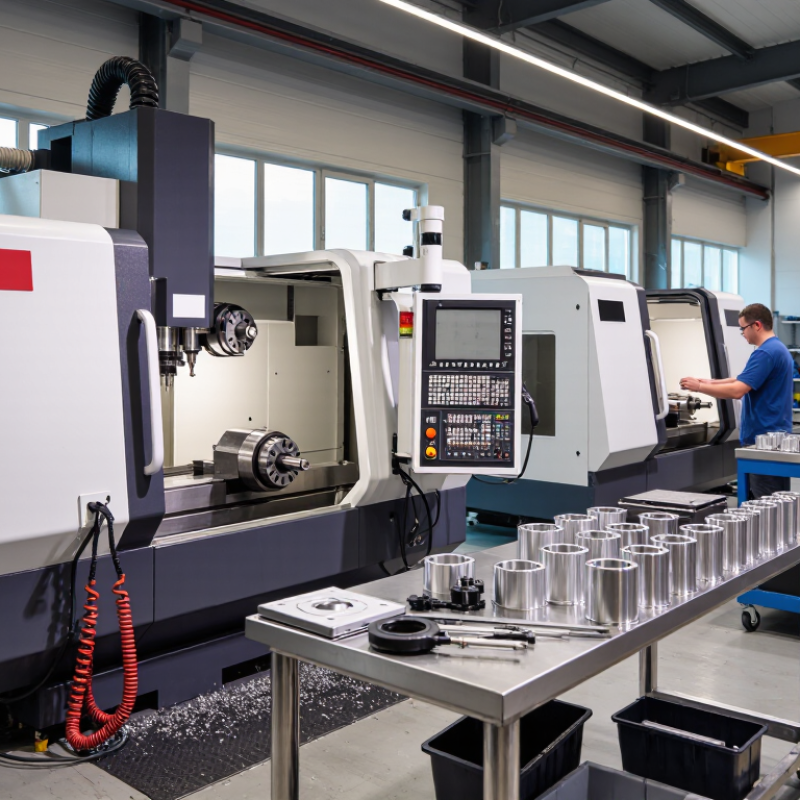
Define Your Business Needs and Production Goals
Before comparing CNC devices, define what your business actually makes. List the materials, part dimensions, tolerances, and surface finishes your jobs require. A shop cutting small aluminum brackets has different needs from one machining large steel components. Estimate monthly demand, peak workloads, and the number of product changes each week. Be specific. “More capacity” is not a useful target by itself.
Production goals should include usable output, not just advertised speed. Record current cycle times, setup delays, scrap, and machine downtime. Then identify the main bottleneck. A faster machine may not help if operators spend hours changing fixtures or waiting for inspection. Check whether the device supports your required operations, tooling, and workpiece size. Consider floor space, power, operator training, and routine maintenance. These details can alter the real cost. I have seen capacity estimates look convincing on paper, then fall short during frequent changeovers. Your own test parts provide better evidence than assumptions.
Tips: Bring representative parts and drawings to a machine evaluation. Ask for measured cycle times, including setup. Check tolerances across repeated runs, not just one successful cut. Leave room for maintenance and future work, but avoid paying for capacity you cannot use. A modest plan can be wiser.
Identify the CNC Machine Types That Fit Your Work
Choosing a CNC machine starts with the shape of your work, not the machine’s headline speed. A three-axis milling machine suits flat parts, pockets, and drilled features in metal or plastic. If parts need angled faces or curved contours, four- or five-axis motion can reduce repeated setups. That matters when alignment errors become costly. More axes also mean higher programming and training demands.
For long, round components such as shafts, a CNC lathe is usually the natural fit. It rotates the workpiece while a cutting tool shapes its diameter and ends. Wood shops and sign makers may benefit more from a CNC router, which handles sheet goods across a broad table. Check the spindle, work area, dust collection, and tool-change needs against your actual jobs. A large table is not automatically useful.
For sheet metal, a CNC plasma cutter offers fast profiling, while waterjet cutting avoids heat at the cut edge and can handle varied materials. These processes differ in finish, operating costs, and secondary work, so compare sample cuts before committing. Keep a month of job records: material, dimensions, tolerances, and batch size. Then ask which machine completes most jobs with the fewest setups. It is easy to overbuy. Production mixes rarely stay exactly as forecast.
Compare Machine Capacity, Precision, and Compatibility
Choosing a CNC device starts with the parts you actually make, not the largest numbers on a specification sheet. Measure your typical workpiece and leave room for clamps, tools, and safe movement. A 600-millimeter table may sound generous, yet a tall fixture can reduce usable clearance. Check spindle power and cutting force against your materials and expected production pace. Bigger is not always better.
Precision needs a practical definition. Compare stated positioning accuracy and repeatability, then ask how those figures were measured. They may not predict results in a warm workshop after hours of operation. For a small aluminum component, a tolerance of 0.05 millimeters might be sufficient; a tighter fit may require more capable equipment and careful calibration. Inspect sample cuts if possible. Real evidence helps.
Compatibility can quietly add cost. Confirm that the machine accepts your intended file formats, tooling, workholding, and existing inspection methods. Check power supply, floor space, extraction needs, and operator training before purchase. These details are easy to overlook. I would also question optimistic cycle-time estimates: setup and tool changes take time, even on a capable machine. Compare the full workflow, not just the cutting speed.
Select a Machine Based on Performance and Long-Term Value
Choosing a CNC machine by purchase price alone can hide its real cost. Match its work envelope, spindle power, tool capacity, and accuracy to the parts you actually produce. A machine that cuts aluminum quickly may struggle with long steel runs or tight tolerances. Ask suppliers to demonstrate your material, tooling, and target cycle time. Measure repeatability across several parts, not just one polished sample.
Long-term value depends on uptime, service access, energy use, and operator training. Deloitte’s 2024 Smart Manufacturing Survey reports that 86% of surveyed manufacturing executives expect smart manufacturing solutions to drive competitiveness within five years. That supports evaluating controls and data connectivity, but features only pay off when your team can use them. Include maintenance and downtime in a five-year cost estimate. It may still miss surprises; real production is messy.
Tips: Request a test cut using your own drawing. Check service response times, spare-part availability, and the cost of common wear items. Compare the expected cost per finished part—not just the machine’s advertised speed.