China Top RTO Manufacturers How to Choose the Best?
Choosing among China’s top RTO manufacturers requires more than comparing stainless-steel panels, prices, or catalog promises. A regenerative thermal oxidizer must match your emission profile, airflow, solvent loading, operating schedule, and local compliance requirements. The U.S. Environmental Protection Agency’s Air Pollution Control Cost Manual reports typical VOC destruction efficiencies of approximately 95% to 99% for well-designed thermal oxidizers. It also emphasizes that actual performance depends on temperature, residence time, mixing, and maintenance.
The numbers matter. An RTO operating at 100,000 Nm³/h may face very different demands from a coating line or chemical process. High solvent peaks can affect valve selection, ceramic media design, burner capacity, and pressure stability. China’s Ministry of Ecology and Environment also stresses process control, fugitive-emission management, and continuous monitoring in VOC governance guidance. Therefore, a reliable manufacturer should provide engineering calculations, tested performance data, equipment drawings, and clear commissioning procedures.
A strong supplier will discuss the difficult details. Ask about heat recovery efficiency, startup fuel consumption, corrosion resistance, switching-valve service life, and emergency bypass control. Request references from facilities with similar gases and production volumes. Independent testing is valuable, although it may not cover every operating condition. No shortlist is perfect. A polished brochure can still hide weak after-sales support or vague warranty terms. This guide examines China’s leading RTO manufacturers through technical capability, manufacturing experience, documentation quality, safety design, customization, and lifecycle cost. The best choice is rarely the cheapest unit. It is the system that performs consistently beside your actual production line.
What Is an RTO and Why Does Manufacturer Choice Matter?
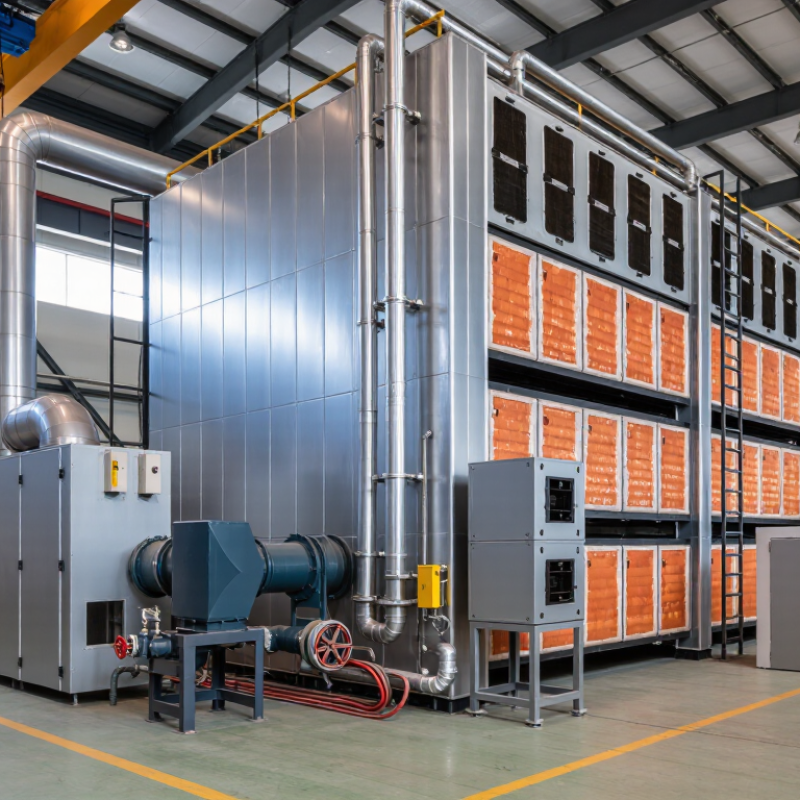
A regenerative thermal oxidizer (RTO) treats VOC-laden industrial exhaust through controlled thermal oxidation. It uses ceramic heat-recovery media to capture and reuse heat, reducing fuel demand during stable operation. Exhaust passes through the media beds, enters a combustion chamber, and then leaves through another heated bed. The airflow direction changes through timed valve switching. Small details matter. Poor sealing can increase leakage, pressure drop, and operating costs.
Manufacturer choice matters because an RTO is not an off-the-shelf box. The system must match gas volume, VOC concentration, moisture, dust loading, and temperature changes. During plant assessments, engineers should review actual operating data, not only design averages. Ask for verified destruction efficiency, heat-recovery performance, valve durability, control logic, and maintenance access. A reliable supplier also explains startup behavior, emergency handling, spare parts, and service response. Some proposals look efficient on paper but overlook fluctuating production. That mistake can become expensive.
Tips: Request a process-based design calculation and recent performance records. Check whether the supplier can test your exhaust before final sizing. Inspect drawings for access doors, drain points, insulation, and safe inspection areas. Compare total ownership cost, including fuel, electricity, media replacement, downtime, and maintenance labor. Do not judge by purchase price alone. A useful question is simple: What happens when the exhaust composition changes suddenly? The answer may reveal more than a polished brochure. Review assumptions carefully, because even experienced teams can miss an inconvenient operating condition.
Key Standards for Evaluating Chinese RTO Manufacturers
China Top RTO Manufacturers How to Choose the Best?
Key Standards for Evaluating Chinese RTO Manufacturers
Choosing an RTO manufacturer requires more than comparing purchase prices. Start with documented experience in your industry, gas composition, airflow range, and operating temperature. Ask for verified data on destruction efficiency, heat recovery, pressure drop, and fuel consumption. These figures should come from tested operating conditions, not attractive estimates.
Inspect the engineering details closely. Ceramic media quality, valve sealing, burner control, chamber lining, and corrosion resistance directly affect service life. Request material certificates, factory inspection records, control-system documentation, and commissioning procedures. A reliable manufacturer should explain how the RTO handles start-up, shutdown, abnormal gas conditions, and routine maintenance. Clear spare-parts lists matter too.
Look for evidence from comparable installations, including operating hours and measured emissions data. Independent testing is more convincing than a sales presentation. Check whether the manufacturer provides operator training, remote support, and realistic response times. In plant evaluations, I have found that small details, such as access-door design and cleaning space, can prevent expensive downtime. No supplier is perfect. Some technical documents may be incomplete, and that deserves direct questions rather than assumptions. A factory visit can reveal welding quality, assembly discipline, and whether testing is genuinely performed. Also review warranty terms carefully, because vague responsibilities can create problems after installation.
How to Compare RTO Technologies, Capacity, and Performance
Choosing a top RTO manufacturer in China starts with comparing the process, not the brochure. An RTO must match VOC type, solvent load, gas temperature, moisture, and operating hours. Ceramic media design affects heat recovery and pressure drop. A practical review should ask for residence time, destruction and removal efficiency, startup fuel use, and switching-valve cycle data. These figures should come from tested conditions close to your own exhaust.
Capacity needs careful calculation. Rated airflow is not always usable airflow. Compare normal flow, peak flow, turndown range, and future expansion separately. Check whether the fan can overcome duct resistance after the ceramic beds load with dust. I prefer reviewing hourly flow records, not only a maximum value. A small pilot test can expose condensation, sticky compounds, or unstable combustion before installation. It costs time, but rework costs more.
Performance also includes control quality and service access. Look for oxygen, temperature, pressure, and VOC monitoring, with clear alarm logic and data logging. Inspect valve materials, insulation thickness, access doors, spare-part lead times, and commissioning support. Ask how efficiency is verified after twelve months, not only on day one. Field data matters. I have seen designs look excellent until dust blocked the media. The best choice may be less compact, but easier to maintain safely.
How to Verify Quality, Compliance, Service, and Experience
Choosing among China’s top RTO manufacturers requires more than comparing prices. Verify the supplier’s engineering records, production controls, and completed projects. Ask for process calculations, material specifications, and tested emission data. A serious manufacturer should explain residence time, heat recovery efficiency, pressure drop, and operating limits in clear language.
Visit the factory when possible. Check weld quality, ceramic media loading, insulation thickness, and control cabinet wiring. Request inspection records for fans, valves, burners, and temperature sensors. Review factory acceptance testing procedures. Test alarms, valve switching, purge sequences, and emergency shutdown functions. Compliance documents matter, but traceable test results matter more. Confirm that the proposed design matches your local permits and operating conditions.
Service quality appears after installation. Ask how quickly engineers respond, which spare parts are stocked, and whether remote diagnostics are available. Speak with several operating customers, not only selected references. Examine maintenance logs and actual energy use. Experience should include similar gases, flow rates, and production schedules. A polished presentation proves little. I have seen complete-looking documents hide unclear responsibilities. That risk deserves attention. Leave every technical promise in the contract, including performance guarantees, training, commissioning support, and response times. A checklist helps, but it cannot replace careful questions and an independent technical review.
China Top RTO Manufacturers How to Choose the Best? - How to Verify Quality, Compliance, Service, and Experience
| Evaluation Dimension | What to Verify | Objective Evidence to Request | Practical Acceptance Benchmark | Warning Signs |
|---|---|---|---|---|
| Process Design Capability | Whether the proposed RTO matches VOC type, concentration, flow rate, humidity, dust load, corrosive components, operating schedule, and required emission limits. | Process design basis, inlet-gas analysis, mass balance, heat balance, equipment datasheets, and clearly stated design assumptions. | All key inlet conditions and operating cases are documented, including start-up, shutdown, low-load, peak-load, and upset conditions. | A standard proposal is issued without requesting an inlet-gas analysis or production profile. |
| Thermal Performance | Combustion-chamber temperature, gas residence time, air distribution, heat recovery, and operating stability. | Thermal calculation, temperature mapping, control logic, heat-balance report, and factory or site test records. | Many RTO designs use approximately 760–950°C combustion temperatures and about 0.5–1.0 second residence time; the final values must be justified by the VOC chemistry and permit requirements. | Temperature and residence-time claims are provided without calculations or test conditions. |
| VOC Destruction Performance | The ability to achieve the required destruction and removal efficiency for the actual VOC mixture. | Guaranteed-performance clause, inlet and outlet VOC test method, independent laboratory report, and defined test operating conditions. | A project-specific guarantee is normally preferable to a generic claim; many industrial RTO applications target at least 95% destruction efficiency, while higher values may be required by the process or permit. | Only an unqualified “99% efficiency” statement is provided, with no definition of VOC basis or test method. |
| Energy Consumption | Fuel consumption, electrical consumption, heat recovery efficiency, auto-thermal operating range, and auxiliary equipment demand. | Fuel and power calculation based on stated VOC loading, flow rate, ambient conditions, purge cycles, and operating hours. | The quotation states fuel consumption in a defined operating scenario rather than presenting one universal number; heat-recovery assumptions are clearly identified. | Very low energy consumption is advertised without an inlet concentration, flow rate, or operating profile. |
| Ceramic Media and Internal Materials | Media type, thermal-shock resistance, pressure drop, corrosion resistance, filling arrangement, and replacement method. | Material certificates, technical datasheets, test reports, layer drawings, loading quantity, and recommended replacement interval. | The selected media is compatible with the gas chemistry and design temperature; pressure-drop and maintenance assumptions are documented. | No material grade, supplier documentation, or replacement procedure is supplied. |
| Valve and Switching System | Valve sealing, switching frequency, actuator reliability, cycle life, leakage control, and maintenance accessibility. | Valve datasheets, actuator specifications, leakage test results, cycle-test records, spare-parts list, and maintenance instructions. | The supplier provides a defined leakage limit, tested cycle life, fail-safe position, and a replacement plan for wearing components. | Valve service life and leakage performance are excluded from the technical guarantee. |
| Safety and Explosion Protection | LEL monitoring, high-temperature protection, pressure relief, flame detection, emergency shutdown, purge logic, and interlocks. | Safety risk assessment, cause-and-effect matrix, instrument list, interlock test records, explosion-relief calculations, and emergency procedures. | The design identifies combustible-gas scenarios and prevents operation outside safe concentration, temperature, pressure, and airflow limits. | Safety is described only as “automatic control,” without a shutdown matrix or documented risk assessment. |
| Emission Compliance | Compliance with the project’s environmental impact assessment, emission permit, local air-pollution limits, and applicable national or sector standards. | Compliance matrix, permit conditions, sampling plan, monitoring requirements, and third-party acceptance-test procedure. | The supplier identifies the exact pollutant limits and test methods applicable to the installation location; no generic national value is substituted for a site-specific requirement. | The proposal guarantees compliance without reviewing the location, industry category, permit, or VOC composition. |
| Quality Management | Control of design, purchasing, welding, fabrication, inspection, nonconformities, and final documentation. | Valid ISO 9001 certificate, certificate scope, inspection and test plan, welding procedures, material traceability records, and nonconformance reports. | The certificate is valid and covers the relevant manufacturing activities; critical materials and inspections are traceable to the finished equipment. | A certificate is shown without scope, validity, certification body, or verifiable registration details. |
| Fabrication and Inspection | Shell thickness, welding quality, refractory installation, insulation continuity, dimensional accuracy, and coating quality. | Inspection and test plan, weld visual inspection, nondestructive-testing records where specified, refractory inspection, pressure or leakage test records, and final inspection report. | Hold points and acceptance criteria are agreed before production, with photographic and signed records available in the final dossier. | The supplier refuses a pre-shipment inspection or cannot provide traceable quality records. |
| Automation and Data Logging | PLC and HMI functionality, alarm history, trend recording, remote access security, recipe control, and data export. | I/O list, control philosophy, alarm list, sample HMI screens, backup procedure, cybersecurity controls, and data-retention specification. | Temperature, pressure, flow, VOC-related signals, valve position, fuel use, alarms, and interlock status can be trended and exported for compliance and maintenance. | The system provides only real-time display and cannot retain or export operating records. |
| Testing and Acceptance | Factory acceptance testing, site acceptance testing, performance testing, and responsibility for independent sampling. | FAT and SAT protocols, test instruments with calibration records, sampling plan, laboratory qualifications, and signed acceptance criteria. | Payment milestones include measurable acceptance criteria covering capacity, temperature stability, emissions, safety interlocks, and documentation. | Acceptance is based only on visual inspection or equipment energization. |
| Installation and Commissioning | Site supervision, alignment, refractory curing, cold commissioning, hot commissioning, tuning, and operator training. | Project schedule, commissioning method statement, manpower plan, training agenda, punch-list process, and commissioning report. | Roles, site attendance, required utilities, customer responsibilities, and handover documents are defined before contract signing. | The price excludes commissioning support or leaves site responsibilities undefined. |
| After-Sales Service | Response time, spare-parts availability, troubleshooting, preventive maintenance, software support, and warranty coverage. | Service-level agreement, escalation contacts, spare-parts catalogue, recommended inventory, warranty terms, and maintenance schedule. | Critical spares, response channels, remote-support scope, on-site support conditions, and warranty exclusions are written into the contract. | Only a sales contact is provided, with no service-level commitment or spare-parts plan. |
| Relevant Project Experience | Experience with similar VOC chemistry, flow rate, industry, operating hours, environmental conditions, and regulatory requirements. | Redacted project references, operating data, commissioning records, customer references, and evidence of comparable equipment capacity. | References are comparable in process conditions rather than merely similar in equipment appearance or nominal capacity. | The supplier lists project counts but cannot provide comparable operating conditions or verifiable references. |
| Commercial and Lifecycle Cost | Purchase price, installation cost, utilities, consumables, spare parts, maintenance labor, downtime risk, and disposal cost. | Itemized quotation, five- to ten-year operating-cost model, utility assumptions, maintenance schedule, and exclusions list. | Proposals are compared using total cost of ownership, not equipment price alone; assumptions are consistent across all bidders. | A low initial price is offered while fuel, instruments, commissioning, refractory work, or compliance testing is excluded. |
| Export and Documentation Readiness | Ability to provide English documentation, export packaging, shipping data, electrical compatibility, customs documents, and destination-country conformity information. | English manuals, general arrangement drawings, packing list, HS-code information, electrical documents, certificates, and destination-specific compliance matrix. | Documentation is complete, version-controlled, and suitable for the destination country; CE or other conformity marking is treated as applicable only when required by the destination market. | “CE certified” is advertised without identifying the applicable directives, standards, technical file, or declaration of conformity. |

How to Select the Best Manufacturer for Your Application
Selecting the best RTO manufacturer starts with your application, not a catalog. Define gas flow, VOC type, concentration, temperature, moisture, dust, and operating hours. These details determine chamber size, heat recovery, residence time, and pressure drop. A supplier that asks only for airflow is missing important engineering risks.
Ask manufacturers to explain their design choices in measurable terms. Request thermal destruction efficiency, heat recovery performance, pressure-drop data, startup time, and expected fuel use. Review the control strategy for changing VOC loads and unstable process conditions. Confirm that the system includes suitable sensors, alarms, explosion protection, and safe maintenance access. Independent testing records and relevant project references provide stronger evidence than polished brochures.
Evaluate fabrication quality, refractory materials, valve durability, and local service capability. Visit a production facility if possible. Inspect welding, insulation, wiring, and final testing practices. Ask how spare parts are stocked and how quickly technicians respond. A low purchase price may hide higher energy costs or difficult maintenance. No design is perfect. Your process may also change after installation, so flexible controls and future capacity matter. I would compare total operating cost over several years, not just the quotation. Get assumptions in writing, especially performance guarantees and exclusions.
China Top RTO Manufacturers: How to Choose the Best?
A practical, non-brand-specific evaluation framework for selecting an RTO manufacturer according to application requirements. The weighting emphasizes performance, compliance, lifecycle cost, and project execution.
The percentages represent recommended evaluation weights for an industrial RTO procurement review. Actual priorities should be adjusted according to VOC composition, airflow, inlet concentration, emission limits, operating schedule, and local installation conditions.