How to Choose the Best Trailer Mounted Drainage Pump for Your Needs?
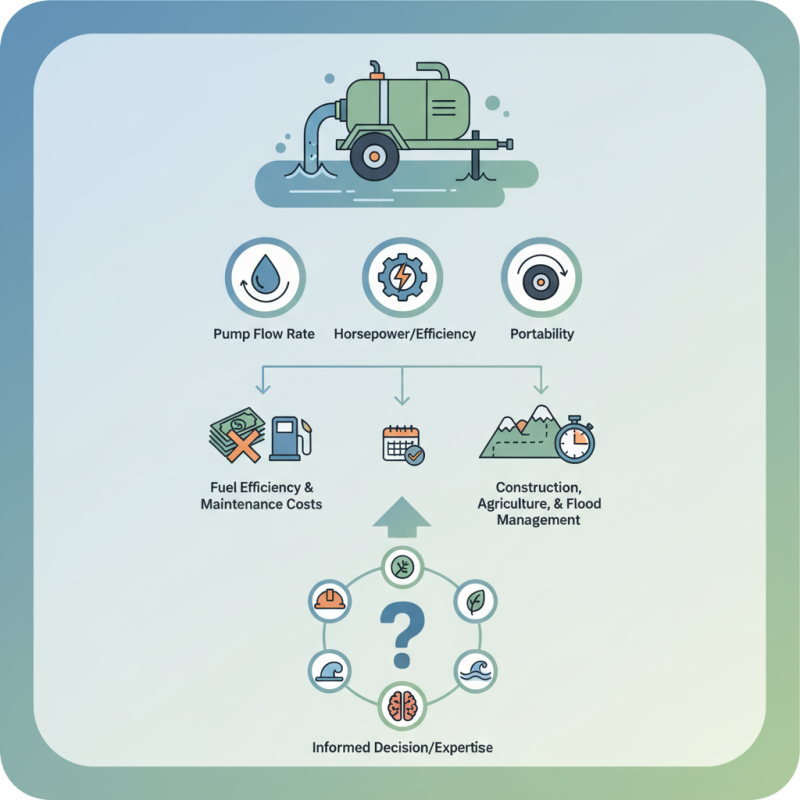
Choosing the right Trailer-mounted drainage pump can significantly impact your project’s efficiency. In 2022, the global pump market size was valued at approximately $78 billion. The increasing demand for efficient waste management solutions has boosted the popularity of trailer-mounted drainage pumps. These pumps are essential for construction sites, agriculture, and flood management.
When selecting a trailer-mounted drainage pump, consider pump flow rates, horsepower, and portability. A pump with higher flow rates can move more water quickly, which is vital during emergencies. However, a powerful pump may not always be the best choice. Fuel efficiency and maintenance costs play a critical role too. Moreover, portability matters, especially on rough terrains.
Industry reports indicate that many users overlook these factors, leading to inefficient operations. The choice of pump can affect productivity and costs over time. Understanding your specific needs helps you make a more informed decision. Selecting the right model involves assessing multiple variables, showcasing the importance of expertise in making the right selection.
Understanding Your Drainage Needs and Requirements
When choosing a trailer-mounted drainage pump, understanding your specific drainage needs is crucial. Factors like the type of water being pumped, the volume, and the elevation difference are vital. According to industry data, about 80% of projects fail to meet their drainage goals due to inadequate assessment of these needs.
Consider the water type. Is it clean water, or does it contain debris? Dirty water requires a pump with a robust filter. Volume is another aspect. Pumps are rated by their flow rate, usually in gallons per minute (GPM). A larger volume needs a higher GPM rating. The specific application can change requirements; residential sites may differ vastly from commercial ones.
Elevation is key, too. The height a pump can lift water is often overlooked. If you need to pump water uphill, ensure your pump's head lift capability can handle it. Reports indicate that miscalculating head lift can lead to equipment overuse and failure. This reflects a common issue: many decisions are made without precise data. Understanding all factors fully is essential for optimal pump performance.
Key Features to Consider in Trailer Mounted Drainage Pumps
When selecting a trailer mounted drainage pump, several key features are essential to ensure you meet your specific requirements. One of the crucial factors is the pump’s flow rate. Determine the volume of water you need to move. Fast flow rates can save time during drainage tasks. However, a higher capacity may lead to increased operational costs. Evaluate your actual needs carefully.
Another important feature is the type of materials used in the pump. A robust, corrosion-resistant construction can enhance durability. This aspect is vital if the pump will be used in harsh conditions. Also, pay attention to the pump’s portability. A lightweight design makes it easier to transport, but this must not compromise strength and stability. Balancing these factors indicates good planning.
Don’t overlook the power source. Depending on your application, you might prefer electric or diesel options. Each option has its pros and cons. Diesel may offer higher power efficiency, while electric pumps could be more environmentally friendly. Make a choice that aligns with your work environment and project scale. Overall, assessing these features tailored to your needs can improve your satisfaction with the pump.
Evaluating Pump Performance: Flow Rate and Head Pressure
When selecting a trailer mounted drainage pump, evaluating flow rate and head pressure is crucial. Flow rate, measured in gallons per minute (GPM), determines how quickly you can move water. A pump with a higher GPM is essential for large-scale drainage tasks. Reports indicate that efficient pumps can achieve rates exceeding 200 GPM. However, high flow rates alone may not meet your needs if head pressure is insufficient.
Head pressure, measured in feet, reflects a pump's ability to lift water vertically. It is vital in applications where drainage involves elevation changes. A pump's effective head pressure can vary significantly based on design and motor strength. For instance, many pumps operate effectively within a maximum head range, often between 20 to 40 feet. However, actual performance can differ based on site conditions. It's important to calculate total dynamic head, which includes pipe friction losses and fittings.
Not all pumps are created alike. Selecting the wrong specs might lead to inefficiencies and higher operational costs. For example, a pump optimized for high flow rates might struggle if your site requires significant elevation. Regular assessment and data analysis on pump performance can prevent unnecessary complications. Always consider both flow and head pressure to ensure the best choice for your drainage needs.
Assessing Mobility and Trailer Compatibility for Your Setup
When selecting a trailer-mounted drainage pump, assessing mobility is crucial. A pump should be easy to transport and maneuver. Consider the weight and dimensions of the trailer. A lighter setup allows for more flexibility. Look for features that enhance portability, like adjustable tow hitches or wheels designed for rough terrain.
Trailer compatibility is another essential factor. Your vehicle must match the trailer's towing capacity. Check the specifications carefully. Some setups require additional safety features, such as brake lights and reflectors. Evaluating these aspects can prevent issues during transit. Pay attention to the pump's connection points as well; compatibility can vary across models, impacting performance.
It’s worth noting that not every pump setup will suit your needs. Some users find their initial choice cumbersome or inefficient. Feedback from others can be useful. If you struggle with the weight or setup, reassess your priorities. Understanding what works best for your situation may take time, but it is key to making an informed choice.
Maintenance and Support: Ensuring Longevity of Your Pump
Choosing the right trailer mounted drainage pump is crucial. Yet, even the best equipment requires proper maintenance. Regular servicing can extend the life of your pump. According to industry reports, neglect can reduce pump efficiency by up to 30% over time. Water, dirt, and corrosion can cause significant wear. Regular inspections are necessary to catch issues early.
Lubrication is also key. The pump's bearings need periodic grease applications. This simple step can prevent severe operational failures. It’s reported that 40% of pump breakdowns occur due to inadequate maintenance. Keeping filters and screens clean ensures optimal performance. A clean pump operates efficiently, maximizing your investment over time.
Additionally, training operators is often overlooked. Proper usage training can reduce accidents and misuse. Statistics show misoperation accounts for nearly 25% of pump service calls. Documentation of maintenance history is vital for identifying patterns. Monitoring performance data helps in proactive maintenance planning. Ultimately, your pump's longevity hinges on diligent care and informed operation practices.
How to Choose the Best Trailer Mounted Drainage Pump for Your Needs?
| Feature | Description | Importance |
| Pump Capacity | The maximum volume of water the pump can move per hour. | High importance for efficiency in draining tasks. |
| Power Source | Type of power required (electric, diesel, or gasoline). | Moderate importance for operation convenience. |
| Portability | Ease of transporting the pump due to its design and weight. | High importance for jobs in multiple locations. |
| Durability | Quality of materials used in construction for longevity. | High importance to minimize replacement costs. |
| Noise Level | Volume of sound produced during operation. | Low importance unless for residential areas. |
| Maintenance Requirements | How often and what type of maintenance is needed. | High importance for long-term functionality. |
| Warranty and Support | Scope and duration of warranty provided. | High importance for peace of mind and support. |