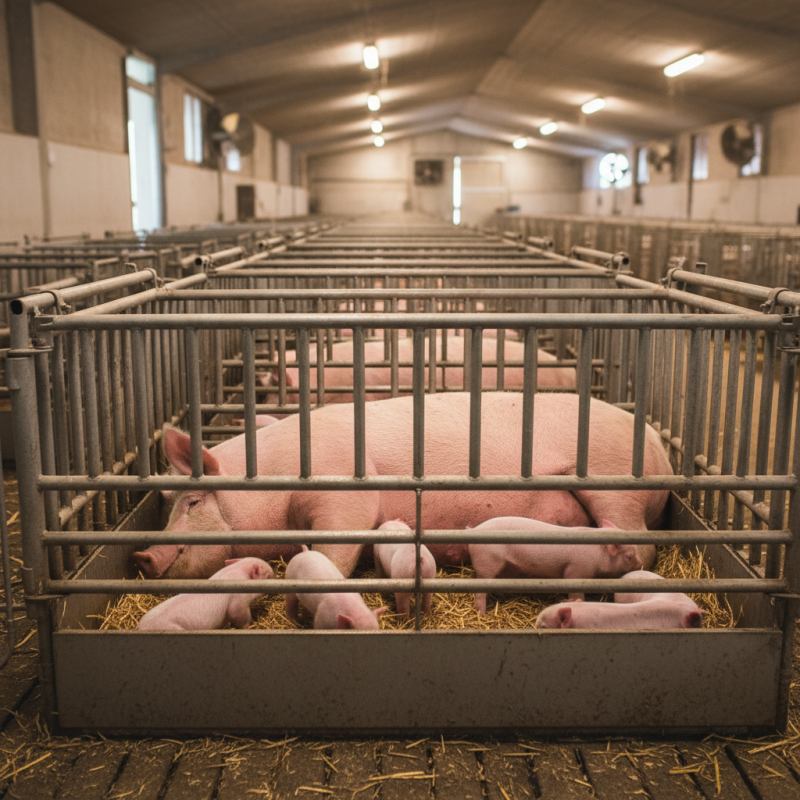
Why Do Farmers Use Farrowing Crates for Piglet Safety?
Farrowing Crates play a crucial role in piglet safety on farms. These structures help ensure that each newborn piglet is protected from accidental harm. In the chaotic environment of a barn, mother pigs can accidentally injure their piglets. Farm workers aim to create a safe space.
The design of farrowing crates allows mothers to nurse without risk. Piglets have a designated area that keeps them safe. This confined space reduces the chance of crushing or trampling by the sow. Farmers have shared experiences where the use of these crates saved lives.
While farrowing crates provide safety, they also spark debate. Critics express concerns about animal welfare. They argue that these crates limit the sow’s movement. However, many farmers believe that the safety of the piglets outweighs these concerns. In this complex conversation, the balance between safety and freedom is key.
Importance of Piglet Safety in Farming Practices
Pig farming practices focus heavily on ensuring the safety of piglets. Newborn piglets are vulnerable and can easily be injured by their mothers. Farrowing crates provide a controlled space that minimizes these risks. By confining the sow while allowing piglets to nurse safely, farmers promote a healthier environment for young pigs.
However, the use of farrowing crates raises ethical questions. Some argue that these crates limit the natural behaviors of sows. A balance must be struck between animal welfare and operational efficiency. Farmers often grapple with these challenges while striving for responsible practices. They must weigh the need for piglet safety against the ethical implications of confinement.
The importance of piglet safety cannot be overstated. Healthy piglets have a better chance of survival and growth, leading to increased profitability. Moreover, focusing on piglet welfare can improve the overall reputation of farming operations. Farmers need to reflect constantly on their methods and consider both the benefits and drawbacks of their choices. Ensuring piglet safety requires ongoing assessment and adaptation.
Importance of Piglet Safety in Farming Practices
Overview of Farrowing Crates and Their Design
Farrowing crates are key in the pig farming industry. These enclosures ensure the safety of piglets during the critical early stages of life. According to industry reports, over 80% of pig farms utilize farrowing crates. Their design provides a controlled environment, minimizing the risks of crushing and other dangers. Each crate typically features space for the sow but limits her movement enough to prevent accidental harm to her piglets.
These crates are typically made of durable metal or plastic. They allow for easy cleaning and maintenance, which is crucial in managing pig health. Studies show farms using farrowing crates have lower mortality rates in piglets, with a reduction of nearly 40% in crushing incidents. However, the ethics surrounding their use spark ongoing debates. Some argue that these crates restrict natural behaviors, affecting animal welfare. The farm must balance safety with ethical considerations. As the industry evolves, farmers face immense pressure to adapt their practices while ensuring the safety of both sows and piglets.
Benefits of Farrowing Crates for Maternal and Piglet Health
Farrowing crates are a common tool in pig farming. They provide a safe environment for both sows and piglets. These crates keep piglets protected from accidental injury. An adult pig can weigh hundreds of pounds. It’s vital to minimize risks during the critical nursing period.
Maternally, farrowing crates contribute to better health for the sow. They reduce stress and allow for focused care. Sows can lie comfortably while ensuring their piglets stay out of harm's way. This stability fosters a healthy nursing environment. Healthy sows promote the successful growth of piglets.
Tip: Ensure the crate design allows for enough space for the sow to move. This promotes comfort and reduces stress-related issues. Monitor your animals closely; their behavior often indicates their comfort level.
The crate system does have drawbacks. Some critics argue that it limits the sow's freedom. It’s essential to balance safety and animal welfare. Farm management should assess these factors regularly. Frequent evaluations ensure the well-being of all animals involved.
Common Concerns and Criticisms of Farrowing Crates
Farrowing crates are designed to protect piglets during their vulnerable early weeks. However, their use is not without controversy. Critics argue that these crates restrict a sow’s movement. Studies show that confined sows may experience stress and frustration. This can lead to adverse effects on their overall well-being. Many animal welfare advocates believe this confinement is inhumane.
Farmers contend that farrowing crates reduce the risk of piglet mortality. The National Pork Board reports a significant decrease in piglet deaths with their use. For example, in well-managed operations, mortality rates can drop to less than 10%. Despite this, concerns linger regarding the long-term psychological impact on sows. Some studies suggest that prolonged confinement may hinder natural maternal behaviors.
This disagreement highlights a critical need for balance. Farmers must prioritize piglet safety while considering the mental health of the sows. Ongoing research is essential to develop alternatives that satisfy both animal welfare and production efficiency. By exploring new housing systems, the industry can address these valid concerns. Striking this balance remains a complex challenge for modern farming practices.
Alternatives to Farrowing Crates in Modern Pig Farming
Farrowing crates have been a common practice in pig farming for decades. However, there are growing discussions around the ethics and welfare implications of using these structures. Farmers are now exploring alternatives that may offer a better balance between piglet safety and maternal comfort.
One promising alternative involves the use of free-farrowing systems. These setups allow sows to move freely while still providing a safe environment for piglets. The idea is that sows can express natural behaviors, such as nesting and caring for their young, without the risks associated with confinement. Some research shows that piglets raised in these systems may experience lower stress levels and improved health outcomes.
Another option is the use of group housing systems. These systems enable multiple sows to share a space, promoting social interactions. While this approach may seem more empathetic, challenges exist. Not all farmers feel equipped to manage aggressive behaviors that can arise in such settings. The transition from traditional farrowing crates requires careful planning and adaptation. Ultimately, the search for the best solutions continues, pushing the industry toward a more compassionate future for both sows and piglets.
Why Do Farmers Use Farrowing Crates for Piglet Safety? - Alternatives to Farrowing Crates in Modern Pig Farming
| Aspect | Farrowing Crates | Advantages | Alternatives | Advantages |
| Animal Welfare | Restricts movement | Increased piglet survival rate | Free farrowing systems | Promotes natural behavior |
| Space Utilization | Compact design | Efficient use of space | Group housing | More social interaction |
| Health Monitoring | Close observation | Immediate health response | Behavioral monitoring systems | Continuous welfare assessment |
| Labor Efficiency | Requires manual intervention | Streamlined management | Automated systems | Reduced labor costs |
| Regulatory Compliance | May face restrictions | High compliance rates | Outdoor systems | Potential for better welfare ratings |