What Is a Double Eccentric Butterfly Valve?
A double eccentric butterfly valve controls flow with a quarter-turn disc and two intentional offsets. Its shaft sits behind the disc centerline and slightly away from the pipe centerline. This geometry reduces rubbing during opening and closing. It also limits seat wear under pressure. The industry usually calls this design a double-offset butterfly valve. The phrase “Double Eccentic” appears in some searches, although it is a common spelling error.
This matters in large pipelines. A 1,200-millimeter valve may move thousands of cubic meters per hour while handling water, air, or process fluids. The offset disc leaves the resilient seat quickly, creating a cleaner sealing action than a concentric design. Operators can therefore achieve lower operating torque and longer service intervals when installation and alignment are correct. Not every application benefits equally. Highly abrasive slurry, extreme temperatures, and severe cavitation still demand careful material selection.
Market data shows why valve efficiency remains important. Fortune Business Insights valued the global industrial valves market at USD 76.57 billion in 2023 and projected continued growth through 2032. Water infrastructure, energy systems, and industrial automation remain major demand areas. These figures describe industrial valves broadly, not double-offset models alone. That distinction matters. For technical selection, engineers should compare pressure class, leakage requirements, seat materials, actuator torque, and applicable standards. API Standard 609 addresses butterfly valves, while ISO 5211 supports actuator mounting dimensions. Field experience also reveals a practical weakness: incorrect flange alignment can damage an excellent valve. The design is capable, but it is not self-correcting.
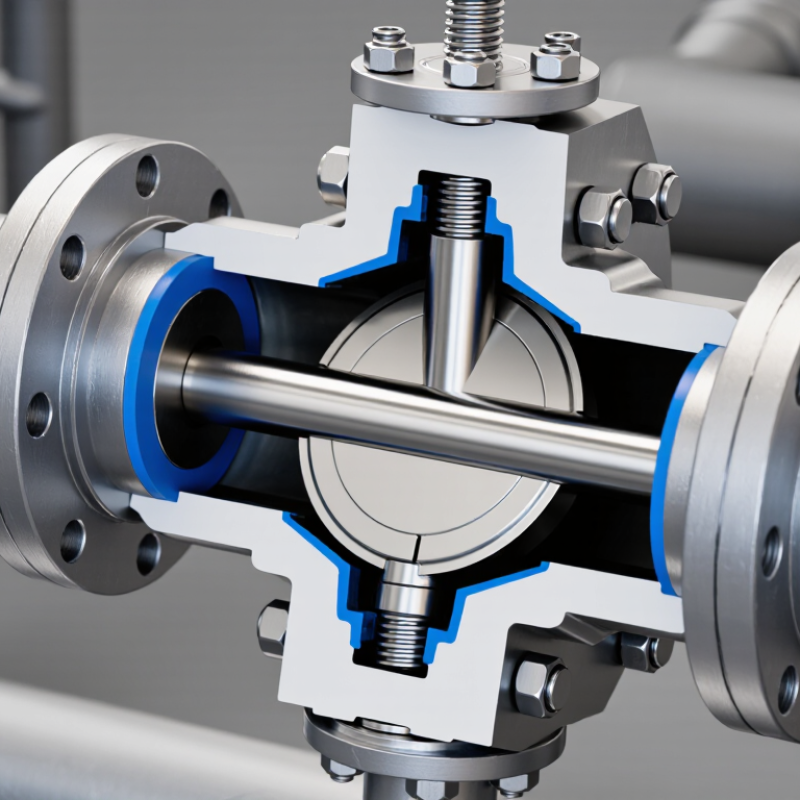
Definition and Operating Principle of a Double-Eccentric Butterfly Valve
What Is a Double Eccentric Butterfly Valve?
A double-eccentric butterfly valve controls flow with a quarter-turn rotating disc. Its stem has two deliberate offsets. The first moves the stem away from the disc center. The second shifts it from the pipe centerline. This geometry changes how the disc meets the seat.
When the valve opens, the disc quickly moves away from the sealing surface. Rubbing is greatly reduced. During closing, the disc contacts the seat mainly near the final part of its rotation. This action helps limit wear and lowers operating torque compared with a concentric butterfly valve. In field inspections, smoother movement often indicates better alignment, although it is not proof of perfect condition.
A double-eccentric design suits water, air, and many industrial services when the seat, pressure rating, and materials match the application. It is not automatically suitable for every fluid. Temperature, pressure, corrosion, and flow speed must be checked before selection. A common mistake is treating reduced friction as maintenance-free operation. Seals still age, debris can damage seating surfaces, and incorrect actuator sizing may cause slow or incomplete closure.
Tips: Confirm the flow direction and seat design before installation. Cycle the valve slowly during commissioning. Check flange alignment, bolt tightening, and actuator travel. If the valve feels unusually tight, stop and investigate instead of forcing it. Small installation errors can become expensive sealing problems.
Disc Offset, Shaft Geometry, and Reduced Seat-Friction Performance
What Is a Double Eccentric Butterfly Valve?
Disc Offset, Shaft Geometry, and Reduced Seat-Friction Performance
A double eccentric butterfly valve uses two deliberate offsets to control disc movement. The shaft sits behind the disc plane and away from the pipe centerline. This geometry creates a cam-like motion during rotation. The disc lifts away from the seat soon after opening begins. Less rubbing occurs.
That detail matters in demanding pipelines. With reduced seat friction, operators often see lower breakaway torque and slower seat wear. The disc does not scrape continuously across the sealing surface. Instead, contact becomes more concentrated near the final closing position. This can support tighter shutoff and longer service intervals when the valve is correctly sized.
Geometry must remain accurate. A small shaft-position error can change the seating angle and increase torque. During inspection, technicians should check disc alignment, shaft play, seat condition, and actuator torque margins. Pressure testing still matters. Reduced friction does not mean friction disappears.
The design is not magic. High temperature, abrasive particles, poor alignment, or unsuitable seat materials can reduce its benefits. In practical maintenance work, a valve may look clean yet show uneven seat polishing. That mark deserves attention. Engineers should compare operating data with design calculations, because real pipeline conditions often challenge ideal assumptions.
Pressure Classes, DN Sizes, and API 609 Design Requirements
What Is a Double Eccentric Butterfly Valve? Pressure Classes, DN Sizes, and API 609 Design Requirements
A double eccentric butterfly valve shifts the stem behind and beside the disc centerline. This geometry reduces seat contact during opening and closing, limiting rubbing and operating torque. It suits water, cooling, fire protection, and process isolation duties. API 609 defines key design, material, pressure-temperature, inspection, and testing requirements for butterfly valves. Category B designs commonly include high-performance, resilient-seated configurations. The standard does not replace project-specific actuator calculations.
Pressure class selection must match temperature, fluid, flange rating, and shutoff requirements. Class 150, 300, and 600 ratings are common in ASME-based systems, while DN 50 through DN 1200 appear frequently in industrial projects. DN indicates nominal size, not the exact bore. Do not treat PN and Class values as interchangeable. They differ by rating system and temperature basis. ASME B16.34 and applicable flange standards should be checked with API 609.
A 2024 industrial valve market report estimated the global market near 78 billion US dollars in 2023, showing the scale of this equipment sector. Yet market size does not guarantee correct selection. In field work, engineers should verify leakage class, disc clearance, shaft materials, and cycle frequency. One practical weakness remains: specifications often copy old DN tables without checking actual piping loads. The boundary is not always obvious. A careful review prevents expensive rework.
Actuation, Installation, Inspection, and Typical Industrial Applications
What Is a Double Eccentric Butterfly Valve?
A double eccentric butterfly valve moves its disc away from the seat centerline in two directions. This design reduces rubbing during opening and closing. It can lower operating torque and extend seat life. Actuation may be pneumatic, electric, or hydraulic. Select the actuator after checking pressure, temperature, medium, and required closing time. The safety position also matters. Some systems need failure-closed operation, while others require failure-open control.
Installation demands careful alignment. Keep the flange faces parallel and clean. Confirm that the disc clears the pipe, gasket, and nearby fittings. Tighten bolts gradually in a cross-pattern. Excessive bolt force can distort the valve body. I have seen commissioning delays caused by poor pipe support, not valve defects. That detail is easy to miss. Before startup, operate the valve through its full travel and verify the position indicator. Inspect for leakage, unusual noise, and actuator hunting.
Inspection should include external corrosion, stem movement, fasteners, and seal condition. Check actuator air pressure or electrical signals against the approved project data. Record torque trends when practical. A rising torque value may indicate deposits, misalignment, or seat damage. These valves commonly serve cooling water, treated water, fire protection, HVAC, power, and process utility systems. They suit large pipelines where compact construction and moderate throttling are valuable. They are not ideal for every abrasive service. Engineers should review erosion risk before selecting them.
What Is a Double Eccentric Butterfly Valve?
Double eccentric butterfly valves are quarter-turn isolation valves in which the disc is offset from the shaft centerline and the pipe centerline. This reduces seat rubbing during operation and supports reliable service in water, wastewater, HVAC, and industrial piping systems.
The chart shows common nominal pressure ranges encountered in typical applications. Electric, pneumatic, or hydraulic actuators may be selected according to valve size, operating torque, cycle frequency, fail-safe requirements, and available utilities. During installation, the disc should be kept in the recommended position to prevent seat damage, while inspection normally includes flange alignment, shaft and fastener condition, seat leakage, actuator operation, and corrosion.