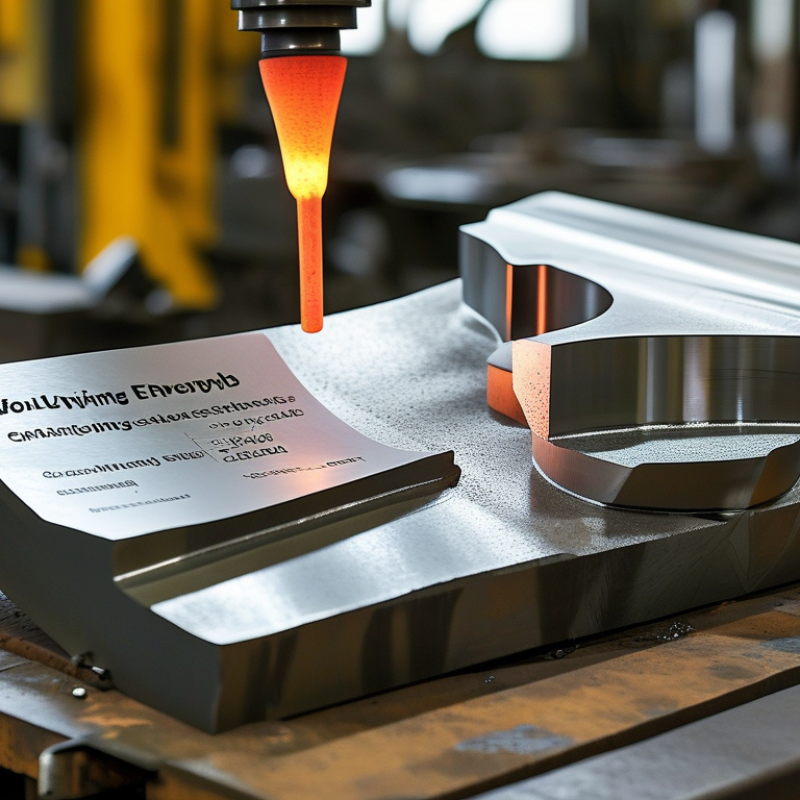
How to Choose the Right Metal Forging Supplier?

Choosing the right Metal Forging supplier begins with evidence, not attractive brochures. Global demand is expanding. Grand View Research estimated the global metal forging market at approximately USD 83.6 billion in 2023. Its report also projects continued growth through 2030, driven by automotive, aerospace, energy, and industrial equipment applications. These figures suggest opportunity, but they also increase supplier competition.

A reliable evaluation should examine forging capacity, alloy experience, tooling control, heat treatment, inspection systems, and delivery history. Ask for measurable evidence. Review material certificates, dimensional reports, non-destructive testing records, and corrective-action examples. A capable supplier should explain grain flow, die wear, machining allowances, and process tolerances without hiding behind technical language. As manufacturing expert William F. Hosford wrote, “Forging is the working of metal by plastic deformation.” His principle matters because deformation control directly affects strength, fatigue performance, and consistency.

The U.S. Department of Energy has identified metal forming as an energy-intensive manufacturing activity. Therefore, energy management and process efficiency deserve attention during supplier audits. A lower quotation may conceal unstable tooling, excessive scrap, or weak traceability. That assumption is often wrong. Price still matters, but part performance matters more. Inspect the shop floor if possible. Look for calibrated instruments, controlled heating zones, clean material storage, and operators who can describe the process clearly. Supplier selection is not perfectly predictable. However, a documented audit, realistic sample order, and transparent communication can reduce avoidable risk. Your best supplier may not be the largest one. It should be the one that repeatedly turns specifications into dependable forgings.

How to Choose the Right Metal Forging Supplier?

Define Your Metal Forging Requirements

Choosing a metal forging supplier begins with a precise definition of your requirements. A vague request creates vague quotations, hidden assumptions, and expensive revisions. State the part’s function, operating load, temperature range, service life, and failure risks. Then specify the alloy, raw material condition, forging method, dimensions, tolerances, surface finish, and heat-treatment requirements.

Material selection deserves evidence. The World Steel Association reported approximately 1.89 billion tonnes of crude steel production in 2023. This large supply does not make every grade interchangeable. Include the exact material standard, chemical limits, mechanical targets, and required test methods. Refer to standards such as ASTM A370 for mechanical testing and ISO 286 for dimensional tolerances. Also define inspection levels, ultrasonic testing, magnetic-particle testing, and material traceability.

Production details matter just as much. State annual demand, batch size, prototype quantity, delivery window, packaging method, and acceptance documents. A supplier should understand whether a 0.2-millimeter tolerance applies before or after machining. That detail changes tooling, process control, and cost. The U.S. Geological Survey’s Mineral Commodity Summaries 2024 highlights steel’s global scale, but volume alone cannot guarantee quality. A common mistake is requesting “high strength” without naming a target value. I have seen otherwise useful drawings fail because datum points were unclear. Leave room for technical review. Some requirements may be unnecessary, while others may still be missing.

Evaluate Supplier Capabilities and Manufacturing Expertise

Choosing a metal forging supplier starts with manufacturing evidence, not polished sales language. Ask which alloys, part sizes, tolerances, and annual volumes the facility handles regularly. A capable supplier should explain its forging method, press capacity, die design process, and material flow. Request sample inspection reports. Look for clear records, not vague promises.

Visit the production area, if possible, and observe die storage, furnace controls, and in-process inspection. Experienced teams monitor billet temperature, reduction ratios, grain flow, and cooling rates during production. They should also describe heat treatment, machining, surface finishing, and non-destructive testing in practical terms. Ask how operators react when results drift. That answer often reveals more than a certificate. Check calibration schedules, operator training, and lot traceability from incoming material to shipment. Independent test reports can support these claims, but they do not replace process understanding.

A supplier’s engineering team should review drawings and flag unrealistic tolerances before tooling begins. They may recommend a radius change, a draft adjustment, or a different alloy condition. Such feedback can reduce scrap and extend die life. No process is perfect. Start with a controlled trial and compare dimensional data, hardness, microstructure, and defect rates. I would not treat one successful batch as proof of long-term reliability. Production pressure can expose weaknesses that samples hide. Keep asking for corrective-action records and realistic delivery capacity.

Verify Materials, Quality Systems, and Industry Compliance

Choosing a metal forging supplier requires more than comparing prices. Start by verifying the material itself. Ask for heat numbers, mill certificates, and traceability records. These documents should connect the raw billet to the finished part. A practical check includes reviewing chemical composition, mechanical properties, and heat-treatment results. If the supplier cannot explain a discrepancy clearly, pause the evaluation. Trust is built through evidence, not confident promises. Details matter.

An effective quality system should be visible in daily work. Request quality certifications, inspection plans, calibration records, and nonconformance procedures. Ask how operators control forging temperature, die wear, grain flow, and dimensional variation. During a factory visit, look for labeled materials, clean inspection areas, and records matching production batches. In my experience, strong paperwork means little when the shop floor is disorganized. That observation may sound harsh, but it prevents expensive surprises. Review sample inspection reports and arrange independent testing when appropriate.

Tips: Compare the supplier’s controls with your industry’s technical and compliance requirements. Confirm product marking, document retention, testing frequency, and export responsibilities in writing. Check whether audits are performed by qualified personnel. Never accept a certificate without checking its scope and validity. Ask who performs heat treatment, machining, and testing. Recheck critical assumptions. That extra step can reveal gaps before shipment.

How to Choose the Right Metal Forging Supplier: Verify Materials, Quality Systems, and Industry Compliance
Evaluation Dimension What to Verify Relevant Evidence or Standard Practical Verification Method Priority
Material Identity Confirm the alloy grade, product form, heat number, and material condition match the purchase specification. Material test report (MTR) containing chemical composition, mechanical properties, heat number, and applicable material standard. Compare the MTR with the purchase order and perform positive material identification when required. High
Traceability Ensure raw material and forged parts can be traced from receipt through processing, inspection, and shipment. Heat-number tracking, lot records, traveler documentation, and permanent or controlled part identification. Follow one sample lot backward to the incoming material and forward to the final inspection record. High
Forging Capability Assess whether the supplier has suitable presses, hammers, dies, heating equipment, and capacity for the required geometry and volume. Equipment list, maximum forging force, workpiece size range, die-maintenance records, and production-capacity data. Review capability studies, sample parts, process flow, and planned capacity against forecast demand. High
Heat Treatment Verify that quenching, tempering, annealing, normalizing, or solution treatment is controlled for the selected alloy. Qualified heat-treatment procedure, furnace calibration records, temperature charts, and hardness results. Audit furnace records and confirm that equipment calibration is traceable to recognized national or international standards. High
Mechanical Properties Confirm tensile strength, yield strength, elongation, reduction of area, hardness, and impact properties where specified. Test reports issued by a competent laboratory and results meeting the applicable material or customer specification. Check test direction, specimen location, test temperature, sampling frequency, and acceptance criteria. High
Non-Destructive Testing Determine whether ultrasonic, magnetic-particle, dye-penetrant, or radiographic inspection is required for the application. Written NDT procedure, personnel qualification records, inspection reports, and acceptance levels. Verify inspector qualifications and confirm that the selected method is suitable for the alloy, geometry, and defect risks. High
Dimensional Control Evaluate the supplier’s ability to maintain drawing tolerances, datum references, surface condition, and machining allowances. Inspection plans, calibrated measuring equipment, capability studies, and dimensional inspection reports. Review first-article or pre-production inspection results and check calibration status of critical instruments. High
Quality Management System Confirm that the supplier operates a documented system for document control, nonconformance management, corrective action, and internal audits. Current certification to ISO 9001 or an industry-specific quality standard where applicable. Validate the certificate scope, issuing body, expiration date, manufacturing site, and audit status. High
Automotive Compliance For automotive components, verify process controls, customer-specific requirements, and production-part approval practices. IATF 16949 certification where contractually required, APQP records, PFMEA, control plan, and PPAP documentation. Review the latest approved PPAP package and confirm that special characteristics are controlled in production. High
Aerospace Compliance For aerospace parts, verify quality controls, special-process oversight, configuration management, and customer approval requirements. AS9100 certification where required, approved special-process sources, and aerospace material traceability records. Confirm certification scope and review approval status for heat treatment, NDT, testing, and other special processes. High
Pressure Equipment Requirements For pressure-retaining parts, verify material control, manufacturing procedures, inspection, and documentation required by the design code. Applicable pressure-equipment regulations, design-code requirements, qualification records, and inspection certificates. Map each contractual requirement to a controlled record before production approval. High
Welding and Joining If welding or repair welding is permitted, verify procedure qualification, welder qualification, and repair authorization. Qualified welding procedures, welder performance qualifications, repair instructions, and post-weld heat-treatment records. Confirm repair limits and review weld inspection results before accepting repaired forgings. Medium
Process Validation Check whether critical forging, heat-treatment, machining, and inspection processes are validated and repeatable. Process qualification records, capability studies, control plans, and approved work instructions. Compare documented parameters with actual shop-floor settings and production records. High
Defect Prevention Assess controls for laps, folds, cracks, underfill, inclusions, decarburization, distortion, and improper grain flow. Process FMEA, defect catalog, inspection criteria, preventive controls, and corrective-action history. Review recent nonconformances and verify that root-cause actions were implemented and effectiveness-checked. High
Laboratory Competence Confirm that chemical, mechanical, metallographic, and NDT testing is performed by competent personnel and equipment. Laboratory accreditation such as ISO/IEC 17025 where required, calibration records, and method validation evidence. Check report authorization, test-method revision, equipment calibration, and laboratory scope. Medium
Supplier Transparency Evaluate willingness to provide complete records, disclose subcontracted processes, and support audits. Approved-supplier documentation, subcontractor list, audit policy, and record-retention procedure. Include audit rights, notification of process changes, and record-retention periods in the contract. High
Delivery Performance Review the supplier’s ability to meet agreed lead times, quantities, packaging requirements, and documentation deadlines. On-time delivery data, capacity plan, production schedule, and documented escalation process. Request historical performance data and assess contingency plans for equipment failure or material shortages. Medium
Environmental and Safety Controls Consider controls for energy use, emissions, hazardous substances, worker safety, and waste generated during forging. Applicable environmental permits, safety procedures, chemical-management records, and ISO 14001 certification when relevant. Conduct a site review focused on furnace emissions, quench media, ventilation, chemical storage, and waste handling. Standard
Commercial Risk Signals Identify unusually low pricing, incomplete documentation, unexplained subcontracting, repeated concessions, or reluctance to support audits. Quotation assumptions, deviation requests, concession records, audit findings, and corrective-action reports. Use a documented risk review before approval and require written resolution of critical gaps. High
Final Approval Decision Approve the supplier only when technical capability, material traceability, quality controls, and applicable compliance obligations are demonstrated. Completed supplier questionnaire, audit report, validated samples, approved quality agreement, and risk assessment. Use a weighted scorecard with mandatory pass criteria for material identity, traceability, critical testing, and regulatory compliance. High

Compare Pricing, Lead Times, and Production Flexibility

How to Choose the Right Metal Forging Supplier?

Price is only the opening figure. Ask for the assumptions behind every quotation. A reliable quote should separate tooling, raw material, machining, inspection, packaging, and freight. Check whether heat treatment and material certificates are included. A low price can hide expensive revisions later. Compare total delivered cost, not just the unit price. Also review minimum order quantities and payment terms.

Lead times deserve equal attention. Request a schedule covering die design, tooling, first-article approval, production, and shipment. Lead times fluctuate. Ask how the supplier manages steel shortages, equipment downtime, and urgent engineering changes. A practical supplier should provide progress updates and identify risks early. During a factory review, inspect the planning board and ask for recent delivery records. Numbers are useful, but evidence matters more.

Production flexibility can protect your project when demand changes. Confirm whether the supplier can handle pilot batches, repeat orders, and gradual volume increases. Ask about available forging presses, alloy experience, die storage, and secondary machining capacity. A flexible process may reduce waste, but it can also increase setup costs. I have seen attractive schedules fail after a minor drawing revision. Leave realistic approval time. A supplier willing to challenge unclear tolerances may be more dependable than one promising everything.

Select a Supplier Through Samples, Audits, and Contract Review

Choosing the right metal forging supplier requires evidence, not impressive brochures.

Request production samples made from the same alloy, heat-treatment route, and tooling concept as your intended parts. Examine grain flow, flash removal, surface defects, dimensional reports, and hardness results. Ask for traceability from billet heat number to final inspection.

A beautiful sample proves little if its process cannot be repeated.

Audit the supplier on the shop floor. Check furnace calibration, die maintenance, operator training, nonconformance control, and subcontractor management.

McKinsey’s 2020 Global Supply Chain Survey found that 93% of supply-chain leaders planned to increase resilience after major disruptions.

That figure supports deeper audits, not casual supplier approval.

ISO’s 2022 Survey recorded more than 1.2 million ISO 9001 certificates worldwide, yet certification alone does not guarantee forging capability.

Contract review should define material standards, sampling plans, inspection methods, packaging, delivery tolerances, and corrective-action deadlines.

Include approval requirements for tooling, process changes, and secondary operations. Require complete inspection records, not only a certificate of conformity. Review warranty language and ownership of dies carefully.

Small wording matters.

A weakness remains: audits can capture one good shift, while production problems appear months later. Add periodic sample testing and performance reviews, then adjust the controls when evidence changes.

Go to Top