How to Choose a PCB Electroplating Rectifier Supplier in 2026
Choosing a Pcb Electroplating Rectifier Supplier in 2026 is not just a price comparison. The rectifier shapes the current delivered to each plating line, affecting process consistency, equipment uptime, and production planning. A polished brochure is useful, but it cannot replace performance data from a real load test.
Electrochemist Michael Faraday wrote, “Nothing is too wonderful to be true, if it be consistent with the laws of nature.” His reminder suits this decision: verify claims against measurable results. Ask suppliers to document output stability, ripple, current-control range, cooling requirements, and performance under your actual operating conditions. Check whether their engineers understand your bath chemistry, busbar layout, and production schedule—not merely the power rating on a nameplate.
Look closely at support, too. A rectifier that stops during a busy shift can leave operators waiting beside an idle plating line. Ask about commissioning, spare parts, fault diagnostics, and response times. Request references from PCB plants with comparable workloads, then speak with their maintenance teams. Ask for proof. A supplier may offer strong specifications yet provide limited after-sales help; that trade-off deserves scrutiny. No checklist can remove every risk, and some details only emerge after installation. Still, careful questions make it easier to choose a partner whose equipment and service fit your process, rather than a supplier who simply offers the lowest quote.
Define PCB Electroplating Requirements and Operating Conditions
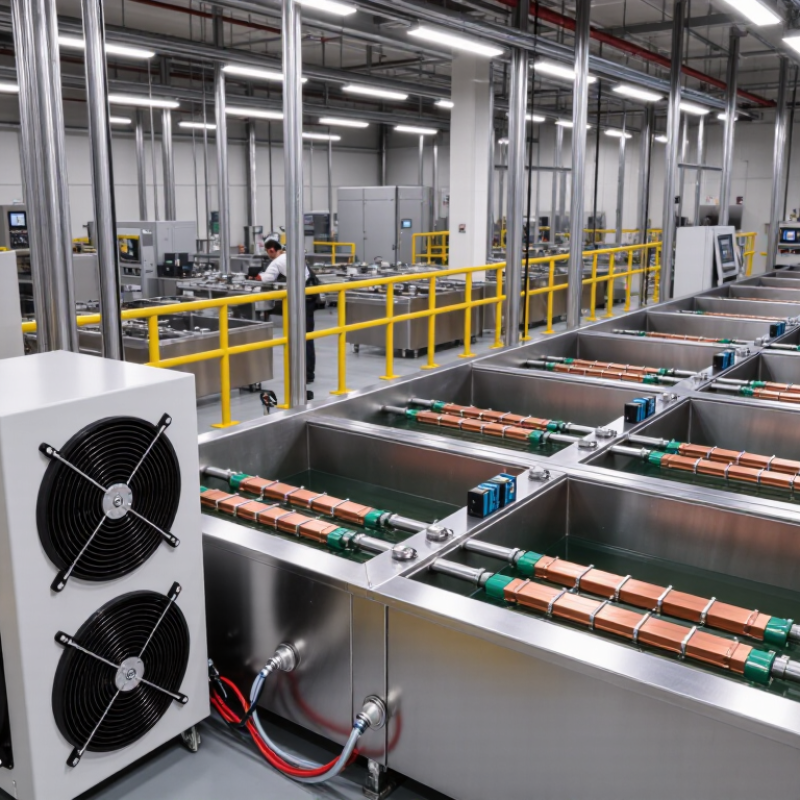
A PCB electroplating rectifier should match the process, not just a headline amperage. Define the target copper thickness, board dimensions, and plating method.
Calculate required current from the active surface area and the process’s current-density range. Include both sides of each panel, plus the number of panels plated at once. Small details matter. A tank running one panel today may run a fuller load next month.
Record the bath chemistry, operating temperature, and expected production cycle. These conditions affect the process and can influence the rectifier’s duty requirements. Specify the needed output voltage, current range, and whether steady DC or a pulse waveform is required.
Allow headroom for cable losses and changing loads, but avoid sizing by guesswork. A tidy spreadsheet can still hide uneven current distribution across a rack. Check calculations against actual production measurements where possible.
Also consider cooling, ventilation, control accuracy, and how operators will monitor output during a long shift. Record them. Requirements often change after a trial run, so leave room to review assumptions before finalizing the supplier specification.
Compare Rectifier Capacity, Waveforms, and Control Features
How to Choose a PCB Electroplating Rectifier Supplier in 2026
Compare Rectifier Capacity, Waveforms, and Control Features
Prismark’s 2023 estimate valued global PCB production at about US$68 billion, reflecting a large, technically varied market. For plating lines, compare rectifier capacity against the actual wetted panel area and required current density—not just the maximum amp rating. Check continuous-duty output, voltage headroom, and performance across your normal load range. A unit sized too tightly may struggle during production peaks; excessive capacity can add cost without improving deposits. Ask suppliers to demonstrate stable output at your operating load, with cables and connections included.
Waveform options matter when plating high-aspect-ratio holes or demanding uniform thickness. Compare pulse and pulse-reverse settings, including frequency, duty cycle, and reverse-current control. Request waveform measurements at the tank terminals under load, not only a screen capture from the rectifier. The cable run changes what reaches the bath. Small detail, big effect. Also inspect current and voltage feedback, recipe storage, alarms, and production data logging. IPC’s plating process guidance emphasizes controlling process conditions; still, a sophisticated interface cannot compensate for poor setup. Run a trial using your chemistry, panel design, and line speed. That test may expose a gap between the brochure and the tank.
Check Safety, Compliance, Reliability, and Quality Evidence
A PCB electroplating rectifier works around high current, heat, and demanding production schedules. Ask suppliers how they protect operators during installation and service. Look for clear details on insulation, grounding, overtemperature protection, and emergency shutdown. Ask for test records, not only a feature list. That matters. Check whether documented safety practices match the equipment configuration you will receive.
Compliance claims need context. Request current certificates, test reports, and traceability for key components. Confirm which standards were assessed and whether the documents apply to the exact rectifier model. A certificate alone does not prove safe operation in your plant. Ask who performs commissioning and what checks are recorded. If an answer is vague, pause and verify it.
Reliability is best judged with evidence from real operating conditions. Request output accuracy and ripple measurements at relevant current levels, plus thermal or load-test records. Ask how faults are diagnosed, which spare parts are stocked, and how quickly technical support can respond. Small details count. Compare the supplier’s acceptance test with your plating process, including cable length and duty cycle. A polished datasheet may still leave gaps; even experienced buyers can overlook service access or calibration intervals. Review those points before approval.
Assess Supplier Expertise, Customization, and After-Sales Support
Choosing a PCB electroplating rectifier supplier in 2026 means checking process knowledge, not just the nameplate rating. Ask engineers how they size current for your panel area, bath chemistry, and target copper thickness. Request commissioning records from comparable lines, plus ripple, current-uniformity, and fault-response test results. The World Economic Forum’s Future of Jobs Report 2025 found that skills gaps were a major transformation barrier for 63% of employers. Supplier engineers should train operators, not simply deliver equipment.
A useful proposal should match your actual production needs. Ask whether current ramps, pulse or reverse-pulse modes, recipe storage, and control-system interfaces can be configured for your process. Require a written operating envelope, including limits for voltage, current, and duty cycle. Measure output at both the rectifier and tank busbar; cable losses can obscure a mismatch. Numbers matter. Validate any custom settings with test panels before relying on them in production.
Agree on after-sales support before purchase: response hours, remote diagnostics, spare-parts availability, and escalation contacts. Ask for service records or references, not only a promised response time. Test it onsite. I would still leave room for doubt: a polished factory trial may not reproduce a crowded, warm production floor, so confirm performance during commissioning under realistic line conditions.
Compare Lifecycle Costs and Validate Performance Before Purchase
In 2026, a rectifier’s purchase price tells only part of its cost. Compare expected energy use, cooling demand, scheduled service, spare modules, and production losses during downtime over its planned life. Ask suppliers to state their assumptions. An efficiency figure without load conditions is weak evidence. Small differences matter. At a continuous plating line, they accumulate.
Validate performance against your own process window, not a generic brochure. Request measurements at low and high output, including current accuracy, voltage stability, ripple, and response to load changes. Where possible, witness a factory test using calibrated instruments. Compare the readings with acceptance limits agreed before ordering. Check alarms, ramp control, and communication with the plant control system. Test matters. It is easy to trust a clean test sheet too quickly. Installation conditions may expose issues a bench test misses.
Include service response, commissioning time, documentation quality, and module replacement time in the lifecycle estimate. Ask for references from facilities running similar plating loads, and confirm what support remains after warranty expiry. Keep the quote and test records. One estimate may still be wrong. Production schedules change. Leave room for that.