Top China Swiss Turning Services for Titanium Bone Screws
Producing titanium bone screws demands more than compact machines and sharp tools. It requires stable processes, verified materials, and disciplined inspection. Swiss Turning Services For Titanium Bone Screws can support these demands through precise, repeatable machining. Long, slender screws need careful support during cutting. Tiny threads must remain clean and consistent. Even a small burr can affect surgical handling or assembly.
W. Edwards Deming, a respected quality expert, stated, “Quality comes not from inspection, but from the improvement of the production process.” His principle remains highly relevant here. Reliable suppliers control tool wear, coolant conditions, spindle alignment, and dimensional variation throughout production. They also document titanium grades, lot traceability, cleaning procedures, and final inspection results. These details are not decoration. They protect consistency.
Small errors matter.
A capable Swiss machining partner should understand medical-device expectations, not merely meet a drawing. Engineers may use live tooling, guide bushings, and carefully selected carbide tools to protect surface quality. They should examine thread form, head geometry, concentricity, and surface finish with calibrated equipment. Experience also matters when titanium generates heat or reacts unpredictably during cutting.
No supplier is perfect. Tool life can change. Inspection plans may miss an unusual defect. That uncomfortable reality deserves attention. Strong manufacturers review failures, question assumptions, and improve their process records. This attitude supports dependable production for orthopedic applications. Before choosing a supplier, buyers should evaluate technical communication, validation experience, production capacity, and evidence of consistent quality. The best results come from transparency, not impressive claims alone.
Titanium Bone Screws and the Role of Swiss Turning
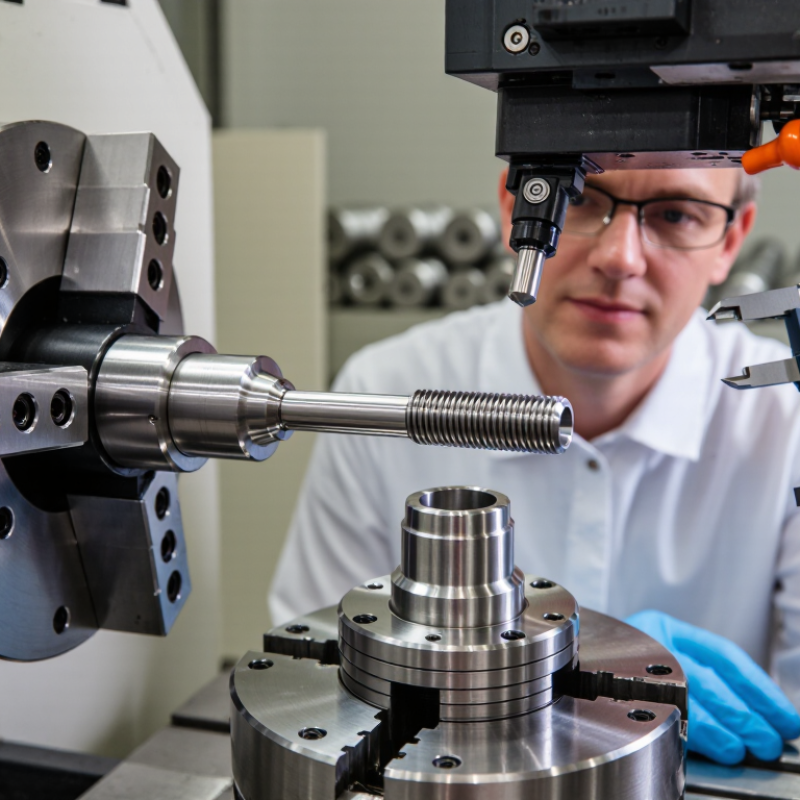
Titanium bone screws demand controlled machining, not just attractive surface finishing. A 2024 market report estimated the global bone screws market at approximately USD 1.2 billion in 2023, with continued growth driven by trauma and spinal procedures. That expansion increases pressure on manufacturers to improve repeatability. Swiss turning supports this need through synchronized cutting, bar feeding, and stable production of small diameters. The process suits titanium alloys such as Ti-6Al-4V, commonly specified under ASTM F136.
Every thread matters. A sharp insert forms cleaner crests and reduces burrs around the drive recess. Careful coolant delivery also limits heat, since titanium conducts heat poorly. In practice, experienced machinists inspect thread pitch, core diameter, head geometry, and surface condition between production batches. ISO 13485-based quality systems reinforce traceability, while ISO 10993 evaluations address biological safety after manufacturing and cleaning. These standards guide the process, but they cannot replace practical judgment.
Swiss turning is not automatically perfect. Tool wear may remain difficult to detect before dimensions drift. That weakness deserves attention. Statistical process control, optical measurement, and documented first-article inspection can reduce the risk. A 2023 industry quality report on orthopedic manufacturing identified dimensional consistency and contamination control as persistent production concerns. For titanium bone screws, reliable Swiss turning means fewer surprises under the microscope, during cleaning, and at final inspection.

Key Manufacturing Requirements for Medical-Grade Titanium Screws
Top China Swiss Turning Services for Titanium Bone Screws
Manufacturing medical-grade titanium screws demands more than precise Swiss turning. Ti-6Al-4V ELI is commonly selected for its strength and biocompatibility. However, its low thermal conductivity can generate heat during cutting. Stable tooling, controlled feeds, and sharp inserts help protect thread geometry. Small burrs can affect insertion and create avoidable clinical concerns. Thread profiles, head dimensions, and cannulation features require documented inspection. Critical measurements should be checked with calibrated equipment and recorded by lot.
Tips: Control heat early. Inspect threads closely. Keep every record traceable.
A reliable production route includes material certificates, supplier controls, and clear process validation. Medical manufacturing systems should support risk management and consistent documentation. Surface finishing must remove residues without changing critical dimensions. Cleaning, passivation, and packaging should be evaluated for the intended use. I have seen minor setup changes influence thread fit more than expected. That is why first-article approval and in-process inspection remain valuable. Not every tolerance needs tightening. Excessive precision can increase cost without improving performance. The better approach links each tolerance to function, safety, and inspection capability. Swiss turning can deliver repeatable results, but only when operators understand titanium behavior. Feedback from machining and quality teams should refine the process continuously. Mistakes may still occur. Transparent corrective action is more trustworthy than perfect-looking paperwork.
Top China Swiss Turning Services for Titanium Bone Screws - Key Manufacturing Requirements for Medical-Grade Titanium Screws
| Manufacturing Dimension | Medical-Grade Requirement or Typical Control | Why It Matters for Bone Screws | Verification or Reference |
|---|---|---|---|
| Base Material | Titanium alloy Ti-6Al-4V ELI, also known as Grade 23, is commonly selected for implantable bone screws. | Provides a high strength-to-weight ratio, corrosion resistance, and established biological history for orthopedic implants. | ASTM F136; ISO 5832-3; material certificate and heat or lot traceability. |
| Chemical Composition | Typical Grade 23 limits include aluminum 5.5–6.5%, vanadium 3.5–4.5%, iron maximum 0.25%, oxygen maximum 0.13%, carbon maximum 0.08%, nitrogen maximum 0.05%, and hydrogen maximum 0.012%, with titanium as the balance. | Controlled chemistry supports consistent mechanical properties and reduces the risk of unsuitable material entering production. | Certified mill test report, positive material identification, and lot-based chemical analysis where required. |
| Material Condition | Use implant-grade bar or wire with documented diameter, surface condition, heat treatment, and material lot identification. | Stable incoming material reduces dimensional variation and supports complete traceability from raw stock to finished screw. | Incoming inspection records, supplier certificates, and batch or heat-number reconciliation. |
| Swiss Turning Capability | Guide-bushing or sliding-headstock turning is suitable for long, slender screws and repeat production of small-diameter features. | Improves support near the cutting zone and helps control runout, thread location, and concentricity. | Machine capability study, first-article inspection, in-process gauging, and statistical process control. |
| Dimensional Tolerances | Tolerances must be defined on the approved drawing. Non-critical turned dimensions may commonly use approximately ±0.02 to ±0.05 mm, while functional features require drawing-specific limits. | Thread fit, head geometry, driving recess, and bone-contact dimensions directly affect insertion and clinical performance. | Engineering drawing, calibrated micrometers, optical measurement, thread gauges, and CMM inspection where applicable. |
| Thread Form and Accuracy | Thread profile, pitch, major diameter, minor diameter, crest condition, and fit class must follow the approved implant design and applicable screw specification. | Accurate threads support predictable insertion torque, fixation, and compatibility with the mating instrument or implant system. | GO/NO-GO gauges, profile measurement, optical inspection, and functional mating tests. |
| Cutting and Chip Control | Use tooling and cutting conditions appropriate for titanium, with controlled heat generation, stable chip evacuation, and coolant management. | Titanium has low thermal conductivity and can generate localized heat, tool wear, burrs, and surface damage if poorly machined. | Tool-life records, visual inspection, burr checks, process validation, and documented coolant controls. |
| Surface Finish | Specify roughness by functional surface. A commonly requested machined target for selected non-contact surfaces may be Ra ≤ 0.8 µm; the approved drawing controls the actual requirement. | Controlled surface texture helps reduce tissue irritation, contamination retention, and stress concentrations. | Profilometer measurement, surface comparison standards, and documented inspection results. |
| Burr and Edge Control | Remove machining burrs without rounding functional thread crests, damaging the driving recess, or altering the specified head and tip geometry. | Loose burrs and sharp unintended edges can affect insertion, cleanliness, handling, and tissue contact. | Magnified visual inspection, tactile checks where appropriate, and documented deburring validation. |
| Heat Treatment | Apply only the heat-treatment condition specified by the material and product requirements; prevent distortion, contamination, and uncontrolled alpha-case formation. | Mechanical strength, ductility, fatigue behavior, and surface integrity can be affected by thermal processing. | Approved process records, furnace calibration, hardness or tensile testing, and material certification. |
| Cleaning and Passivation | Use a validated cleaning process to remove machining oils, particles, metal debris, and processing residues. Titanium naturally forms a protective oxide layer; additional chemical treatment must be specifically justified and validated. | Clean surfaces reduce contamination risk and support biocompatibility and sterilization performance. | Cleaning validation, residue testing, particulate inspection, and process-batch records. |
| Biocompatibility Assessment | Evaluate the finished device, including material, manufacturing residues, surface treatment, and packaging, using a risk-based biological evaluation. | Biological safety depends on the final finished product, not only the raw titanium alloy. | ISO 10993 series and documented biological evaluation plan or report. |
| Quality Management System | Manufacturing controls should operate under a medical-device quality system with documented procedures, training, change control, nonconformance handling, and corrective action. | A controlled quality system provides repeatability and evidence that production requirements are consistently met. | ISO 13485 certification or equivalent documented quality-system controls. |
| Risk Management | Identify and control risks related to fracture, thread damage, dimensional mismatch, contamination, corrosion, packaging failure, and incorrect labeling. | Risk-based controls connect design characteristics with inspection and process-validation activities. | ISO 14971 risk-management file and linked verification records. |
| Inspection and Testing | Perform first-article, in-process, final dimensional, visual, cleanliness, and functional inspections according to the approved control plan. | Multiple inspection stages detect process drift before nonconforming screws are released. | Inspection plan, calibrated equipment, sampling rationale, test reports, and device history records. |
| Mechanical Performance | Evaluate insertion torque, driving strength, axial pullout, torsional strength, fatigue, or other properties when required by the screw design and intended use. | Testing confirms that the screw withstands expected surgical insertion and in-use loads without stripping or fracture. | Product-specific validation protocol, applicable ASTM methods, and approved acceptance criteria. |
| Packaging and Sterilization | Use validated packaging appropriate to the supplied condition. If provided sterile, sterilization and packaging must be validated for the specified sterile-barrier and shelf-life claims. | Packaging protects the implant from particles, moisture, handling damage, and loss of sterility where applicable. | ISO 11607 for sterile-barrier packaging; applicable sterilization validation standards and shelf-life testing. |
| Traceability and Documentation | Maintain links among raw-material heat, machine route, operator or equipment records, inspection results, cleaning batch, packaging lot, and release authorization. | Traceability supports investigation, field action, regulatory compliance, and consistent quality over the product lifecycle. | Device history record, certificate of conformity, inspection report, and retention policy. |
How China Swiss Turning Services Produce Bone Screw Components
Top China Swiss Turning Services for Titanium Bone Screws
How China Swiss Turning Services Produce Bone Screw Components
Producing titanium bone screw components starts with controlled material selection. Titanium bar stock must match the approved drawing and medical-grade requirements. Swiss turning machines guide slender material close to the cutting tool. This reduces vibration during small-diameter machining. It also supports accurate shafts, threads, tips, and drive features. Coolant delivery matters. Poor flow can create heat marks or unstable dimensions.
Experienced machinists monitor tool wear throughout the run. Titanium can work-harden quickly when cutting conditions drift. Sharp tools, suitable speeds, and stable feeds help protect thread quality. Live tooling can produce cross-holes or recesses without repeated setups. Fewer setups often reduce alignment errors. Small details matter most.
Inspection should continue beyond the first article. Optical systems check thread profiles, lengths, and critical diameters. Thread gauges confirm functional fit. Surface checks can reveal burrs near the drive recess. Each production lot also needs clear material and process traceability. Cleaning and controlled packaging help prevent contamination before assembly.
No process is flawless. A smooth surface does not prove reliable performance. Tool wear may remain unnoticed between inspections. For this reason, responsible production teams review measurement trends, not isolated results. They also compare machining records with customer drawings and validation requirements. This practical discipline makes Swiss turning more dependable for titanium bone screw components.
Quality Control and Compliance in Titanium Screw Manufacturing
Top China Swiss Turning Services for Titanium Bone Screws
Titanium bone screws demand more than tight dimensions. Swiss turning supports stable control of threads, profiles, and concentricity. Experienced machinists monitor tool wear because titanium can generate heat and encourage work hardening. Cutting data should be recorded, not remembered. In-process checks use calibrated gauges, optical measurement, and thread inspection. Small errors matter.
Quality control begins with verified material certificates and clear lot identification. For implant-grade titanium, specifications such as ASTM F136 may apply, depending on design and market. Each lot needs traceability from incoming bar stock through machining, cleaning, packaging, and release. Surface inspection should identify burrs, tears, discoloration, and embedded particles. These details can hide beneath polished surfaces. Cleaning validation and packaging controls also require direct evidence, not assumptions.
Compliance requires a documented quality system, risk-based controls, and controlled changes. ISO 13485 and ISO 14971 may support the manufacturing framework, while biological evaluation depends on the finished device and its intended use. Records should show inspection results, equipment calibration, nonconformance decisions, and corrective actions. No process is perfect. A missed burr or incomplete record can reveal a weak system. Suppliers should welcome audits and explain failures plainly. Certification claims must match current, verifiable documents.
Selecting a Reliable China Swiss Turning Service Provider
Choosing a China Swiss turning service provider for titanium bone screws requires practical verification. Titanium can generate heat, burrs, and rapid tool wear during machining. An experienced supplier should control cutting speed, coolant flow, and chip evacuation carefully. Ask for evidence of ISO 13485-based quality procedures and complete material traceability. Inspection records should include thread accuracy, surface finish, concentricity, and critical dimensions.
Tips: Request sample screws before approving production. Review inspection reports, calibration certificates, and titanium material certificates. Confirm how the supplier manages tool replacement and production changes. Clear drawings and tolerances prevent expensive misunderstandings. Small details matter.
Reliable communication also reveals manufacturing discipline. The provider should explain its Swiss turning capacity, secondary operations, cleaning process, and packaging controls. For bone screws, thread profiles must remain consistent under repeated inspection. Optical measurement and calibrated gauges can support this control. Ask how nonconforming parts are isolated and documented. A supplier that hides problems is risky.
Remote audits are useful, but they are not perfect. A polished presentation cannot replace physical samples and traceable records. Some providers may promise very tight tolerances too quickly. That should invite deeper questions, not immediate trust. Discuss production volume, lead times, corrective actions, and technical support before signing an agreement. Reliable performance grows from verified processes, honest reporting, and steady communication.