
What Are China’s Top Fresh Fruit Export Packaging Solutions?

Fresh fruit reaches distant markets through a fragile chain of temperature, humidity, handling, and time. Fresh Fruit Export Packaging Solutions must protect quality without blocking airflow or creating unnecessary waste. A carton can look strong, yet fail when condensation softens its fibers.

The Food and Agriculture Organization reported that approximately 14% of global food production is lost between harvest and wholesale. Fruits and vegetables remain especially vulnerable because they continue respiring after harvest. UNEP’s Food Waste Index Report 2024 also estimated 1.05 billion tonnes of food waste in 2022. Packaging cannot solve every loss. However, correctly designed packs can reduce bruising, moisture damage, and temperature abuse.

Chris Watkins, a Cornell University postharvest specialist, has emphasized: “Packaging is part of the postharvest system, not an afterthought.” That principle should guide exporters. Ventilated cartons can support cooling. Molded pulp trays can separate delicate berries. Modified-atmosphere films may extend freshness, but only when matched with the correct fruit and temperature. Even small design choices matter, such as drainage holes, corner strength, and pallet stability.

This guide examines practical Fresh Fruit Export Packaging Solutions for berries, citrus, stone fruit, apples, and tropical produce. It also considers recyclable materials, traceability labels, humidity control, and cold-chain compatibility. Real shipments are rarely perfect. A package that performs well in a laboratory may struggle on a humid loading dock. That gap deserves attention. Reliable packaging decisions should combine supplier testing, transport trials, post-arrival inspection, and recognized food-contact and export requirements. The best solution protects the fruit, respects the destination market, and avoids promising more than the evidence supports.
What Are China’s Top Fresh Fruit Export Packaging Solutions?

Fresh Fruit Export Packaging Requirements in China

China’s fresh fruit export packaging must protect quality, meet food-contact rules, and survive long transport. The FAO’s State of Food and Agriculture 2019 reports that 14% of food is lost between harvest and wholesale. Fruits can deteriorate faster when ventilation, temperature, or cushioning fails.

Export cartons should resist compression and moisture. Corrugated fiberboard is common, but its strength can drop inside humid reefer containers. Small ventilation holes help remove field heat, although excessive openings weaken the carton. Plastic clamshells, molded pulp trays, and absorbent pads can reduce bruising around soft fruit. Packaging materials touching fruit should comply with applicable Chinese food-contact standards, including GB 4806 requirements. In practice, exporters should retain material declarations and migration-test records.

Wooden pallets and crates require special attention. Under the International Plant Protection Convention’s ISPM 15 standard, solid wood packaging usually needs approved treatment and an official mark. Non-wood pallets can simplify documentation. Labels should show product name, origin, packer information, lot details, net weight, and handling instructions when required by the destination market. China Customs and destination authorities may request traceability records, treatment certificates, or inspection documents.

Cold-chain design remains imperfect. A 2023 global cold-chain industry report estimated that temperature-controlled logistics can reduce perishable losses, but results vary sharply by route and infrastructure. A package tested at 2°C may fail after hours on a warm loading dock. Exporters should conduct compression, vibration, drop, and simulated humidity tests before shipment. The best design balances airflow, stack strength, recyclable materials, and real handling conditions.


Key Packaging Materials for Protecting Fresh Fruit

Exporting fresh fruit safely begins with matching materials to fruit biology, route length, and climate. A package for firm apples may crush soft berries. Corrugated fiberboard cartons remain useful because they are light, stackable, and easy to label with handling information. However, board weakens when condensation enters the box. Water-resistant coatings help, but excessive coating can reduce recyclability and complicate disposal.

Vent holes allow airflow around the fruit. Their position matters. Poorly aligned openings may reduce compression strength or leave warm pockets inside.

Molded pulp trays and paper inserts separate individual pieces, limiting bruises during vibration. For delicate fruit, breathable liners can manage moisture without sealing the load completely. Perforated polyethylene films offer useful humidity control, yet film selection requires testing.

Too much humidity encourages decay; too little causes shriveling.

Reusable plastic crates provide strong ventilation and consistent dimensions for repeated export routes.

They also need cleaning, drying, and careful inspection between shipments. That maintenance is often underestimated.

Temperature-control materials must support, not replace, cold-chain management. Gel packs, absorbent pads, and insulated panels can reduce temperature swings during short delays. They cannot rescue fruit loaded warm or packed while wet.

In practical trials, I would measure pulp temperature, box compression, moisture, and bruising after arrival.

A visually neat package may still hide damaged corners or blocked vents.

Some designs fail. That is useful evidence, not a reason to ignore testing.

Popular Packaging Formats for Different Fruit Types

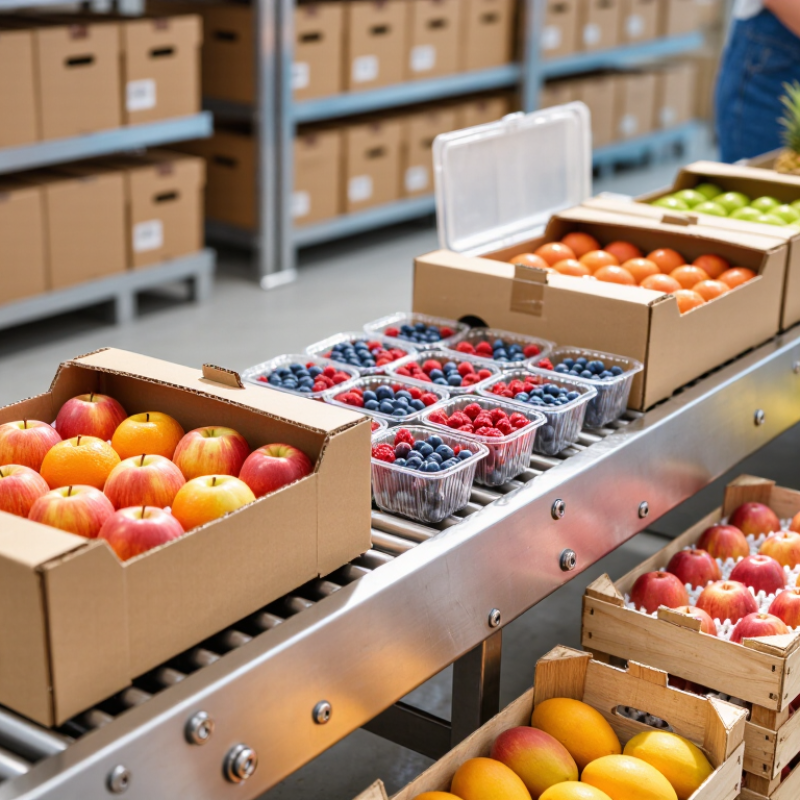
Fresh fruit export packaging in China varies with the fruit’s skin, weight, moisture, and travel time. Berries commonly use small vented clamshells with absorbent pads. These containers reduce crushing and allow cold air to circulate. Vent holes matter more than decoration.

Grapes often travel in punnets or shallow trays inside strong corrugated cartons. Small openings help release condensation. However, oversized cartons can increase movement and berry loss. Citrus fruit usually needs ventilated cartons, molded trays, or soft net sleeves. These formats protect the peel while supporting airflow. Apples and pears benefit from molded-pulp trays, which separate each piece and limit bruising. Stone fruits need shallow trays because stacking pressure can quickly damage ripe surfaces.

Packaging decisions should follow actual handling tests, not appearance alone. In export trials, packers may check fruit temperature, carton compression, humidity, and vibration after several transport stages. A package can perform well in storage but fail during loading. It is not perfect. Fruit sizes also vary between harvests, so fixed compartments may create pressure points. For that reason, adjustable inserts and carefully sized inner packs can improve reliability. Clear labels, batch records, and moisture-resistant outer cartons support traceability and safer cold-chain management. Thin plastic may reduce material use, yet it can tear when condensation increases. A slightly stronger structure may prevent greater product waste.

Cold Chain and Sustainability Considerations

What Are China’s Top Fresh Fruit Export Packaging Solutions?

Fresh fruit packaging must protect quality without trapping heat. For Chinese exporters, ventilated corrugated cartons remain practical for apples, citrus, pears, and grapes. Their openings support airflow during forced-air cooling. Molded-pulp trays can reduce bruising around delicate fruit. Reusable plastic crates also work well on predictable routes, especially when reverse logistics are available. FAO food-loss reporting estimated that 13.2% of food was lost globally between harvest and retail in 2021. Better packaging alone cannot solve this problem. Pre-cooling, calibrated temperature settings, and careful loading matter just as much.

Cold-chain design should match the fruit, route, and season. A carton that performs well in a dry warehouse may weaken at 90% relative humidity. Use moisture-resistant board when sea freight includes condensation risks. Add temperature and humidity data loggers inside representative pallets. UNEP’s Food Waste Index Report 2024 estimated 1.05 billion tonnes of food waste in 2022. This supports a practical lesson: preventing spoilage can sometimes justify slightly stronger packaging. Still, excessive plastic is not automatically responsible. The trade-off needs testing.

Tips: Measure pulp temperature before loading, not only truck temperature. Keep ventilation holes aligned across cartons. Test compression after wetting samples. Compare total packaging weight with rejected-fruit rates. Reusable crates sound sustainable, but empty returns can increase transport emissions. The best solution is often route-specific, and that conclusion may change after one harvest season.

Corrugated fiberboard with ventilation is widely used for export fruit because it is lightweight, recyclable, and compatible with palletized cold-chain logistics. Reusable plastic crates provide strong airflow and moisture resistance, while molded-pulp trays and ventilated wood crates can offer cushioning and structural protection for specific fruit types. The temperature ranges shown are typical postharvest storage targets and should be adjusted according to cultivar, maturity, transit duration, and controlled-atmosphere requirements.

How to Select the Right Export Packaging Solution

Selecting the right fresh fruit export packaging starts with the fruit, not the carton. A soft peach needs different protection from a firm apple. Consider harvest maturity, skin sensitivity, weight, and expected transit time. Packaging should control airflow while reducing bruising, moisture loss, and condensation.

In packing trials, small details often decide the result. Vent holes must support cooling without weakening the box. Cushioning should hold fruit firmly, but excessive pressure can leave hidden marks. Corrugated cartons, molded pulp trays, and ventilated plastic crates each suit different shipping conditions. Choose materials that tolerate cold storage and humidity. A box may look strong, yet fail after several hours on a wet pallet. That mistake deserves review.

Tips: Test a complete shipment before committing to large volumes. Simulate stacking, vibration, cooling, and temperature changes. Check fruit condition after opening the package, not only its appearance outside. Use clear batch identification for traceability. Confirm food-contact safety, recycling requirements, labeling rules, and import conditions in the destination market. Packaging suppliers should provide material specifications, load data, and practical testing records. Ask for evidence. Do not rely on attractive samples alone. A slightly higher packaging cost can prevent greater losses, although the cheapest option sometimes performs well for short routes.

What Are China’s Top Fresh Fruit Export Packaging Solutions? - How to Select the Right Export Packaging Solution
Packaging Solution Typical Fresh-Fruit Applications Common Export Formats Typical Pack Weight Ventilation and Cooling Performance Product Protection Moisture and Condensation Performance Reusability / Recyclability Best Selection Scenario
Ventilated Corrugated Fiberboard Cartons
Most versatile
Apples, pears, citrus, stone fruit, kiwifruit, grapes and other fruits shipped in palletized loads. Telescopic cartons, regular slotted cartons, die-cut cartons and cartons with internal dividers or trays. Approximately 4–15 kg per carton Vent holes can support forced-air cooling when correctly aligned with pallet and cold-room airflow. Performance depends on hole design, carton strength and stacking pattern. Good compression protection when the correct board grade, flute profile, corner strength and internal fit are selected. Moderate to good. Moisture-resistant coatings or wax-free water-resistant board may be needed for high-humidity cold chains. Usually recyclable as paper after removing non-paper components, provided the carton is clean and accepted by the local recycling system. A balanced choice for containerized exports that require efficient pallet utilization, printable surfaces and controlled ventilation.
Molded Fiber Pulp Trays and Inserts
Plastic-reduction option
Apples, pears, peaches, plums, nectarines, mangoes, citrus and other individual or small-cluster fruit. Pulp trays, cup inserts, layer pads, corner protectors and molded compartments inside cartons. Typically 2–10 kg per tray or carton layer Open-cell or ventilated designs allow airflow around fruit, but the tray should not block the carton’s main ventilation openings. Good separation and abrasion control. Cushioning is strongest when each fruit is properly seated and the tray fits the carton tightly. Moderate. Fiber can absorb moisture and lose stiffness, so dry storage, suitable board coatings and condensation control are important. Generally recyclable or compostable depending on the fiber composition, additives and destination-country recycling rules. Suitable when fruit needs individual separation and the importer prefers fiber-based alternatives to plastic inserts.
Plastic Clamshells and Vented Punnets
Small delicate fruit
Berries, cherries, small tomatoes, table grapes and other high-value fruit requiring visibility and individual retail protection. Hinged clamshells, lidded punnets and stackable retail containers, commonly placed in corrugated master cartons. Approximately 125 g–1 kg per retail unit Vent holes can support cooling and humidity management, but excessive openings may increase moisture loss in sensitive fruit. Very good against crushing, handling contact and contamination when the lid closes securely and the package is correctly stacked. Good when vent area, lid fit and liner design are matched to the fruit. Excess condensation may occur if cooling is delayed. Recyclability depends on resin type, labeling and local collection systems. Mono-material designs are generally easier to sort than mixed-material packs. Best for premium retail presentation, delicate fruit and shipments where product visibility and unit-level protection are priorities.
Reusable Plastic Crates
Rigid and stackable
Citrus, apples, pears, stone fruit, mangoes and other fruit moving through closed-loop or returnable distribution systems. Ventilated nesting crates, stackable crates and foldable crates, often combined with liners or separators. Approximately 5–25 kg per crate High structural stability and consistent ventilation when the crate wall pattern and stacking design are suitable for forced-air cooling. Very good resistance to compression, impact and repeated handling. Separators or liners may be required for bruise-sensitive fruit. Good resistance to wet conditions and repeated washing. Drainage openings help remove water after sanitation. Designed for repeated reuse. End-of-life recyclability depends on the plastic type and recovery infrastructure. Strong option for stable, returnable supply chains where reverse logistics, cleaning and crate tracking are available.
Wooden Crates and Bins
Heavy-duty loads
Apples, citrus, pears, melons, stone fruit and other products requiring rigid protection or larger-volume handling. Slatted crates, nailed boxes, pallet bins and large field-to-packhouse bins. Approximately 10–500 kg, depending on crate or bin size Slatted construction can provide strong airflow, but solid panels or dense stacking can restrict cooling. Very good structural strength and impact resistance. Rough surfaces must be controlled to avoid abrasion and puncture damage. Variable. Wood can absorb water and support mold growth if it is not properly dried, stored and sanitized. Reusable when structurally sound and properly maintained; damaged wood may be repairable, recyclable or recoverable depending on local systems. Appropriate for heavy or rigid-load applications, but weight, storage volume and international wood-treatment requirements must be considered.
Mesh Bags and Net Packaging
High airflow
Onions, garlic, potatoes, citrus, coconuts and selected robust fruit with relatively low abrasion sensitivity. Raschel mesh bags, knitted net bags, drawstring bags and mesh sleeves used inside outer cartons or on pallets. Approximately 0.5–20 kg per bag Excellent air exchange because of the open structure, although the pack does not provide controlled cooling by itself. Low to moderate. The package offers limited compression and impact protection and is not ideal for soft or easily bruised fruit. Good drainage and low moisture retention, but high airflow may increase water loss if temperature and humidity are not controlled. Material-dependent. Single-material netting is easier to manage than bags combining mesh, labels, ties and laminated components. Suitable for robust produce where ventilation, drainage and low packaging cost are more important than high cushioning.
Modified-Atmosphere or Micro-Perforated Liners
Shelf-life control
Selected berries, grapes, cherries, stone fruit, kiwifruit and other products whose respiration and moisture loss can be managed. Micro-perforated bags, carton liners, pallet covers and produce bags used together with a rigid outer package. Approximately 0.5–15 kg per liner or bag Cooling can be slower if the liner blocks airflow. Perforation size and distribution must be matched to the fruit and cold-chain process. Limited structural protection; liners must be combined with cartons, trays, punnets or crates. Can reduce moisture loss and help maintain humidity, but incorrect film permeability may cause condensation or undesirable gas levels. Depends on film composition. Recyclability is generally better when the liner is a clearly identified, single-polymer material. Recommended only after validation through temperature, humidity, gas-composition and shelf-life trials for the specific fruit and route.
Selection note: Actual performance depends on fruit variety, maturity, pack weight, carton dimensions, pallet pattern, pre-cooling method, transport duration, temperature, relative humidity and destination-country packaging requirements. All stated weights are indicative industry ranges rather than fixed specifications.

Article Source:

Go to Top