What Are China Top 10 LPG Gas Detector Suppliers?
Choosing the right Lpg Gas Detector supplier is a safety decision, not merely a purchasing exercise. LPG can collect near floors, drains, and poorly ventilated corners. A small leak may remain unnoticed until an ignition source appears. Reliable detection therefore depends on sensor accuracy, alarm response, installation guidance, and regular calibration.
This article examines China’s top 10 Lpg Gas Detector suppliers through practical and technical criteria. We will consider catalytic and infrared sensing technologies, detection ranges, alarm settings, IP ratings, explosion-proof certifications, and product consistency. ATEX, IECEx, CE, and local compliance records also deserve careful review. Certifications alone are not enough. Manufacturing controls, calibration support, replacement sensors, and after-sales training reveal a supplier’s real capability.
John Howard, MD, former Director of the U.S. National Institute for Occupational Safety and Health, states, “The mission of NIOSH is to develop new knowledge in the field of occupational safety and health and to transfer that knowledge into practice.” This principle applies directly to gas detection. A detector must work in real kitchens, cylinder storage rooms, factories, and fuel distribution sites—not only in laboratory brochures.
Supplier rankings can be imperfect. Public information changes. Some manufacturers publish limited test data, while others overstate performance. That limitation deserves honest attention. We will compare available evidence, including technical documentation, production experience, customer support, customization ability, and delivery reliability. The goal is not to promote one company blindly. It is to help buyers identify dependable partners and avoid costly gaps in gas safety.
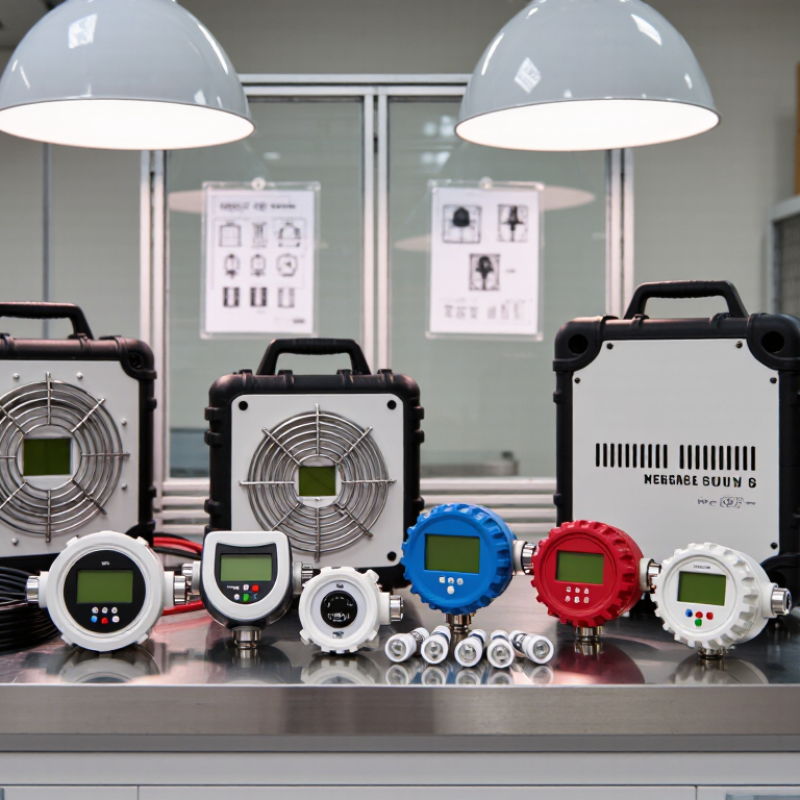
What Is an LPG Gas Detector and Why Is It Important?
An LPG gas detector is a safety device that monitors the air for leaked liquefied petroleum gas. LPG commonly contains propane or butane, both heavier than air. A leak can therefore collect near floors, drains, or enclosed corners. The NIST Chemistry WebBook lists propane’s lower flammable limit at about 2.1% in air. That margin is narrower than many people expect.
The detector uses a sensor to trigger an audible alarm before gas reaches a dangerous concentration. Placement matters. A wall-mounted unit should usually sit low, near possible leak sources, while ventilation and room layout require professional judgment. NFPA 58, the Liquefied Petroleum Gas Code, emphasizes suitable installation, inspection, and leak-control practices. A detector cannot replace regular hose checks, cylinder inspections, or proper ventilation.
The need remains significant. The WHO and World Bank Tracking SDG 7 report estimated that 2.1 billion people lacked access to clean cooking in 2022. LPG can support cleaner household cooking, but it still demands disciplined handling. In field inspections, false alarms often come from solvents, aerosols, dust, or poor sensor placement. That detail is easy to overlook. Batteries also fail quietly, so monthly testing and timely sensor replacement should be routine.

LPG Gas Detector Reference: Lower Explosive Limits of Common LPG Components
LPG detectors are important because propane and butane can form explosive mixtures with air at relatively low concentrations. The chart compares the approximate lower explosive limit (LEL) of common LPG components by volume in air. Detector alarms are commonly configured as a percentage of the LEL, with exact settings determined by local codes, site risk assessments, and sensor specifications.
Reference values: propane LEL ≈ 2.1% vol and n-butane LEL ≈ 1.8% vol, based on widely used fire-safety and chemical-safety reference data.
How to Evaluate China’s LPG Gas Detector Suppliers
What Are China Top 10 LPG Gas Detector Suppliers?
How to Evaluate China’s LPG Gas Detector Suppliers
A credible top-ten shortlist should begin with safety evidence, not catalog photos. LPG is heavier than air, so detector placement and low-level response matter. Ask suppliers for test records using propane or butane mixtures. Verify alarm thresholds, response time, sensor lifespan, and operation between 0°C and 50°C. Test it cold. Real kitchens are rarely laboratory-clean.
The Tracking SDG 7: The Energy Progress Report 2024 estimates that 2.3 billion people still lacked clean cooking access in 2022. This keeps affordable LPG equipment important, but low prices can hide weak quality control. Compare production traceability, incoming sensor inspection, aging tests, and calibration procedures. A supplier should provide certificates from recognized laboratories, not merely downloadable declarations. Check whether reports match the exact model and revision.
MarketsandMarkets’ Gas Sensors Market report estimates growth from about USD 1.8 billion in 2023 to USD 2.4 billion by 2028. Market growth increases supplier choices, but it also complicates comparison. Request three production samples, then repeat alarm tests independently. Review ISO 9001 records, factory audit results, warranty terms, spare sensor availability, and technical response times. Ask for field failure statistics, even if the answer is uncomfortable. No supplier is flawless. A missing failure log deserves more questions. Supplier scoring should weight safety documentation and after-sales capability above packaging, discounts, or attractive software.
Who Are the Top 10 LPG Gas Detector Suppliers in China?
China’s top 10 LPG gas detector suppliers are mainly specialized manufacturers serving homes, factories, kitchens, and energy facilities. They typically offer fixed detectors, portable monitors, alarm panels, and sensor replacement parts. The strongest suppliers combine local production with documented testing, calibration support, and export experience.
These ten suppliers can be assessed through clear technical differences. Some focus on compact household alarms with audible alerts and simple installation. Others build industrial systems with relay outputs, remote panels, and explosion-resistant housings. Several provide catalytic bead sensors, while newer product lines use infrared sensing for longer service life. A reliable supplier should explain detection ranges, response time, operating temperature, and sensor lifespan in plain language.
Ask for calibration records.
Field experience matters. A detector may perform well in a laboratory but react slowly in a cold, dusty workshop. Suppliers with practical engineering teams can recommend mounting heights, ventilation considerations, and routine testing schedules. They should also provide manuals, wiring diagrams, and responsive after-sales support. Certification documents deserve careful review, not blind trust. Some product pages look impressive, yet installation guidance remains weak. That is a point worth questioning. Buyers should compare sample reports, warranty terms, spare-part availability, and customer feedback before selecting among China’s top LPG gas detector suppliers.
What Are China Top 10 LPG Gas Detector Suppliers? - Who Are the Top 10 LPG Gas Detector Suppliers in China?
| Rank | Supplier ID | Main Manufacturing Region | Primary Product Focus | Typical LPG Detection Method | Common Product Formats | Typical Protection Rating | Common Compliance Documentation | Customization Capability | Typical Buyer Segment |
|---|---|---|---|---|---|---|---|---|---|
| 1 | Supplier 01 | Guangdong | Household and commercial LPG alarms | Semiconductor or catalytic sensor | Wall-mounted alarms; plug-in units | IP30–IP44 | CE, RoHS, EMC and product test reports | OEM housing, labels, alarm thresholds and packaging | Residential safety distributors and appliance installers |
| 2 | Supplier 02 | Zhejiang | LPG leak alarms with shut-off integration | Catalytic bead sensor | Standalone alarms; valve-controller systems | IP30–IP55 | CE, RoHS, EMC and electrical safety documentation | Valve interfaces, relay outputs, power options and firmware | Gas distributors, kitchen-equipment suppliers and installers |
| 3 | Supplier 03 | Jiangsu | Industrial combustible-gas detectors | Catalytic or infrared sensor | Fixed detectors; controller-based systems | IP65–IP66 | CE, EMC, RoHS and factory calibration records | Sensor ranges, outputs, relays, displays and communication protocols | LPG storage, filling stations and industrial facilities |
| 4 | Supplier 04 | Shandong | Gas detection systems for LPG storage and handling | Catalytic bead sensor | Fixed-point detectors; multi-channel panels | IP65–IP67 | CE, ISO 9001-related quality records and calibration certificates | Panel layouts, alarm logic, relay modules and enclosure design | Petrochemical contractors and bulk LPG operators |
| 5 | Supplier 05 | Fujian | Portable LPG and combustible-gas detectors | Semiconductor or catalytic sensor | Handheld meters; portable alarm monitors | IP54–IP65 | CE, RoHS, EMC and battery transport documentation | Display language, probe length, battery type and alarm settings | Maintenance contractors and field-service teams |
| 6 | Supplier 06 | Shanghai | Connected LPG monitoring equipment | Semiconductor or infrared sensor | Wireless detectors; gateway-connected systems | IP30–IP65 | CE, RoHS, EMC and wireless communication test reports | Wireless protocols, dashboards, alerts and application interfaces | Smart-building integrators and facility-management providers |
| 7 | Supplier 07 | Anhui | Cost-effective household LPG alarms | Semiconductor sensor | Plug-in alarms; battery-backed alarms | IP20–IP44 | CE, RoHS, EMC and incoming-material inspection records | Logo-free private labeling, packaging and power-plug variants | Retailers, property managers and residential projects |
| 8 | Supplier 08 | Hubei | Fixed gas alarms for commercial kitchens | Catalytic bead sensor | Wall-mounted detectors; shut-off alarm kits | IP30–IP55 | CE, RoHS, EMC and installation test documentation | Solenoid-valve compatibility, relay outputs and customized wiring | Restaurants, hotels, catering groups and kitchen contractors |
| 9 | Supplier 09 | Chongqing | Portable and fixed detectors for industrial service | Catalytic or infrared sensor | Portable meters; fixed-point monitoring units | IP54–IP66 | CE, RoHS, EMC and calibration documentation | Probe assemblies, alarm ranges, data logging and output options | Industrial maintenance providers and safety-equipment distributors |
| 10 | Supplier 10 | Henan | Multi-gas and LPG detection solutions | Catalytic, infrared or electrochemical sensor combinations | Portable multi-gas detectors; fixed systems | IP54–IP67 | CE, RoHS, EMC and calibration certificates | Gas combinations, sensor configuration, data export and enclosures | Safety-equipment wholesalers and energy-sector contractors |
Note: The supplier identifiers are anonymized. The ranking is an indicative comparison based on product breadth, LPG application coverage, customization capability and commonly documented export-oriented requirements. Certification, sensor type, ingress protection and product specifications should be verified against the supplier’s current technical documents before procurement.
How Do China’s Leading Suppliers Compare in Products and Services?
China’s leading LPG gas detector suppliers differ less in basic sensor technology than in verification, integration, and after-sales support. MarketsandMarkets’ 2024 Gas Detection Equipment Market report estimates the global market will grow from about USD 4.9 billion in 2024 to USD 6.7 billion by 2029. That growth raises expectations for Chinese exporters. Strong suppliers usually provide catalytic-bead or infrared sensors, audible alarms above 85 decibels, relay outputs, and optional wireless monitoring. Product certificates matter, but test evidence matters more.
Look closely at the top ten candidates’ service systems. The better suppliers can explain sensor response time, calibration intervals, ingress protection, and performance near LPG’s lower explosive limit. They also offer sample testing, wiring diagrams, spare sensors, and remote troubleshooting. The IEC 60079-29-1 framework supports reliable flammable-gas detection, while China’s GB 15322 series provides a domestic reference for combustible-gas alarms. These standards do not automatically guarantee field performance. Installation quality remains critical.
Cost comparisons can mislead. A lower quotation may exclude calibration kits, replacement sensors, or commissioning support. The IEA’s Gas 2024 report shows continued investment in gas infrastructure, increasing demand for dependable monitoring across storage and commercial sites. Yet supplier websites often provide limited failure-rate data. That is a weakness. Buyers should request batch test records, clear warranty terms, and references from similar LPG environments. In my experience, response speed after delivery can matter more than a small price difference. Some suppliers still rely too heavily on brochures.
What Should Buyers Check Before Choosing a Supplier?
Choosing among China’s top LPG gas detector suppliers requires more than comparing prices. Buyers should inspect product specifications, test reports, and manufacturing records. Ask whether the detector identifies propane and butane at suitable concentration levels. Confirm its response time through real test data, not promotional claims. Certification should match the destination market and application environment. Check the issuing laboratory, certificate number, and validity date carefully.
Request samples before placing a large order. Test alarm volume, display visibility, sensor stability, and performance after repeated power cycles. Outdoor projects may require stronger protection against dust and moisture.
Factory experience matters too. Ask about sensor calibration, production traceability, and quality inspections for each batch. A reliable supplier should explain calibration intervals and provide clear replacement guidance. Keep records.
After-sales support can expose weak suppliers. Confirm warranty terms, spare sensor availability, training, and technical response times. Ask for references from similar LPG storage, commercial kitchen, or industrial projects. A video call with the production team may reveal more than a polished catalog. Still, remote audits are limited. I would not treat them as complete proof. Unclear answers about failure rates, software updates, or shipping damage deserve attention. The cheapest offer can become expensive when alarms drift, parts arrive late, or installation support disappears.