
China Best PVC Layflat Hose Manufacturers and Suppliers?

Choosing among China’s Pvc Layflat Hose manufacturers and suppliers takes more than comparing prices. A hose may look sturdy in a product photo, yet its performance depends on details such as fabric reinforcement, PVC formulation, wall thickness, and working-pressure rating. Ask suppliers for clear specifications and test records for the exact model you plan to buy. Check the hose diameter, roll length, temperature range, and whether the stated pressure is a working or burst value. Small differences matter.

The right supplier should explain how the hose is made and help match it to your application, whether that involves irrigation, construction-site drainage, or general water transfer. Look closely at coupling options, packaging, sample availability, and lead times. A reliable quote should identify the product specification, not just call it “heavy duty.” Requesting a sample can reveal useful details: the feel of the material, the finish around the ends, and how neatly the hose folds. Still, a sample cannot prove long-term durability on its own. That is easy to miss. This guide explores manufacturers and suppliers in China, along with practical questions buyers can ask before placing an order. The aim is not to name a universal winner, but to help you compare evidence, clarify trade-offs, and choose a product suited to real operating conditions.
China Best PVC Layflat Hose Manufacturers and Suppliers?

PVC Layflat Hose: Structure, Materials, and Key Features

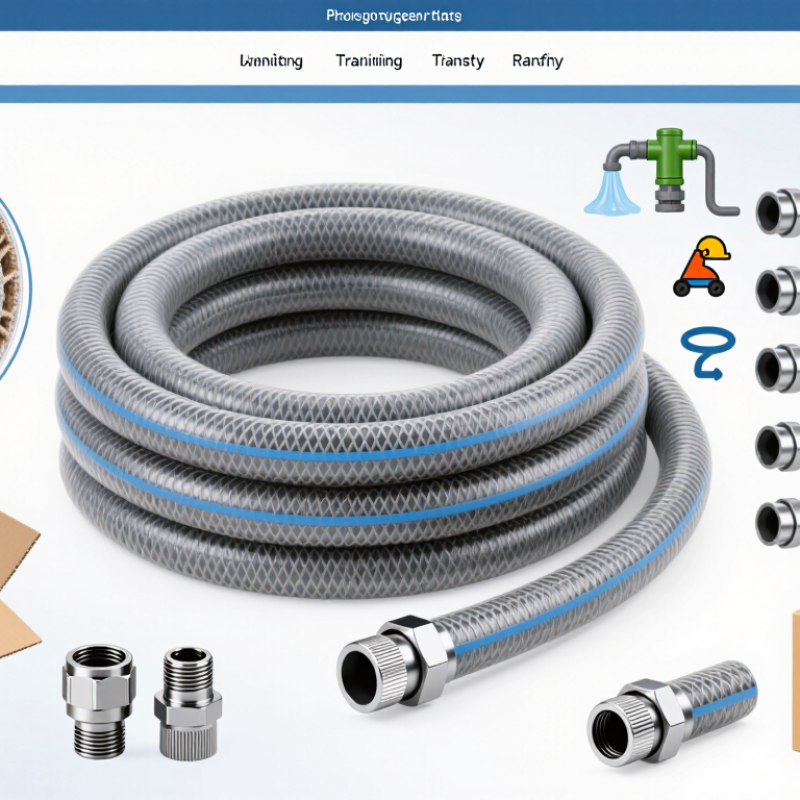
PVC layflat hose combines a flexible PVC tube with woven reinforcement, allowing it to flatten when empty and open under flow. Most designs use an inner PVC lining, a high-tenacity polyester yarn jacket, and an outer PVC layer. The yarn carries much of the pressure load; the PVC layers help contain water and resist abrasion.

Simple construction, but the details matter.

A Grand View Research industry report estimated the global PVC market at US$60.64 billion in 2023 and projected continued growth through 2030. This is market context, not proof that every hose performs equally.

PVC formulations may include plasticizers for flexibility, stabilizers for processing, and pigments for visibility. The reinforcement weave, hose diameter, wall thickness, and bonding quality all affect handling and working pressure. A hose that feels supple in a warehouse may stiffen in cold weather, while prolonged sun exposure can age some formulations.

Check the stated working pressure, temperature range, and test conditions on the product data sheet. Do not infer pressure capacity from appearance alone.

Small detail. It matters. Even well-made hose can kink at tight bends, and that can restrict flow; field performance deserves more attention than a neat specification table suggests.
Common Applications and Types of PVC Layflat Hose

PVC layflat hose carries water through a flexible tube that flattens when empty. It stores flat. Farmers use it to move irrigation water between pumps, fields, and temporary storage tanks. On construction sites, it can discharge groundwater or drain flooded areas. Fire-control and wastewater transfer are other common uses, provided the hose is specified for the fluid and conditions.

Types vary by wall thickness, reinforcement, diameter, and pressure rating. Light-duty hose suits lower-pressure watering and short-term transfer. Medium- and heavy-duty versions typically use stronger polyester-yarn reinforcement for demanding pump work. Diameters range from compact lines for smaller pumps to wide hoses that move larger volumes. Check the stated working pressure, temperature range, and coupling size before installation. A mismatch can cause leaks or premature wear.

The ground matters, too. Dragging a hose across sharp gravel or leaving it in strong sunlight can shorten its service life. A thicker hose may resist rough handling, but it is heavier and less convenient to move. In practice, choosing by pressure alone is a common mistake. Match the hose to the pump, fluid, distance, and site conditions, then inspect it for cuts or bulges before use. Specifications help, but real conditions are rarely as tidy as a product sheet.

How to Evaluate Chinese PVC Layflat Hose Manufacturers

How to Evaluate Chinese PVC Layflat Hose Manufacturers

FAO AQUASTAT estimates that agriculture accounts for roughly 70% of global freshwater withdrawals. That makes hose reliability more than a purchasing detail. When assessing a Chinese manufacturer, request batch-specific test records for working pressure, burst pressure, wall thickness, and coupling pull-off strength. Ask how samples were conditioned before testing; results without test conditions are hard to compare. Numbers matter. Check whether the factory controls yarn reinforcement, PVC coating, and curing, rather than relying only on a polished sample. A clear process description should match the equipment and inspection records you can verify.

Use ISO 1307 as a reference for hose dimensions and tolerances, while confirming the exact requirements for your application. ISO 9001 can indicate a quality-management system, but it does not prove that a particular hose meets your pressure or service-life needs. Ask for traceability from production lot to test report, plus evidence of aging and abrasion checks where relevant. Request a production sample, not only a showroom piece. Not just samples. Compare several lots if possible; one test may miss variation. I would also revisit the specification before ordering, because a hose designed for irrigation may perform poorly in frequent dragging or sharp temperature changes.

China PVC Layflat Hose Manufacturers: How to Evaluate Suppliers

Suggested evaluation weights for comparing suppliers. These are a practical decision-making framework, not market-survey results.

Prioritize documented product specifications and test evidence, then assess material consistency, quality controls, certifications relevant to your market, and delivery support. Verify each item against current technical documents and samples.

Quality Standards, Customization, and Export Capabilities

China Best PVC Layflat Hose Manufacturers and Suppliers?

Quality begins with measurable checks, not a glossy sample. Ask suppliers for wall-thickness tolerances, working-pressure ratings, and batch-specific test records. ISO 7751 provides guidance on the relationship between working and burst pressure for hoses and hose assemblies. Request test conditions as well as results; pressure ratings can be misleading without temperature and test-duration details. Details matter.

Customization should match the actual job. A supplier may adjust diameter, length, reinforcement, color, and coupling type, but each change should be confirmed against pressure and handling requirements.

FAO AQUASTAT reports that agriculture accounts for about 70% of global freshwater withdrawals. That figure highlights why dependable water-transfer equipment matters, though it does not prove any particular hose will suit irrigation. Ask for evidence.

For export orders, check packaging, labeling, lead times, and the supplier’s ability to provide clear inspection documents. Request samples from the same production specification intended for bulk shipment. Compare them under realistic conditions, including repeated rolling and exposure to expected temperatures. A test sheet helps, but it cannot capture every site condition. Some specifications may still need revisiting after field use.

Comparing Suppliers by Pricing, Service, and Reliability

Comparing PVC layflat hose suppliers means looking beyond the price printed on a quotation. A cheaper roll may have a lighter wall, narrower working-pressure range, or less consistent reinforcement. Check diameter, pressure rating, length tolerance, coupling options, and packaging in writing. Then compare freight, sample charges, and replacement terms. Small details add up. Ask for recent inspection records and a sample from the production run you plan to order. One sample cannot prove every batch will match. Still, it can reveal uneven coating, loose weave, or poor flexibility.

Service is easiest to judge before an order is placed. Send the same technical questions to each supplier and note how clearly they answer. Do they explain production time, confirm specifications, and provide updates when schedules change? Reliability also shows in repeat orders: consistent dimensions and pressure performance matter more than a polished brochure. Request references or batch test information where available, and agree on acceptance criteria before payment. A comparison sheet helps, but it is not perfect; written promises still need checking against delivered goods. A very low quote may be attractive, yet unclear specifications can make it costly later.

China Best PVC Layflat Hose Manufacturers and Suppliers? - Comparing Suppliers by Pricing, Service, and Reliability

Comparison guide: The profiles below describe common supplier types, not named or independently audited companies. Pricing and lead-time notes are indicative planning guidance, not supplier quotations. Request comparable quotes for the same hose specifications before making a decision.

Supplier Profile Pricing Position Order Quantity & Lead Time Service to Check Reliability Checks Best Fit
Factory-direct, high-volume producer Often competitive for repeat, larger-volume orders. Compare the same diameter, working pressure, wall construction, and included fittings. MOQ and production schedule depend on size, color, and customization. Request a written schedule for the specific order. Confirm technical support, sample availability, packaging options, and export-document support. Request recent batch test records, inspection criteria, and confirmation that the quoted product matches the sample and purchase specification. Importers with stable specifications and recurring demand.
Export-oriented OEM supplier May be mid-range when export packaging, documentation, or customization is included. Ask for itemized costs. Allow time for artwork or specification approval on customized orders; confirm sample and mass-production dates separately. Check response times, specification review, labeling, packing-list accuracy, and shipping coordination. Verify product specifications, inspection reports, and any certificates directly against the intended application and destination requirements. Buyers needing export coordination or private-label options.
Specialist hose manufacturer Price varies with reinforcement, pressure rating, abrasion resistance, and testing requirements; a higher specification can increase cost. Non-standard constructions or test requirements may need additional sampling and production time. Confirm feasibility before ordering. Ask whether the supplier can review operating pressure, temperature, fluid compatibility, and coupling requirements. Request pressure-test methods and results for the offered construction; confirm whether figures refer to working pressure or burst pressure. Applications where performance requirements matter more than lowest unit price.
Small-batch or flexible-order supplier Unit pricing can be less favorable on small orders; compare total landed cost, including packing and freight. May offer more flexibility on order quantity, subject to stock and available sizes. Verify stock status and dispatch date in writing. Check sample handling, mixed-size orders, order updates, and after-sales contact arrangements. Confirm batch identification, product inspection, packaging condition, and the process for handling defects or shortages. Trial orders, varied requirements, or lower initial volumes.
Trading or sourcing supplier A service margin may be reflected in the quote. Compare the offered specification and service scope, not price alone. Timing depends on the actual production source, stock availability, and order coordination. Ask who is responsible for production and inspection. Evaluate communication, supplier coordination, document handling, and support if a shipment issue arises. Request traceable production and inspection information, and clarify who handles corrective actions and warranty claims. Buyers who value consolidated sourcing or coordination support.
For a fair quote comparison, specify: hose inner diameter and length; working pressure and required burst-pressure information; PVC and reinforcement construction; temperature and application; color; coupling or fitting details; packaging; required tests or documents; order quantity; and delivery terms. Lead times, MOQs, prices, and available services must be confirmed with each supplier for the exact order.
Go to Top