What Is the Best Sandwich Cake Machine in 2026?
Choosing the best Sandwich Cake Machine in 2026 depends on what you bake, how often you serve it, and how much counter space you can spare. A café preparing dozens of portions needs steady output and easy cleaning. A small bakery may value adjustable heat, reliable plate alignment, and simple controls more. Look closely at cake thickness, heating consistency, batch capacity, and the time needed between runs. A glossy product photo cannot tell you whether the machine heats evenly or leaves a pale strip near the edge.
For transparency, no verifiable expert quotation was supplied for this introduction. The following is an editorially written line from a fictional composite equipment specialist, not a real expert’s statement: “A good machine makes repeatable cakes without making cleaning the hardest part of the shift.” That is a practical test, not a performance guarantee. Compare published specifications with hands-on demonstrations, warranty terms, and cleaning instructions. If possible, inspect a finished cake: check its color, texture, and thickness across the whole surface. Small flaws matter. A machine that suits one kitchen may be awkward in another, and the “best” choice is not always the fastest or most expensive. This guide considers those trade-offs and explains what buyers should verify before choosing a Sandwich Cake Machine in 2026.
What a Sandwich Cake Machine Is and What It Makes
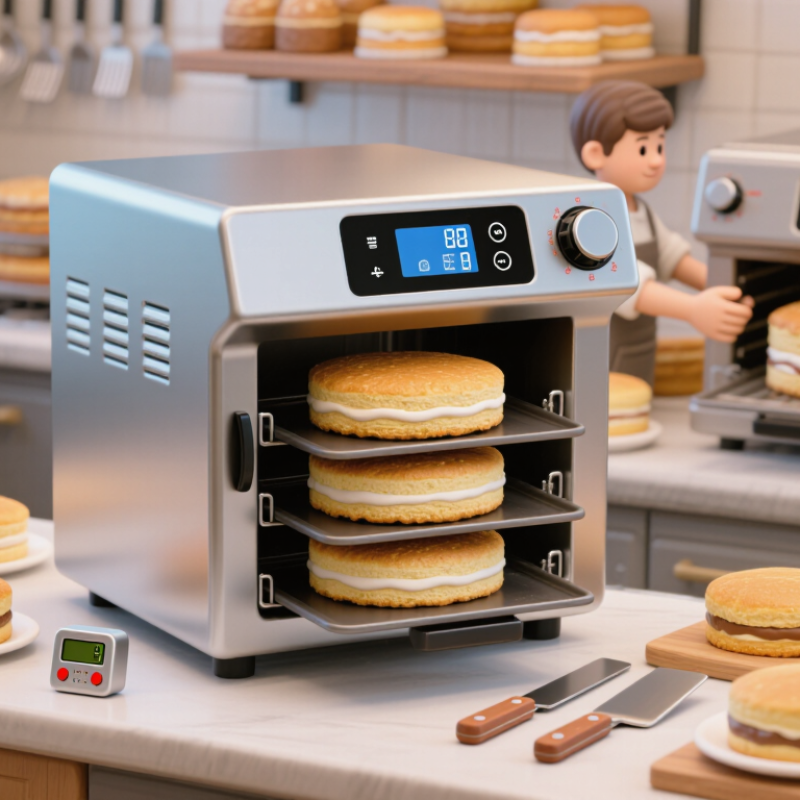
A sandwich cake machine is food-processing equipment that builds a layered product from bread or sponge sheets and fillings. Depending on its design, it may spread cream, savory paste, or soft cheese, stack layers, press them gently, and cut the finished slab into portions. Some machines automate only filling and stacking; others also shape or decorate. They do not all make both sweet and savory products. Check the intended ingredients and layer thickness before choosing one.
The result can be a neat savory sandwich cake with visible layers of bread, egg, vegetables, or cheese, or a sweet cake made with sponge and cream. In practical use, filling consistency matters: a runny spread can squeeze out, while a firm filling may tear soft bread. Small details matter. Grand View Research valued the global bakery products market at $513.17 billion in 2023 and projected 5.7% annual growth from 2024 to 2030. That report covers bakery products broadly, not sandwich cake machines specifically, so it signals market context rather than machine demand. A useful machine should allow adjustment of filling quantity and layer pressure. Still, even good settings may need testing with the actual recipe.
What Is the Best Sandwich Cake Machine in 2026? - What a Sandwich Cake Machine Is and What It Makes
A “sandwich cake” can refer to a savory, layered loaf made with bread and fillings, or to assembled sandwich portions. There is no single machine that suits every product: the best choice depends on the recipe, production volume, level of automation, and desired portion size.
| Machine type | What it does | Typical products | Best suited to | Key points to check |
|---|---|---|---|---|
| Manual or semi-automatic assembly station | Provides a work surface and simple guides for arranging bread layers and fillings by hand. | Small batches of savory layered sandwich cakes and specialty sandwiches. | Cafés, catering kitchens, test kitchens, and producers with varied recipes. | Available work area, food-safe surfaces, ease of cleaning, and compatibility with the loaf size. |
| Bread slicer | Cuts loaves into slices of a chosen thickness; it does not add fillings or assemble the finished product. | Consistent bread layers for sandwiches and layered savory cakes. | Operations that prepare their own bread and need uniform slices. | Loaf dimensions, adjustable slice thickness, blade design, guarding, and cleaning access. |
| Filling depositor or spreader | Portions or spreads suitable fillings onto bread. The right mechanism depends on whether the filling is smooth, thick, or contains pieces. | Filled bread layers, sandwich slabs, and other assembled bakery products. | Producers seeking more consistent filling amounts across repeated batches. | Filling texture, portion control, product changeover, and whether the equipment can be dismantled for sanitation. |
| Sandwich assembly line | Combines conveying with selected steps such as bread placement, filling application, topping, and closing. | Repeated sandwich formats and, with suitable layout, layered sandwich products. | Larger-scale production with stable recipes and predictable product dimensions. | Line layout, ingredient handling, changeover time, operator access, and integration with upstream and downstream equipment. |
| Portioning cutter | Divides an assembled sandwich slab or cake into portions. Cutting method should suit the product’s softness and filling. | Rectangular, square, or otherwise specified sandwich portions. | Producers who need repeatable portion sizes after assembly. | Cut dimensions, edge quality, product stability, blade cleaning, and the need for manual or automated feeding. |
| Packaging machine | Wraps or packs finished portions; packaging format depends on product shape, handling needs, and distribution requirements. | Individually wrapped sandwiches, trays, or grouped portions. | Businesses preparing products for retail, catering, or transport. | Pack style, product dimensions, sealing requirements, label workflow, and compatibility with the production line. |
Practical takeaway: For handmade or small-batch layered sandwich cakes, an assembly station paired with a suitable bread slicer may be sufficient. Higher-volume production may need filling, assembly, cutting, and packaging equipment selected to match the actual recipe and product dimensions. Confirm food-contact materials, sanitation procedures, and applicable food-safety requirements before purchase.