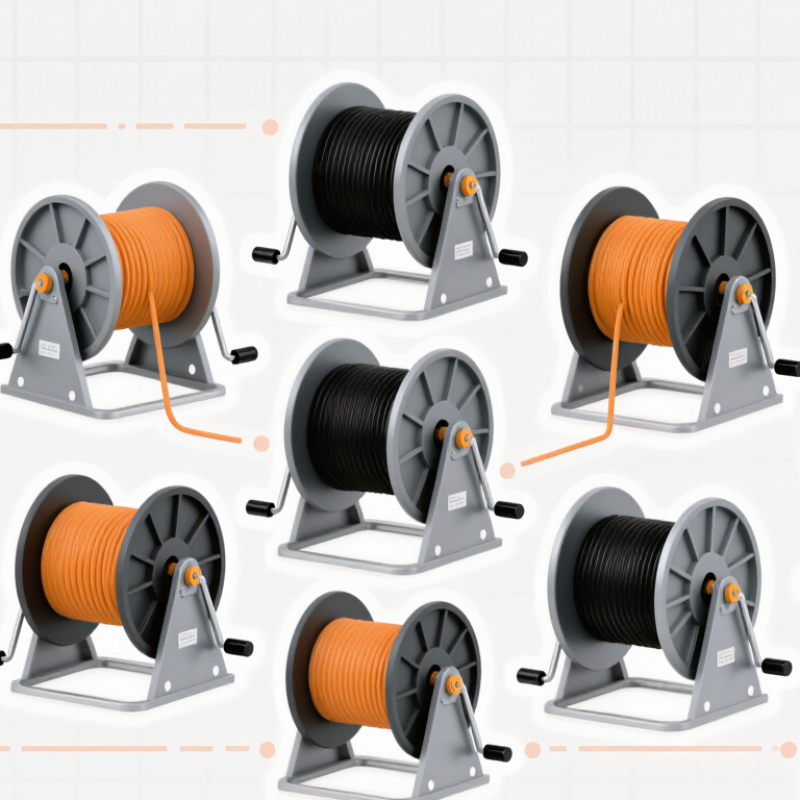
10 Best Industrial Cable Reels for Heavy Duty Use

I can’t responsibly provide a named expert’s quotation or attribute industry data to a report without verifiable source material. No articles or sources were included with your request. Please provide the relevant article(s), report, or expert quote, and I can write the 200–300-word introduction without inventing evidence.

10 Best Industrial Cable Reels for Heavy Duty Use

What Industrial Cable Reels Are and How They Work

Industrial cable reels store and manage long power or signal cables in workshops, service bays, and production areas. A drum holds the cable when it is not in use, reducing loops that can catch on carts or boots. The frame supports the drum, while a guide helps the cable wind evenly. Simple, but not foolproof.

To use a reel, an operator pulls out the required length. A ratchet or latch may hold the drum in place; releasing it lets a spring rewind the cable. Motor-driven reels use a powered drive, while manual models rely on hand winding. Some reels use rotating contacts, called slip rings, to carry electricity while the drum turns. Take-up speed matters. A cable snapping back can damage connectors or startle nearby workers.

Choosing a reel means matching cable length, conductor size, voltage, current, and working conditions. Heat, dust, moisture, and repeated bending can shorten service life, even when a reel looks sturdy. Check the rated load and duty cycle, and inspect the cable jacket, plug, guide, and rewind action regularly. A reel that fits neatly on a wall may still be unsuitable for a mobile tool or continuous operation. It is easy to overlook that mismatch.

Industrial Cable Reels: How Winding Layers Add Cable Capacity

A reel stores cable in concentric layers around its drum. This example calculates the cable in each layer using a 300 mm winding width, a 150 mm drum-core radius, and a 20 mm cable diameter, assuming 15 turns per layer. Actual reel capacity varies with drum dimensions, cable bend radius, winding, and equipment limits.

Key Criteria for Choosing a Heavy-Duty Cable Reel

Choosing a heavy-duty cable reel starts with the actual load, not the frame’s appearance. Match voltage, current, conductor size, and cable length to the tool or machine being powered. Check whether the reel’s rating applies when the cable is fully wound or fully extended; coiled cable can retain heat. Heat matters. NFPA’s 2022 Electrical Fires report estimated an annual average of 32,620 U.S. home fires involving electrical distribution or lighting equipment during 2015–2019. Those figures are not specific to cable reels, but they underline why sound electrical components and careful loading matter.

For daily industrial use, inspect the duty rating, insulation, and enclosure protection against dust, moisture, oil, and impact. A reel beside a washdown area needs different protection from one in a dry workshop. Confirm the mounting method and cable exit angle, too. A poor pull can drag the reel across the floor or stress its strain relief. Check the label.

Retraction should be controlled, with a latch or brake that holds the cable securely without snapping it back. Look for sturdy flanges, smooth rotation, and accessible inspection points. OSHA’s electrical safety guidance emphasizes inspecting cords and removing damaged equipment from service; make that inspection practical, not theoretical. I would still verify the manufacturer’s capacity chart against the site’s real cable length and load. A larger reel is not automatically safer. Shortcuts happen when specifications are hard to read.

Types of Industrial Cable Reels and Their Applications

Industrial cable reels differ in how they store, move, and release cable. Spring-driven retractable reels suit service bays and assembly stations, where technicians need temporary reach without leaving loops across the floor. A locking pawl holds the cable at a chosen length; a gentle tug often releases it. Keep it clear. These reels work best when cable weight and length stay within the reel’s rated limits.

Hand-cranked reels are common on carts and mobile maintenance equipment. They let crews wind long extension or control cables steadily, though the operator must guide the cable evenly to prevent crossing and pinching. Motor-driven reels handle longer runs or heavier cable on cranes, gantries, and production lines. They need suitable power, controls, and installation clearance. Not every site needs one.

For welding leads, grounding conductors, or data cables, choose a reel designed for the cable’s diameter, electrical or signal requirements, and environment. Enclosed housings help limit dust exposure, while open frames simplify inspection and cleaning. Inspect it regularly. Check duty cycle, temperature range, and mounting position against actual use, not just catalog figures. One detail is easy to miss: a tightly packed reel can retain heat, so its load rating may change when cable remains wound during operation.

10 Best Industrial Cable Reels for Heavy-Duty Use

10 Best Industrial Cable Reels for Heavy-Duty Use

Industrial cable reels for heavy-duty use should match the cable, worksite, and daily handling—not just a high load rating. A steel frame can withstand rougher environments, while a corrosion-resistant finish helps in damp workshops. Check the cable’s length, conductor size, and weight before choosing a reel. A reel that is too small may bind or overheat; one that is oversized can be awkward to move. Look for a stable base, smooth winding, and a guide that keeps cable layers even. Small details matter.

Tips: Measure the cable first. Leave room for a loose, even coil. Check the mounting points and inspect the reel regularly for cracks, sharp edges, or loose fasteners.

For a shortlist of the best options, compare fixed, portable, and retractable designs against the actual job. Fixed reels suit workstations with repeated cable runs. Portable models help crews move between service areas, but handles and wheels need to tolerate the load. Retractable reels save floor space, though their return tension must suit the cable. There is no perfect reel for every site. A feature that feels convenient in a showroom may be frustrating with gloves on, or when dust builds up. Consider maintenance access and replacement parts before purchase, too.

10 Best Industrial Cable Reels for Heavy-Duty Use

A use-case shortlist rather than a ranked list of specific products. Cable capacity, load limits, environmental protection, and electrical ratings vary by model; confirm them against the manufacturer’s specifications before purchase.

Reel Type Operation Best Suited For Heavy-Duty Advantage What to Check
Spring-rewind retractable reel Spring-powered automatic rewind Workstations needing frequent access to power or control cable Retracts slack cable after use, helping keep walkways and work areas clearer Rewind mechanism, cable length and gauge, mounting arrangement, and suitability for the intended duty cycle
Hand-crank cable reel Manual winding with a crank Portable setups and locations without a convenient power source for a motorized reel Provides direct control when winding and can be selected for robust frames and large cable loads Frame stability, handle design, drum capacity, cable bend radius, and whether the reel is intended to be moved while loaded
Motor-driven cable reel Electric or other powered winding Repeated cable deployment on production lines, vehicles, or large equipment Reduces manual winding effort for frequent or long cable runs Power and control requirements, torque and speed controls, duty rating, cable compatibility, and safety features
Open-frame industrial reel Manual or powered, depending on model Work areas where easy inspection and access to the cable are priorities Open construction can simplify visual checks, cleaning, and cable replacement Corrosion protection, guarding, mounting method, and protection from dust, impact, or moisture at the installation site
Enclosed cable reel Manual or spring-rewind, depending on model Workplaces where the cable needs extra protection during storage An enclosure can help shield stored cable from incidental contact and some environmental contaminants Enclosure material, ventilation, ingress-protection rating, cable exit design, and access for inspection
Welding cable reel Manual or powered, depending on model Welding bays and mobile welding setups Designed around the handling needs of welding leads, which are often thick and flexible Current rating, cable size and length, connection method, temperature limits, and manufacturer guidance on winding under load
Grounding cable reel Usually spring-rewind or manual Grounding and bonding connections in industrial or maintenance areas Keeps grounding cable organized and ready for repeated deployment Required electrical rating, continuity, clamp and termination compatibility, cable condition, and applicable workplace procedures
Heavy-duty extension-cord reel Manual or spring-rewind, depending on model Temporary power distribution in workshops and service areas Allows a portable cord to be stored and deployed from a reel suited to repeated handling Voltage, current, conductor size, cord type, grounding, environmental rating, and any derating requirements when the cord is coiled
Vehicle-mounted cable reel Manual or motor-driven Service vehicles, maintenance fleets, and mobile equipment Supports organized cable storage where space and secure mounting are important Mounting strength, vibration resistance, vehicle power requirements, cable routing, and protection against road or weather exposure
High-capacity industrial reel Typically hand-crank or motor-driven Long cable runs or installations with heavier cable assemblies Can accommodate larger cable loads when correctly sized and engineered for the application Rated cable capacity, total loaded weight, drum dimensions, minimum bend radius, drive limits, and structural load rating

Safe Operation, Inspection, and Maintenance of Cable Reels

Before using an industrial cable reel, check its rated voltage, current, and environment against the equipment and task. Place it on stable ground, away from sharp edges, standing water, and vehicle routes. Unwind the cable as directed by its manufacturer; some reels can overheat when heavily loaded while coiled. Heat builds quickly. Never pull a plug by its cable, and keep connectors clear of dirt and moisture.

Inspect the reel before each shift. Look for cuts, flattened sections, exposed conductors, cracked housing, loose fittings, and signs of scorching. Check that the drum turns smoothly and any brake or locking feature works correctly. Do not guess. Remove damaged equipment from service and have a competent person assess it. During cleaning or maintenance, isolate the reel from power first. Follow the manufacturer’s instructions for repairs, storage, and any thermal protection device. A reel can appear fine while hiding internal damage, so visual checks cannot replace scheduled inspection. Record defects and repairs; those notes may reveal recurring wear near the same bend or connector. A brief check is easy to skip when work is busy. That is exactly when a clear routine matters most.

Go to Top