Best Coex Films Manufacturers in China for Global Buyers
For global buyers, choosing among Coex Films manufacturers in China involves more than comparing prices. Film structure, resin selection, thickness tolerance, and sealing performance all affect how a product runs on packaging lines. A sample may look suitable but behave differently at production speed. Small details matter.
This guide introduces manufacturers and the factors buyers can assess before requesting a quotation. Consider whether a supplier can explain its coextrusion capabilities, provide clear technical data, and discuss applications such as food packaging, liners, or protective wraps. Ask about available widths, layer configurations, printing compatibility, and quality checks. Where relevant, request current certificates and confirm their scope directly with the issuing body. Clear answers are useful; vague promises are not.
Supplier comparisons should also cover lead times, minimum order quantities, sample policies, and communication during specification changes. These details can reveal how well a manufacturer supports international orders beyond the first conversation. Still, no supplier is the right fit for every buyer. Specifications, shipping needs, and quality expectations differ, and a polished catalog cannot replace testing material on your own equipment. A little uncertainty remains until that trial is done. By weighing documented capabilities against practical samples and service, buyers can build a more reliable shortlist of Chinese Coex Films manufacturers.
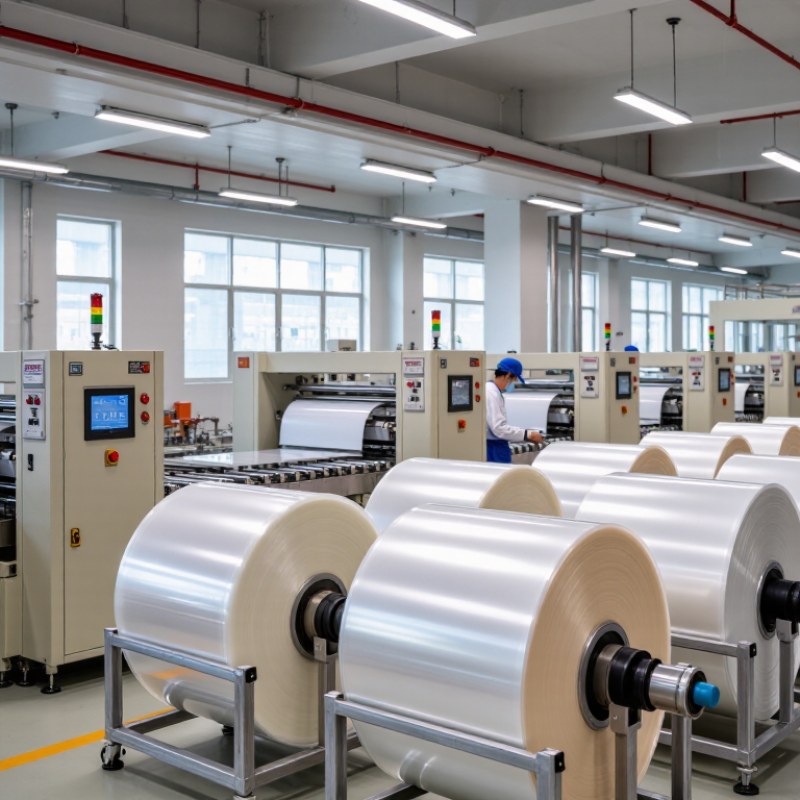
What Coex Films Are and Why Global Buyers Use Them
Co-extruded (coex) films combine two or more molten polymer layers through a shared die. Each layer can perform a distinct job: sealing, stiffness, toughness, or moisture and oxygen control. A central layer may provide strength, while outer layers support printing or handling. The actual structure depends on material choice, thickness, and production consistency. More layers do not automatically mean better performance.
Global buyers use coex films when one material alone cannot meet packaging needs. A suitable structure may protect dry goods, support a reliable seal, or tolerate repeated handling. Results vary with the product, storage conditions, and converting equipment. Buyers should request a specification sheet and test samples on their own filling lines. Check thickness, seal strength, puncture resistance, and roll consistency. Small variations matter.
Price is tempting to compare first, but it rarely tells the full story. A low-cost roll can create waste if seals wrinkle or web tension drifts during conversion. Ask the manufacturer how layers are controlled and whether batch records can be shared. Then compare performance against a written target, not a broad promise. One caution: a neat sample is not proof of stable production. Pilot runs can expose issues early, though they add time and cost.
Typical Densities of Resins Used in Coextruded Films
Comparing resin density helps explain how different materials contribute to a coex film’s structure and performance.
Bars show approximate midpoints of typical density ranges, in g/cm³: LDPE 0.910–0.940; HDPE 0.941–0.965; PP 0.895–0.920; PA6 1.12–1.14; EVOH 1.12–1.20. Actual values vary by grade and formulation.
How Chinese Manufacturers Produce Coex Films
Chinese coex film manufacturers typically make multilayer films through coextrusion, combining different polymers in one continuous production line. Production starts with resin selection based on the film’s intended use, such as moisture resistance, strength, or sealability.
Separate extruders heat and melt each polymer. A feedblock or multilayer die then brings the melt streams together in a controlled structure. The layered material passes through a die, cools into a film, and is wound into rolls. Cooling rate and line speed affect thickness and clarity. Small shifts matter.
Tips: Share target thickness, layer structure, and packaging conditions when requesting a quote. Ask how the supplier checks layer consistency. Keep samples.
Reliable production depends on stable temperatures, calibrated equipment, and regular inspection. Operators may check roll thickness, appearance, and sealing performance against agreed specifications. A sample roll can reveal issues that a specification sheet misses. No line is perfectly uniform, so discuss acceptable tolerances before production. One practical detail buyers sometimes overlook is resin compatibility: an unsuitable combination may weaken bonding between layers, even when the film looks smooth.
Key Criteria for Comparing Coex Film Manufacturers in China
Comparing coex film manufacturers in China starts with the application, not the sales brochure. Ask for layer structure, resin grades, nominal gauge, and thickness tolerance. Then match these details to your filling line, sealing temperature, and required barrier performance. For PE or PP films, request test methods and recent results for tensile strength, impact resistance, coefficient of friction, and seal strength. ASTM D882, D1709, and D1894 can help make comparisons consistent. Ask how often measurements are recorded, and whether reports identify the production lot.
Quality systems matter, but evidence matters more. Review the manufacturer’s process controls, calibration records, traceability, and handling of rejected rolls. Request samples from normal production, not only specially prepared trial material. Run them on your own equipment and record seal failures, web breaks, and roll telescoping. Small details count. A smooth roll edge can save setup time. The OECD’s 2022 Global Plastics Outlook reports that packaging generated 40% of plastic waste in 2019. That makes downgauging and end-of-life compatibility relevant questions, alongside price and performance.
Also compare lead times, minimum order quantities, export packing, and technical support across time zones. Ask for written change-control procedures covering resin, layer ratios, and production sites. A certificate alone cannot prove that every shipment performs consistently. No checklist catches everything. And a short trial may miss seasonal variation. Be cautious when a supplier promises identical results without sharing tolerances or test conditions. Request a corrective-action example; the response can reveal more than a polished presentation.
Notable Chinese Coex Film Manufacturers for International Buyers
Chinese coex film manufacturers serve buyers seeking flexible packaging with several functional layers in one structure. Their capabilities vary: some focus on high-volume commodity films, while others handle custom thicknesses, seal layers, or barrier needs. Details matter. Ask for a layer-structure specification, thickness tolerance, and recent test data. A sample roll should also be checked for sealing behavior, clarity, and consistency across its width.
For international buyers, factory evaluation should go beyond equipment lists. Request samples from routine production, not only specially prepared rolls, and compare them on your own packing line. Ask how operators monitor layer ratios, roll defects, and batch variation. A clean sample is not enough. Discuss minimum order quantities, lead times, packaging, and technical support in writing. Communication can be uneven, and test methods may differ between suppliers; that is worth clarifying early. Independent inspection can help confirm key measurements before shipment. Even then, no single test predicts every production condition, so practical trials remain useful.
How to Assess Quality, Compliance, and Export Readiness
When comparing coex film manufacturers in China, request data for the exact structure and thickness you plan to buy. A glossy sample proves little. Ask for thickness tolerance, seal strength, haze, coefficient of friction, and test methods. Request recent batch records, not only a sales specification. Small details matter. Compare results across production lots; one passing sample cannot establish stable output.
Check whether the supplier can provide traceable material records, a certificate of analysis, and documented change control. Confirm food-contact or other destination-specific requirements with your compliance team; rules vary by use and market. Ask for current test reports from qualified laboratories, then verify their scope, dates, and tested construction. A certificate folder can look reassuring while leaving gaps. That deserves scrutiny.
Export readiness is practical. Review carton labels, roll protection, pallet dimensions, moisture safeguards, and shipping documents before production. Request a pilot shipment or pre-shipment inspection, with acceptance criteria agreed in writing. Clarify lead times, claim handling, and how defects are contained. No checklist catches everything. Buyers can overlook fine print or changing specifications, so revisit them before repeat orders.