
What Are the Best China Power Tiller Parts?

Choosing the right Power Tiller Parts can determine whether a machine works smoothly or fails during demanding fieldwork. Farmers often notice the difference in small details: a belt that slips under load, a blade that leaves uneven soil, or a filter clogged with dry dust. This guide examines practical replacement choices for popular China power tillers, including rotary blades, drive belts, clutch cables, air filters, bearings, and gearbox components. It focuses on fit, material quality, service life, and real operating conditions rather than appearance alone.

Reliable selection begins with evidence. Check the tiller model, engine type, shaft size, bolt pattern, and manufacturer specifications before ordering. Experienced technicians also inspect worn parts directly, because similar components may have different dimensions. A hardened steel blade may suit compact, rocky soil, while a lighter blade can perform better in softer garden beds. Belts should match the correct length and profile. Bearings need suitable seals for dust and moisture. Small errors matter.

Supplier reputation matters too. Look for traceable product information, clear measurements, warranty terms, and responsive technical support. OEM parts can provide dependable compatibility, while high-quality aftermarket options may offer better value. However, cheaper parts are not automatically economical. A weak clutch cable can interrupt work at the worst moment. A poor air filter may shorten engine life.

No list is perfect. Field conditions vary. Some recommendations may need adjustment after inspection and testing. This article offers a practical framework, not a substitute for the operator’s manual or qualified service advice. With careful comparison, Power Tiller Parts can improve performance, reduce downtime, and support safer agricultural work.
What Are the Best China Power Tiller Parts?

Power Tiller Parts: Types, Functions, and Operating Principles

What Are the Best China Power Tiller Parts?

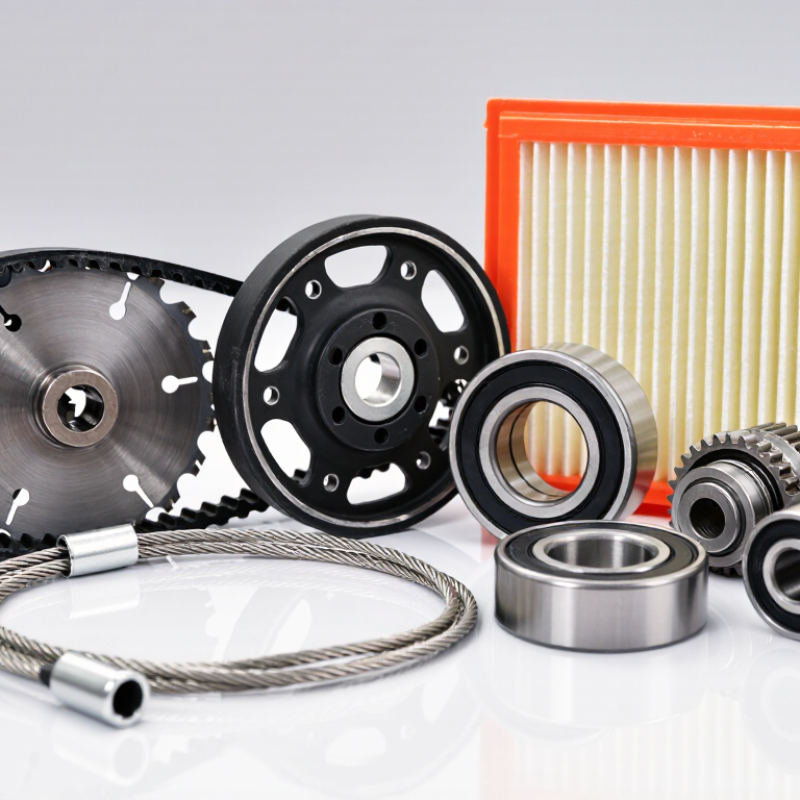
Power tiller parts should match soil, engine load, and working width. Common parts include rotary blades, drive belts, clutch plates, gear sets, wheels, axles, filters, and carburetor components. Rotary blades cut and mix soil. The gearbox transfers engine torque to the wheels or rotor shaft. A clutch controls engagement, while the belt reduces shock during starting. China’s Ministry of Agriculture reported that national agricultural machinery power exceeded 1.1 billion kW in 2023, showing the scale of mechanized farming and parts demand.

Operating principles are simple but precise. Fuel combustion turns the crankshaft. The clutch sends rotation through belts or gears. The final drive then powers the blade shaft or wheels. Hardened blades usually resist abrasion better in dry soil, but softer soil may need a different cutting angle. The FAO Agricultural Production Statistics database highlights continuing global growth in mechanized agricultural production, although local maintenance conditions are often overlooked. That gap matters.

Tip: Check shaft diameter, belt length, tooth count, and mounting-hole spacing before ordering. Measure twice. A visually similar part may still fail under load. Inspect oil seals for swelling, and replace clogged filters before testing. In field use, I have seen operators blame the gearbox when loose blade bolts caused vibration. Not every failure is dramatic. Small alignment errors can waste fuel, damage bearings, and reduce tilling depth. Keep a written service record, even if it feels unnecessary.


Key Factors for Choosing Reliable China Power Tiller Parts

What Are the Best China Power Tiller Parts?

Reliable China power tiller parts begin with accurate compatibility, not the lowest price. Check the tiller’s model, shaft size, mounting holes, and operating specifications. A gearbox, clutch plate, or rotary blade must match the machine’s power and working conditions. Small differences can cause vibration, premature wear, or unsafe operation. Experienced users should measure the original part before ordering. Photos help, but measurements are more dependable.

Material quality also deserves close attention. Look for hardened gears, heat-resistant seals, corrosion-resistant fasteners, and blades with consistent thickness. Ask suppliers for dimensional drawings, material details, inspection records, and replacement policies. Clear documentation suggests better process control. However, paperwork alone is not proof. I once trusted a neat specification sheet and overlooked a poorly finished bearing seat. The part worked briefly, then developed noise. That mistake still influences my inspection routine.

Tips: Compare three suppliers, then request a sample when possible. Inspect threads, welds, edges, and paint coverage. Rotate moving parts by hand before installation. Check whether spare components are available locally. Keep installation instructions and test the tiller at low speed first. A short trial can reveal unusual heat, looseness, or vibration. Do not ignore minor defects. They often become expensive failures.

Essential Engine, Transmission, and Clutch Components

What Are the Best China Power Tiller Parts?

A dependable power tiller starts with a correctly matched engine. For small farms, engine displacement, cooling, and fuel efficiency matter more than advertised horsepower. FAO research reports that 84% of farms worldwide operate on less than two hectares. This makes repairable, affordable components especially valuable. Choose a cylinder liner, piston ring, air filter, and crankshaft designed for the engine’s exact bore and stroke. A loose ring can increase smoke, oil consumption, and starting difficulty. I have seen users replace only the piston, then discover a worn connecting rod. That shortcut often fails.

Transmission parts transfer engine power to the wheels and rotary tools. Inspect gear teeth, bearings, shafts, seals, and keyways together. One damaged gear can contaminate the entire housing with metal particles. Clutch components deserve equal attention. A friction disc, pressure plate, release bearing, and clutch cable must work as one system. The OECD-FAO Agricultural Outlook 2024–2033 emphasizes productivity growth through efficient farm equipment and better resource use. Still, efficiency depends on correct adjustment, not replacement alone. A perfect parts list does not exist.

Tips: Measure shaft diameters before ordering. Check gear backlash with a feeler gauge. Replace brittle seals during transmission service. Keep engine oil clean and use the specified viscosity. Record operating hours, unusual vibration, and clutch engagement distance. These small notes reveal patterns. Sometimes the cheapest component creates the highest labor cost.

What Are the Best China Power Tiller Parts?

Essential Engine, Transmission, and Clutch Components

This chart shows common maintenance planning intervals for essential power tiller components. Engine oil and air filters normally require the most frequent attention, while transmission oil and clutch friction components are typically checked at longer operating-hour intervals. Actual intervals depend on the machine design, working conditions, load, dust exposure, and the service manual.

How to Match Parts with Different Power Tiller Models

Choosing China power tiller parts starts with the machine’s identity, not appearance. Record the model code, production year, engine displacement, shaft diameter, and PTO direction. FAO’s 2023 Statistical Yearbook reports China has more than 100 million hectares of arable land. That scale supports strong demand for replacement parts. It also creates compatibility risks. Similar machines may use different gear ratios, splines, or mounting patterns. Looks close is not enough.

Match the part through measurable details. Check shaft length, spline count, bearing size, belt width, bolt spacing, and rotation direction. For a rotary attachment, confirm blade thickness and hole position with the old component. A digital caliper helps. A paper mounting template helps more than memory. When a power take-off is involved, compare dimensions with relevant ISO 500 guidance. Never assume a “universal” clutch fits every model. Small differences can cause vibration, heat, or early gearbox wear.

Field testing should follow the workshop check. Install the part without forcing it, then inspect free movement by hand. Run the tiller at low speed first. Listen for uneven knocking. After ten minutes, check bearing temperature and fastener movement. A 2024 agricultural machinery market analysis projects roughly 5% annual growth in China through 2029, increasing the need for dependable aftermarket matching. I still recheck measurements twice. One overlooked washer can change alignment. That is an imperfect step, but it prevents expensive mistakes.

What Are the Best China Power Tiller Parts? - How to Match Parts with Different Power Tiller Models

The table below summarizes common power tiller replacement parts and the key specifications used to match them with different model configurations. Dimensions are typical industry ranges; always verify the original part number, shaft measurements, mounting pattern, and engine specifications before purchasing.

Part Category Typical Specification or Size Suitable Power Tiller Configuration Key Matching Dimensions Important Selection Check Common Mismatch Risk
Engine Assembly Approximately 4–15 kW; single-cylinder, air-cooled diesel or gasoline configurations are common. Light-duty tillers generally use 4–7 kW; medium and heavy-duty models commonly use 7–15 kW. Mounting-hole spacing, crankshaft diameter, crankshaft length, rotation direction, and pulley or clutch position. Confirm rated speed, fuel type, cooling method, starting system, and available clearance inside the frame. The engine may fit the frame but fail to align with the gearbox input shaft or belt drive.
Clutch Assembly Manual belt tension clutch, cone clutch, or multi-plate wet clutch, depending on the transmission design. Belt clutches are common on compact models; heavier tillers usually require higher-capacity mechanical or wet clutches. Input shaft diameter, spline or keyway profile, friction-plate diameter, spring position, and cable travel. Match the clutch to the engine torque and gearbox input speed rather than using diameter alone. Incorrect engagement travel can cause slipping, overheating, or incomplete disengagement.
Drive Belt Common profiles include A, B, and metric equivalent V-belts; exact length varies with pulley spacing. Suitable for belt-driven transmission, rotary attachment, and auxiliary drive systems. Top width, belt height, effective length, pulley groove angle, and center distance. Measure the old belt and pulley profile; select an oil-resistant, heat-resistant agricultural belt where required. A belt with the correct length but the wrong cross-section can bottom out or ride too high in the pulley.
Gearbox and Gear Set Reduction gearing commonly includes spur, helical, or bevel gears in oil-filled housings. Models with forward, reverse, or multiple working-speed settings require transmission-specific gear sets. Number of teeth, module or diametral pitch, pressure angle, gear width, bore, keyway, and shaft center distance. Match the complete gear pair and transmission ratio; inspect the housing and bearing seats at the same time. A small difference in tooth profile or center distance can cause noise, rapid wear, or gear failure.
Rotary Tiller Blades Common blade thickness is approximately 4–8 mm; blade shape and hole pattern vary by rotor design. Light tillers use narrower blade sets; higher-power machines can use wider or heavier-duty blade assemblies. Blade length, thickness, mounting-hole diameter, hole spacing, left/right orientation, and rotor width. Replace blades as matched left and right sets to maintain rotor balance and consistent soil penetration. Wrong orientation or uneven blade weight can create vibration and reduce tilling performance.
Tiller Rotor Shaft Solid or tubular steel shaft with keyed, splined, or bolted blade-carrier connections. Must correspond to the working width and transmission output arrangement of the tiller. Overall length, outside diameter, bearing-seat diameter, keyway size, spline count, and end-thread dimensions. Check straightness, bearing fit, seal locations, and the distance between blade mounting sections. A shaft with the wrong bearing-seat size may require unsafe modifications to the gearbox housing.
Wheels and Tires Agricultural lug tires commonly range from about 4 to 8 inches in rim diameter for walk-behind tillers. Narrow tires suit light soil and transport; wider lug tires provide improved traction on heavier soil. Rim diameter, tire width, hub bore, axle diameter, keyway, offset, and tread direction. Confirm the tire does not contact the mudguard, rotary housing, brake, or transmission case. An incorrect offset can overload the axle bearing or make the machine unstable.
PTO or Attachment Shaft May use a keyed shaft, splined shaft, or dedicated attachment coupling rather than a universal tractor PTO. Used for rotary tiller housings, transport wheels, pumps, and other model-specific attachments. Shaft diameter, spline count, key size, engagement length, rotation direction, and operating speed. Verify that the attachment speed and direction are compatible with the implement before operation. A coupling that engages only partially may strip the shaft or separate during use.
Bearings and Oil Seals Deep-groove ball bearings, tapered bearings, and rubber-lip oil seals are commonly used in transmissions and rotors. Applicable to engine supports, gearbox shafts, wheel axles, and rotary blade shafts. Bearing inside diameter, outside diameter, width, seal outside diameter, seal lip direction, and shaft surface condition. Read the bearing or seal code where available and measure the shaft with a caliper. Using a similar-looking bearing with a different width can cause axial misalignment or insufficient preload.
Control Cables and Levers Mechanical cables commonly operate the throttle, clutch, brake, gear selector, or engine stop function. Suitable only when the cable route and control mechanism match the tiller frame and transmission. Outer-casing length, inner-wire travel, end fitting, threaded adjuster, lever hole diameter, and mounting bracket. Compare both cable ends and measure required travel from fully released to fully engaged. Excessive cable length or insufficient travel may prevent safe clutch or brake operation.
Air, Fuel, and Oil Filters Filter type and dimensions depend on engine displacement, housing design, and fuel system. Required for both diesel and gasoline engines, but filter elements are not generally interchangeable between fuel types. Element height, outside diameter, inside diameter, gasket size, thread size, and flow direction. Match filtration type and sealing surface; keep the intake system free from air leaks. A filter with the wrong gasket or flow capacity can allow contamination or restrict engine performance.
Fasteners and Mounting Hardware Metric bolts, nuts, washers, keys, pins, and retaining rings are commonly used throughout the machine. All power tiller models, provided the replacement hardware matches the original assembly. Thread diameter, thread pitch, length, strength grade, head type, key width, and locking method. Use the original strength grade and locking arrangement, especially on rotating or high-vibration components. An incorrect thread pitch or low-strength fastener may loosen, shear, or damage the mating part.
Recommended Matching Method: Identify the tiller’s engine type, rated power, transmission layout, shaft dimensions, mounting-hole pattern, and original part measurements. When specifications differ, the original part number and a clear measurement drawing should take priority over appearance alone.

Maintenance and Replacement Standards for Long-Term Performance

The best China power tiller parts are not always the cheapest options. They should match the machine’s model, engine output, shaft size, and working conditions. Correct fit matters more than appearance. A loose belt can reduce power, create heat, and damage nearby components. A poorly hardened tine may bend in dry soil. These failures often begin with unsuitable replacements.

Maintenance standards should start with regular inspection. Check engine oil before each working session. Replace it at the interval recommended by the service manual. Clean or replace the air filter when dust blocks its surface. Inspect belts for cracks, glazing, or slack. Measure twice. Tighten bolts evenly, especially around the gearbox and handle assembly. Grease bearings according to the manufacturer’s specification, because excess grease can attract abrasive soil. Keep replacement parts sealed and dry before installation.

For dependable replacement, compare material quality, dimensions, and tolerance, not only the product description. Steel tines need consistent hardness and accurate mounting holes. Gears should have clean teeth and smooth rotation without unusual play. Seals must remain flexible after contact with oil and temperature changes. I have seen operators replace a damaged part without checking the original cause. That can repeat the failure. A worn bearing may come from poor lubrication, misalignment, or excessive load. No inspection system is perfect. Record operating hours and repairs, then adjust the schedule when field conditions become harsher. Safety guards and fasteners also deserve inspection, even when the tiller still runs normally.

Go to Top