10 Best Automotive CNC Machining Parts Manufacturers?
Automotive CNC Machining Parts support components that need consistent dimensions, reliable fit, and repeatable production. They may include sensor brackets, transmission housings, steering components, and lightweight aluminum prototypes. Even a small variation can complicate assembly or create extra inspection work. Details matter.
This guide introduces ten manufacturers serving automotive machining needs, from early prototypes to production runs. The right partner depends on more than a polished website or a long equipment list. Buyers should compare material experience, milling and turning capacity, achievable tolerances, order volumes, lead times, and communication. Ask how parts are inspected. Coordinate measuring machines, documented checks, and clear revision control can help reveal whether a supplier’s process suits a demanding component. Certifications may be relevant, but their scope and current status should be verified directly.
A manufacturer that excels at low-volume prototypes may not be the best choice for a large, stable production program. Likewise, a low quote may leave out finishing, packaging, or inspection requirements. This list is a starting point, not a substitute for reviewing drawings, requesting capability evidence, and discussing quality expectations with each supplier. No comparison is perfect. Company capabilities and availability can change, and a good fit on paper may still disappoint during a real project. Use the profiles to narrow your options, then confirm details against your own design, schedule, and production goals.
Understanding Automotive CNC Machining Parts and Their Applications
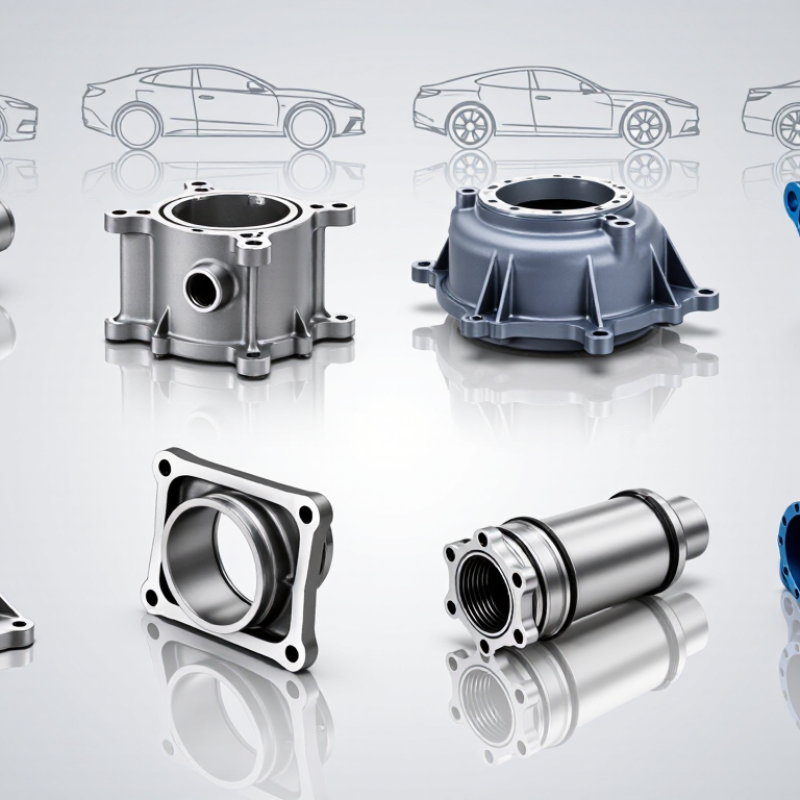
Automotive CNC machining turns digital designs into precise metal parts through milling, turning, drilling, and finishing. Typical components include transmission housings, steering knuckles, brake caliper bodies, engine parts, and electric-motor housings. These parts need accurate bores and flat mating surfaces so bearings, seals, and fasteners fit correctly. In 2023, global vehicle production reached about 93.5 million units, according to the International Organization of Motor Vehicle Manufacturers (OICA). That scale helps explain why repeatable machining and consistent inspection matter across automotive supply chains. Fit matters. Yet not every part needs the same tolerance; tighter specifications can add cost without improving performance.
Material and geometry shape the machining plan. Aluminum is common in lightweight housings, while steel and cast iron suit parts facing higher loads or heat. A deep pocket, thin wall, or cross-drilled passage may require different tools and setups. Engineers also consider chip removal, tool wear, surface finish, and how a component will be measured. The U.S. Department of Energy’s report on lightweight materials identifies vehicle mass reduction as a route to improved fuel economy, though material choice must still meet strength and durability needs. Small details count. A rough edge near a seal can cause trouble later.
Tips: Ask for a drawing review before production. Confirm critical dimensions, material grade, finish, and inspection method. Request a sample part when fit is uncertain; drawings do not always reveal assembly surprises.

Key Criteria for Evaluating Automotive CNC Manufacturers
A dependable automotive CNC supplier should prove process control, not just quote a tight tolerance. Ask for inspection plans, calibrated equipment records, and capability data for critical dimensions. A bore that measures correctly once may drift as a tool wears. Review Cpk or Ppk results alongside sample inspection reports, and confirm how the supplier reacts when a measurement falls outside limits. Ask about material certificates, lot traceability, and documented changes to programs or tooling.
Quality systems matter, but certificates alone are not enough. Check whether the supplier can support APQP and PPAP documentation when required, and whether its machines, inspection staff, and backup capacity match your production forecast. Deloitte and The Manufacturing Institute estimate that U.S. manufacturing may need 3.8 million workers by 2033, with 1.9 million roles potentially unfilled. That workforce outlook makes it sensible to verify who actually programs, runs, and inspects your parts—not only who handles the sales call.
Visit the shop if possible. Look at chip control, fixture condition, coolant management, and how finished parts are protected from scratches. Ask for a recent example of a corrective action, including the measured cause and follow-up check. A neat audit folder can still hide weak day-to-day habits. And a supplier’s first sample is not the whole story; repeatability across shifts and production lots deserves close attention.
Profiles of 10 Leading Automotive CNC Machining Manufacturers
A useful profile of an automotive CNC manufacturer starts with its production strengths, not a ranking. Profile one is a high-volume aluminum specialist, suited to repeat housings and brackets. Profile two focuses on five-axis work, where complex engine or drivetrain shapes need fewer setups. Profile three handles prototypes, with quick fixture changes and practical design feedback. Profile four machines shafts and pins, emphasizing concentricity and consistent surface finish. Profile five works from castings, removing stock while protecting thin walls and sealing faces. Ask for evidence. Sample inspection records reveal more than polished claims.
Profile six serves lightweight structures, where tool access and distortion control matter. Profile seven centers its process on measurement, using documented checks for critical dimensions. Profile eight accepts varied alloys and can explain how each material affects cutting and tool wear. Profile nine coordinates machining with finishing and assembly, reducing handoffs between suppliers. Profile ten specializes in short runs, offering flexibility when vehicle programs change. These are capability-based profiles, not a claim that one supplier suits every application. A careful buyer should compare tolerances, inspection methods, capacity, and communication against the part drawing. No shop is perfect. Even a capable supplier may need a trial run before production assumptions hold up.
Automotive CNC Machining: Typical Material Densities
A comparison of representative materials used for machined automotive components. Lower-density materials can help reduce component weight, while material choice also depends on strength, durability, cost, and application requirements.
Density values are approximate representative values; actual values vary by alloy, grade, and product specification.
Comparing Manufacturer Capabilities, Materials, and Quality Standards
Choosing an automotive CNC machining supplier requires more than comparing hourly rates. Review its equipment, part-size range, machining processes, and experience with production volumes similar to yours. A shop equipped for five-axis work may handle complex housings efficiently, while simpler brackets may not need that capability. Ask how it manages setup changes and repeat orders. These details affect consistency.
Material expertise matters just as much. Aluminum alloys are common in lightweight housings, while steel and stainless grades may suit highly loaded or corrosion-exposed components. Ask whether the manufacturer can provide material certificates and maintain lot traceability. Then compare its inspection methods: coordinate measuring machines, calibrated gauges, and documented checks can help verify critical dimensions. A polished inspection report is useful, but it cannot replace clear records tied to the actual parts.
Quality standards should be checked in context. Ask which quality-management certifications are current, what sites and processes they cover, and how nonconforming parts are handled. Request sample inspection plans and discuss tolerances, surface finish, and delivery expectations before production begins. Small details matter. I would not judge a supplier from certificates alone; their response to a difficult drawing can reveal more. Still, that judgment takes time, and one sample run may not expose every weakness.
How to Choose the Right Automotive CNC Machining Partner
Choosing an automotive CNC machining partner starts with the part, not the sales pitch. Share the drawing, material grade, annual volume, and critical tolerances, then ask how each feature will be measured. For a machined aluminum housing, that may mean checking bore diameter and flatness with calibrated gauges or a coordinate-measuring machine. Ask for sample inspection records, material traceability, and a clear response plan for out-of-spec parts. Where required, confirm the supplier can support PPAP documentation and your quality-system expectations, such as IATF 16949.
Digital process control matters, too. Deloitte and MAPI’s 2024 Smart Manufacturing Survey found that 86% of surveyed manufacturing executives expect smart manufacturing to drive competitiveness within five years. That does not guarantee better parts, but it makes questions about machine monitoring, inspection data, and revision control worthwhile. A polished capability sheet can still hide weak communication. No audit predicts every delay.
Tips: Request a pilot run using your actual drawing and material. Compare measured results with the print, not just the sample’s appearance. Ask who owns tool maintenance, how lead times change at higher volumes, and how engineering changes are recorded. Check the details. If a supplier cannot explain a tolerance in practical terms, pause and ask again. IATF 16949 certification is useful evidence, but it is not a substitute for reviewing process capability and inspection records.
10 Best Automotive CNC Machining Parts Manufacturers? - How to Choose the Right Automotive CNC Machining Partner
Use this comparison guide to match a supplier’s manufacturing strengths to your part, production volume, quality requirements, and launch timeline.
| Supplier Capability Profile | Typical Automotive Parts | Common Materials | Production Fit | Quality Evidence to Request | Best Fit When... |
|---|---|---|---|---|---|
| 1. Prototype and rapid-turnaround shop | Brackets, housings, mounts, test fixtures, and design-validation parts | Aluminum alloys, carbon steel, stainless steel, and engineering plastics | One-off parts, prototypes, and low-volume builds | Inspection reports, material certificates, documented revision control, and first-article results | Design changes are frequent and short lead times matter more than high-volume automation. |
| 2. High-volume aluminum machining supplier | Transmission housings, motor housings, valve bodies, and structural components | Common wrought and cast aluminum alloys, selected to suit the drawing and application | Repeated production with stable demand and established process plans | Process-control records, measurement-system evidence, capability studies, and traceability records | You need repeatable machining, efficient cycle times, and a documented plan for process control. |
| 3. Precision steel-component specialist | Shafts, gears, pins, steering components, and other load-bearing parts | Alloy steel, carbon steel, and stainless steel grades specified by the design | Low- to high-volume production, depending on part geometry and tooling | Material traceability, dimensional reports, heat-treatment records when applicable, and process-control documentation | Strength, wear resistance, or post-machining heat treatment is important to the application. |
| 4. Multi-axis complex-part manufacturer | Integrated housings, fluid-system components, and parts with multiple angled features | Aluminum, steel, stainless steel, and selected copper alloys | Prototype through production, subject to machine capacity and setup requirements | Coordinate-measuring inspection, setup documentation, and verification of critical features | Reducing setups, improving feature alignment, or machining complex geometry is a priority. |
| 5. CNC turning and shaft specialist | Axles, spindles, pins, sleeves, bushings, and cylindrical connectors | Steel, stainless steel, aluminum, and brass where specified | Small batches through repeat production; bar-fed automation may suit suitable designs | Runout and concentricity measurements, surface-finish results, and material identification | Your parts are primarily rotational and require consistent diameters, shoulders, threads, or grooves. |
| 6. Tight-tolerance and metrology-focused supplier | Precision valve parts, sensor interfaces, bearing seats, and machined reference surfaces | Material depends on the design, operating environment, and specified tolerances | Specialized low- to medium-volume work or critical features within larger programs | Calibrated-gauge records, CMM reports, measurement methods, and capability data for agreed critical characteristics | Drawings specify demanding tolerances or features that need a clearly defined measurement plan. |
| 7. Cast-and-machine integration supplier | Engine, gearbox, pump, and electric-drive housings | Cast aluminum, cast iron, and other drawing-approved casting alloys | Most suitable when casting supply and machining demand can be coordinated | Casting material and process records, machining inspection reports, and control of casting-to-machining datums | Combining casting procurement and finish machining could simplify supplier coordination. |
| 8. Multi-process manufacturing partner | Machined assemblies, brackets, housings, and parts requiring secondary operations | Metals and engineering plastics compatible with the specified finishing and assembly processes | Prototype through production, depending on the partner’s in-house and managed processes | Subcontractor controls, plating or coating certificates where applicable, assembly checks, and full part traceability | Your project needs machining plus finishing, heat treatment, or assembly under coordinated control. |
| 9. Electrification-component machining supplier | Motor end plates, inverter housings, cooling plates, and battery-system hardware | Aluminum alloys, copper alloys, stainless steel, and other drawing-approved materials | Prototype and production; capacity should be confirmed against program demand | Leak-test or sealing results when required, dimensional reports, material traceability, and cleanliness controls where specified | Thermal management, sealing, electrical interfaces, or lightweight structures are key design requirements. |
| 10. Automotive quality-system-oriented supplier | Safety-related or production-critical machined components across automotive systems | Specified by the drawing, engineering standard, and customer requirements | Production programs requiring formal supplier-quality planning | Current certificates and scope, control plans, nonconformance procedures, change control, and traceability evidence | Your purchasing requirements call for a verified quality-management system, such as IATF 16949 or ISO 9001, as applicable. |
Note: These are capability profiles, not named or ranked companies. Material choices, achievable tolerances, production volumes, certifications, and inspection requirements vary by part and supplier. Confirm them against the engineering drawing, application requirements, and a supplier’s current documentation before placing an order.