
China Best 808 Nm Diode Laser Manufacturer?

Choosing the best China 808 Nm Diode Laser manufacturer requires more than comparing prices or polished factory photographs. The right evaluation should examine wavelength stability, optical output, thermal control, packaging quality, and documented testing. A dependable manufacturer should explain its chip source, assembly process, burn-in procedures, and quality records clearly. It should also provide traceable specifications for each production batch.

Details matter.

During practical evaluation, engineers should inspect solder joints, cooling channels, connector protection, and beam consistency after extended operation. An 808 Nm Diode Laser may appear stable during a short demonstration, yet drift under heat. This is where real manufacturing experience becomes visible. Ask for test data, sample results, warranty terms, and independent compliance documentation. ISO 13485 certification may support medical-device quality systems, while applicable laser-safety requirements must be verified for the intended market.

Dr. Rox Anderson, a pioneer in medical laser research, has emphasized, “The biology comes first.” That principle remains valuable when assessing laser suppliers. Technical performance must match the intended application, skin type, treatment protocol, and cooling method. A factory with strong engineering support should discuss these factors without making exaggerated promises. It should also help customers understand risks, maintenance needs, and realistic service life. No manufacturer is perfect. A supplier may have excellent diode modules but weaker documentation or slower after-sales support. That possibility deserves honest attention. The best China 808 Nm Diode Laser manufacturer is therefore not simply the cheapest or largest company. It is the partner that combines measurable performance, responsible communication, transparent quality control, and consistent support from prototype testing to long-term production.
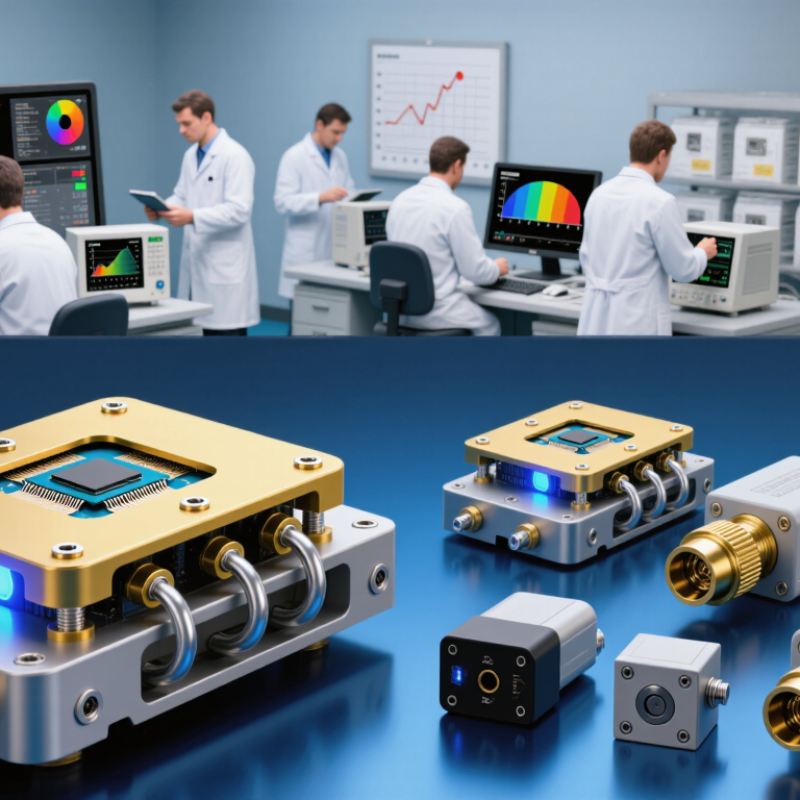
China Best 808 Nm Diode Laser Manufacturer?

What Does 808 nm Mean? Wavelength and 1.53 eV Photon Energy

China Best 808 Nm Diode Laser Manufacturer?

What Does 808 nm Mean? Wavelength and 1.53 eV Photon Energy

An 808 nm diode laser emits near-infrared light. The wavelength measures the distance between repeating light waves. At 808 nanometers, the radiation is invisible to the human eye. Each photon carries approximately 1.53 electron volts of energy. This value comes from the equation E = hc/λ, where shorter wavelengths produce higher photon energy.

The 808 nm range is widely used in optical pumping, industrial equipment, and professional light-based systems. Its performance depends on more than the nominal wavelength. Output power, spectral width, beam shape, thermal control, and operating lifetime also matter. A reliable manufacturer should provide test data, wavelength tolerance, and temperature information. Independent measurements with a calibrated power meter or spectrometer can verify these claims.

The word “best” is incomplete.

In practical evaluations, I would examine consistency between production batches. A diode may reach its rated power but still show unstable output after heating. That detail is easy to overlook. Proper heat sinking, current control, and protective housing improve operational reliability. Safety procedures remain essential because invisible infrared light can damage eyes without causing an immediate blink response. One limitation deserves attention: 808 nm is not automatically ideal for every application. System design, optical losses, and real working conditions must guide the final choice.
How Are Diode Lasers Rated by Output Power, Beam Profile, and Efficiency?

China Best 808 Nm Diode Laser Manufacturer?

An 808 nm diode laser should be rated under clearly defined operating conditions. Output power alone is not enough. According to 2024 industry reports from Yole Group and Laser Focus World, commercial single emitters commonly deliver several watts, while bars and stacks can reach tens or hundreds of watts. These figures depend on cooling, drive current, and duty cycle. A serious datasheet should state continuous-wave power, pulse conditions, case temperature, and lifetime testing.

Beam profile matters just as much. Typical high-power emitters show fast-axis divergence near 30–40 degrees and slow-axis divergence around 8–12 degrees before collimation. M² values, near-field images, and spot dimensions reveal more than a simple “high-quality beam” claim. A nearly rectangular spot may suit pumping or heating, but it can reduce coupling efficiency in fiber systems. Alignment changes everything.

Efficiency is usually expressed as wall-plug efficiency. Recent photonics industry surveys place mature 808 nm devices broadly around 45–60%, depending on package design and operating power. Higher efficiency means less waste heat. It does not guarantee longer service life. Thermal resistance, solder quality, and wavelength stability still require inspection. I would also question impressive peak numbers without aging data. Peak power is easy to advertise. Stable power is harder. My own evaluation would compare samples at the same temperature, current, optics, and measurement method, because inconsistent testing can make an ordinary device appear exceptional.

Which Cooling and Duty-Cycle Specifications Matter in 808 nm Systems?

China Best 808 Nm Diode Laser Manufacturer?

Which Cooling and Duty-Cycle Specifications Matter in 808 nm Systems?

Choosing an 808 nm diode laser manufacturer requires more than checking optical output. Cooling design strongly affects wavelength stability, diode lifetime, and treatment consistency. Air cooling may suit low-power modules, but higher-output systems usually need liquid cooling. Ask for the coolant temperature range, flow rate, heat-exchanger capacity, and alarm settings. A stable 20–25°C coolant temperature is often useful, though the correct range depends on the module design.

Duty cycle deserves equal attention. Continuous-wave operation creates sustained heat, while pulsed operation changes peak current and thermal stress. Review pulse width, repetition rate, maximum on-time, and required off-time. A system rated for 30 seconds on and 30 seconds off is not equivalent to one rated for five minutes continuously. Small differences matter. Request test data at the intended power, not only at laboratory conditions.

In practical evaluations, I would monitor coolant flow, diode temperature, optical output, and wavelength drift during repeated cycles. One overlooked detail is recovery time after a long pulse. The specification may look adequate, yet performance can decline after several minutes. Manufacturers should provide calibration records, thermal test methods, and protection thresholds. I would also question vague claims such as “high efficiency” without supporting measurements. Real installations are rarely perfect, and ambient temperature, blocked vents, or aging pumps can expose weak assumptions.

How Do IEC 60825-1 Laser-Safety Requirements Apply to Diode Equipment?

China Best 808 Nm Diode Laser Manufacturer?

At 808 nm, diode equipment emits invisible near-infrared radiation. The eye may not trigger a blink response. IEC 60825-1:2014 therefore evaluates accessible emission, wavelength, pulse duration, repetition rate, and beam geometry. Output power alone is not enough.

A compliant manufacturer should measure the final assembly, not only the diode chip. IEC 60825-1 requires laser classification, warning labels, protective housing, interlocks, and user instructions. For high-power systems, a temporary service panel can create a Class 3B or Class 4 exposure. The risk becomes serious near an open fiber connector.

ICNIRP’s 2013 laser-exposure guidelines identify 700–1,400 nm as a retinal hazard region. Their limits depend on exposure time and retinal image size. A 2022 industrial laser safety survey from the Laser Institute of America reported that training and administrative controls remain frequent weaknesses in workplace programs. The figure is useful, but survey methods vary.

In practical audits, technicians should verify wavelength, pulse settings, beam divergence, and accessible emission. They should also inspect interlock response with calibrated instruments. I have seen teams trust a label without testing the enclosure. That is not enough. A diode module can pass bench checks yet fail after integration. Documentation should include test conditions, calibration records, classification rationale, and maintenance procedures. Safety design is sometimes treated as paperwork. It should be treated as hardware.

China Best 808 nm Diode Laser Manufacturer? How Do IEC 60825-1 Laser-Safety Requirements Apply to Diode Equipment?

Photon energy at selected near-infrared wavelengths

Photon energies are calculated using E = hc/λ and rounded to three decimal places. An 808 nm photon has an energy of approximately 1.535 eV. Wavelength alone does not determine a diode laser’s IEC 60825-1 classification: assessment also depends on accessible emission and applicable operating and measurement conditions.

How to Compare Chinese Manufacturers Using Verifiable Test Data and Certifications

China Best 808 Nm Diode Laser Manufacturer?

How to Compare Chinese Manufacturers Using Verifiable Test Data and Certifications

Choosing an 808 nm diode laser manufacturer takes more than comparing quoted power or price. Ask for test reports tied to the exact device configuration, including wavelength, output power, beam uniformity, and operating temperature. Check whether measurements identify the instruments used, calibration dates, test conditions, and sample size. A report with numbers but no method is difficult to verify. Request recent production-unit results, not only prototype data. Small differences between samples can matter.

Tips: Ask for a sample report and verify its document number with the issuing laboratory. Confirm that certificates cover the specific product and manufacturing site; a company-wide certificate may not cover every model. Review quality-system records, traceability procedures, and how failed units are handled. If possible, arrange an independent inspection before shipment. Keep written records of the agreed specifications.

A factory visit or live video inspection can clarify how testing works in practice. Look for calibrated meters, controlled test conditions, and labeled records linked to serial numbers. Ask how the manufacturer investigates readings outside tolerance. Clear answers matter, but paperwork alone is not proof. Some suppliers may provide incomplete files; that should prompt more questions, not an immediate conclusion. Compare evidence consistently, and note what you still cannot verify.

China Best 808 Nm Diode Laser Manufacturer? - How to Compare Chinese Manufacturers Using Verifiable Test Data and Certifications

Comparison dimension What to request or check Verifiable evidence How to compare fairly
Wavelength Nominal wavelength and measured peak wavelength of the emitted light. Spectrometer test report identifying the tested unit, measurement method, result, and instrument calibration status. Check the measured result against the product specification and its stated tolerance; do not rely on “808 nm” in marketing materials alone.
Optical output and fluence Output energy or power per pulse, pulse duration, repetition rate, spot size, and stated fluence in J/cm². Instrumented test report with measurement conditions, uncertainty where available, and the tested handpiece or applicator identified. Compare values measured under the same settings and method. Confirm that displayed settings correspond to measured output.
Output uniformity Distribution of optical energy across the treatment spot and any stated measurement tolerance. Beam-profile or spot-uniformity measurement with the test setup and evaluation method documented. Compare results using the same aperture, distance, and analysis method; request the full report rather than a selected image.
Pulse performance Pulse duration, pulse-to-pulse consistency, and performance across the specified operating range. Oscilloscope or suitable detector records showing test conditions, sample identification, and measured waveforms or results. Ask for measurements at more than one operating setting and compare the results with the declared specifications.
Cooling and temperature control Cooling method, temperature monitoring, alarms, and operating limits for the applicator and system. Test records for temperature monitoring and safety functions, plus the user manual’s operating and maintenance instructions. Check that test conditions are stated and that alarms and shutdown behavior are demonstrated, not merely listed.
Electrical and basic safety Applicable electrical safety requirements for the finished medical electrical equipment and its intended use. Applicable test reports, such as reports addressing IEC 60601-1, with the exact model and configuration identified. Verify the report’s scope, edition, laboratory, model coverage, and any limitations. Applicability depends on the product and intended use.
Electromagnetic compatibility Emissions and immunity performance for the finished equipment in its specified configuration. Applicable EMC test report, commonly assessed against IEC 60601-1-2 for medical electrical equipment. Confirm the tested accessories, cables, software, and operating modes match the offered product configuration.
Quality management system Whether the manufacturer operates a quality management system relevant to medical devices. Valid ISO 13485 certificate; verify the certificate issuer, validity dates, certified legal entity, sites, and scope. A certificate supports verification of the stated quality-system scope; it does not by itself prove product performance or regulatory approval.
China market authorization Regulatory status in China, where required for the device’s classification and intended use. Applicable NMPA registration or filing information and product documentation; verify the exact product and certificate holder through official records. Requirements depend on product classification and intended use. Do not treat an unrelated certificate or factory document as product authorization.
Traceability and production testing Serial or lot identification, final inspection records, and controls for changes to components or software. Sample anonymized inspection records, traceability procedure, and documented change-control process. Check that records can link a finished unit to its inspection results and relevant component or software versions.
Report authenticity Whether test documents are complete, authentic, and relevant to the offered model. Full reports with report number, date, laboratory details, tested model, configuration, methods, results, and authorized sign-off. Where possible, confirm report details with the issuing laboratory and check that no pages or model identifiers are missing.

Note: The table lists comparison criteria and evidence to request; it does not assert that any particular manufacturer or device holds a certification or achieves a specific test result.

Go to Top