What Is a 22m Telescopic Diesel Boom Lift?
A 22m Telescopic Diesel Boom Lift is designed to raise workers and tools to elevated work areas, often across uneven outdoor sites. Its straight, extending boom can reach upward and outward, helping crews access façades, steelwork, roofs, and other hard-to-reach locations. Diesel power is commonly chosen for outdoor use, where long operating periods and rougher ground may be part of the job.
The “22m” figure needs careful interpretation. Depending on the manufacturer, it may refer to platform height or working height, which includes an assumed operator’s reach. That distinction matters. Check the machine’s specification sheet for platform height, horizontal outreach, basket capacity, and permitted ground conditions. A lift’s reach on paper does not guarantee access to a particular work point; obstacles, slope, and load can change what is practical.
Before choosing a model, consider the site surface, access route, task duration, and number of people and tools in the platform. Inspect controls, tyres, guardrails, and emergency-lowering systems before operation, and follow the manufacturer’s instructions and applicable site procedures. These checks are not glamorous. They can prevent a rushed setup from becoming a poor one. Even experienced crews may focus on maximum reach and overlook the space needed to position the chassis. This guide explains how a 22m telescopic diesel boom lift works, what its key specifications mean, and which practical details deserve attention before a rental or purchase.
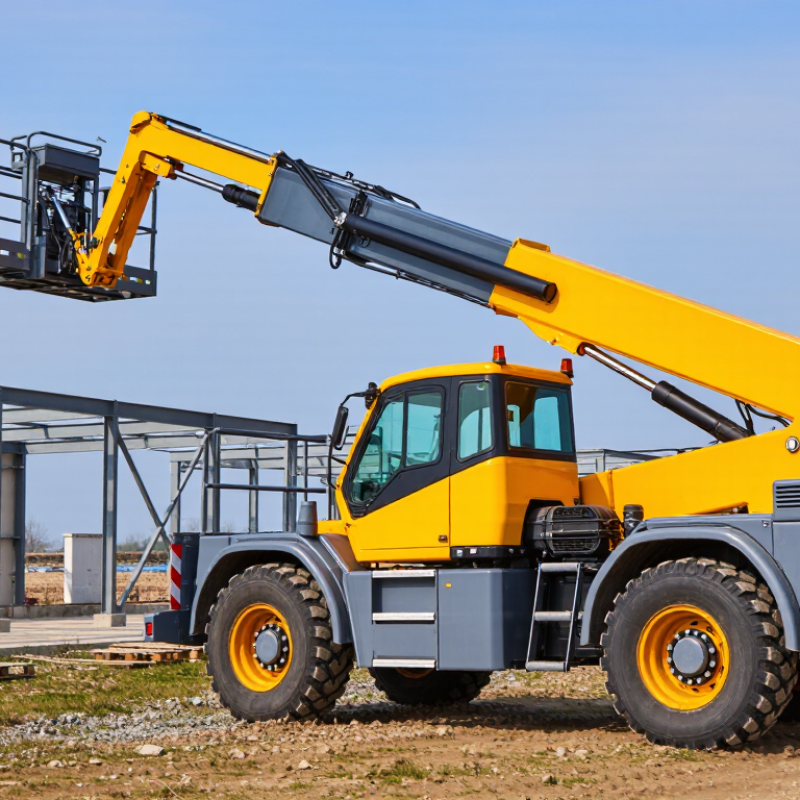
What a 22m Telescopic Diesel Boom Lift Is
A 22m telescopic diesel boom lift is a mobile work platform with a straight, extendable arm. The “22m” figure usually describes its working height, not the height of the platform itself. Exact measurements vary by model, so check the machine’s specification plate and manual. That detail is easy to miss.
The telescopic boom reaches outward as well as upward, helping workers access façades, roof edges, and tall structures. A diesel engine provides power for outdoor jobs, while rough-terrain tyres and a stable chassis can help on firm, uneven ground. They do not make soft soil safe. Ground conditions still need checking.
The platform carries workers, tools, and materials within a stated load limit. Operators also need to account for wind, overhead obstacles, slope, and the machine’s working envelope. A longer reach can be useful, but it does not mean every position is safe or reachable.
Before use, inspect the tyres, controls, emergency lowering system, and guardrails. Small defects matter. The right lift depends on the task, access route, ground, and required side reach—not height alone.
How Its Telescopic Boom and Diesel System Work
What Is a 22m Telescopic Diesel Boom Lift?
How Its Telescopic Boom and Diesel System Work
A 22m telescopic diesel boom lift uses a straight, extendable arm to position a work platform at height. The 22m figure may describe working height or platform height, depending on the model. Check the machine’s specifications before planning a task. That detail matters.
The boom is made of nested steel sections that slide outward, usually through hydraulic cylinders. Operators can raise and extend the arm to reach work areas beyond the machine’s base, such as a high wall or roof edge. The platform can often rotate, helping workers adjust their position without repeatedly moving the whole lift. Reach depends on boom angle, load, and ground conditions. It is not a simple vertical measurement.
A diesel engine typically powers hydraulic pumps and may also drive the wheels. When the operator moves a control, hydraulic fluid flows to the relevant cylinder or motor. This raises the boom, extends its sections, or moves the chassis. On uneven ground, stabilizing systems and machine limits become especially important. A strong engine does not make poor setup safe. Operators should inspect tires, controls, fluid leaks, and platform capacity before use. Small leaks are easy to dismiss, but they deserve attention.
Key Components and Typical Specifications
A 22m telescopic diesel boom lift is built for elevated work where straight-line reach matters. The height figure usually means working height, not the platform floor. Platform elevation is often about 20m, but terminology varies between listings. Check the machine’s data plate. That small distinction matters.
The main assembly includes a diesel engine, telescoping boom sections, a rotating turntable, a wheeled chassis, and a guarded work platform. Hydraulic cylinders extend the boom; controls in the basket let the operator steer and position it. Typical specifications may include a 230–450kg platform capacity, roughly 15–18m horizontal outreach, and four-wheel drive. Exact figures depend on boom geometry, counterweight, and operating configuration. A 22m model can weigh well over ten tonnes, so access routes and ground conditions deserve attention.
Safety systems commonly include load sensing, tilt alarms, emergency lowering, and platform controls. These are not substitutes for trained operation. IPAF’s 2024 Global Safety Report recorded 4,374 incident submissions for 2023 across 23 countries, including serious platform-related events. The figures are reported incidents, not a complete count of every event. Still, they underline why platform capacity and positioning limits should be checked before work begins. Rental listings can be untidy; compare the actual machine plate with the task plan.
What Is a 22m Telescopic Diesel Boom Lift? - Key Components and Typical Specifications
| Category | Component or Specification | Typical Details |
| Overview | Machine type | A self-propelled, diesel-powered aerial work platform with a telescoping boom. It raises workers and tools to elevated work areas, often on outdoor construction and maintenance sites. |
| Working envelope | Platform height | Approximately 22 m (72 ft), measured from the ground to the platform floor at maximum elevation. |
| Working envelope | Working height | Approximately 24 m (79 ft). This commonly represents platform height plus an estimated 2 m reach for a standing worker; definitions can vary between suppliers. |
| Working envelope | Maximum horizontal outreach | Typically about 17–19 m (56–62 ft), depending on boom geometry, platform load, and operating position. |
| Platform | Rated platform capacity | Commonly around 230–300 kg (507–661 lb), including occupants, tools, and materials. The permitted load may change with boom position. |
| Platform | Basket size and movement | A typical basket is about 2.4 m long by 0.9 m wide. Platform rotation is often approximately 160°–180°; some configurations include a jib for additional positioning. |
| Boom assembly | Telescopic boom and jib | Multiple nested boom sections extend and retract hydraulically. A jib, when fitted, helps position the platform around obstacles and may provide additional articulation. |
| Power system | Diesel engine | Typically a four-cylinder diesel engine in the approximate 35–55 kW (47–74 hp) range, driving hydraulic and travel systems. Actual engine output varies by model and emissions specification. |
| Drive and terrain | Chassis, axles, and tires | Usually four-wheel drive, with large rough-terrain tires and, on many models, an oscillating axle to help maintain traction over uneven ground. |
| Drive and terrain | Gradeability | Often about 40%–45% under specified conditions. This figure is not a substitute for the machine’s slope limits or the operator’s manual. |
| Rotation | Turntable rotation | Typically 360° continuous rotation, allowing the boom to swing around the chassis without repositioning the machine. |
| Transport | Machine weight and stowed size | Operating weight is commonly around 11,000–13,000 kg (24,250–28,660 lb). Overall transport dimensions depend on boom design, axle configuration, and platform position. |
| Safety systems | Typical protection features | Common features include platform overload sensing, emergency stop controls, emergency lowering, tilt and drive alarms, and interlocks that limit operation when safety conditions are not met. |
| Applications | Typical uses | Outdoor structural work, industrial maintenance, steel erection, building-envelope installation, and access to elevated areas beyond the reach of a scissor lift. |
Note: These are representative ranges for this equipment class, not guaranteed ratings for a specific machine. Always check the manufacturer’s data plate, load chart, operator’s manual, and site conditions before use.
Common Uses Across Worksites and Industries
A 22m telescopic diesel boom lift is commonly used where crews need to reach high, distant work areas outdoors. Its straight boom can extend over obstacles such as fencing, parked equipment, or uneven landscaping. On construction sites, workers may use it to install facade panels, inspect roof edges, or position steel components. The actual reach depends on the machine’s specifications and how far the platform extends horizontally.
That reach matters. On infrastructure projects, crews can access bridge undersides, lighting poles, and elevated pipework without placing equipment directly below every task. Maintenance teams may use a lift to repair exterior cladding or replace signs at commercial properties. Diesel power suits many outdoor jobs that require long operating periods, though exhaust makes enclosed spaces a poor fit unless ventilation and site conditions have been properly assessed.
Not everywhere, though. Soft ground, tight access routes, and overhead obstructions can limit where the machine can work. A lift that reaches 22 meters may still fall short if the platform cannot get close enough horizontally. Before use, site teams should check the model’s working-height and outreach charts, platform capacity, ground support, and wind limits. These details are easy to overlook when a schedule is tight.
What Is a 22m Telescopic Diesel Boom Lift?
A 22m boom lift is rated to reach a working height of about 22 meters. The platform height is typically around 20 meters; working height commonly includes an allowance of approximately 2 meters for a person’s reach. Exact specifications vary by machine.
Diesel telescopic boom lifts are commonly used outdoors for building construction and façade work, industrial plant maintenance, infrastructure projects, and elevated installation tasks. Their straight-boom design helps workers reach elevated work areas, including locations set back from the machine.
Operating Requirements and Essential Safety Measures
What Is a 22m Telescopic Diesel Boom Lift?
A 22m telescopic diesel boom lift raises workers and tools to elevated outdoor work areas. Its long, straight boom can reach over obstacles, but height magnifies small setup errors. Before operation, check the machine’s rated capacity, platform load, slope limits, and permitted wind speed in the manual. Inspect tires, controls, guardrails, emergency lowering systems, and the work area. Firm, level ground matters; a hidden drain cover or soft shoulder can undermine stability. Keep clear of overhead power lines and maintain a controlled ground-level exclusion zone.
Training is essential. OSHA’s 29 CFR 1926.453 requires aerial-lift operators to be trained and equipment to be inspected before use. NIOSH’s 2001 alert reported 26 worker deaths involving aerial lifts between 1992 and 1998, including falls, electrocutions, and tip-overs. That historical figure is a reminder, not a prediction of current risk. Use approved fall-protection equipment attached to the designated anchor point, and never climb on the guardrails. Diesel exhaust also requires adequate ventilation, especially near enclosed or partially enclosed work areas.
Tips: Park on stable ground. Check overhead hazards. Keep both feet on the platform floor. Use a spotter where visibility is limited. A checklist helps, but it cannot make an unsafe setup safe.