What Is the 2026 Best Corrugated Box Feeder Machine?
Choosing the 2026 best Corrugated Box Feeder Machine requires more than comparing speed, price, or polished product images. A reliable machine must feed flat blanks steadily, protect printed surfaces, and maintain alignment during long production runs. It should also adapt to different board grades, box sizes, and changing order volumes. Small details matter. A slipping belt can ruin an otherwise efficient shift.
Packaging machinery consultant Peter D. Hargreaves explains, “The best feeder is not always the fastest; it is the one that delivers consistent feeding with the fewest interruptions.” This practical view reflects real factory conditions. Operators often value stable suction, simple adjustment, accessible controls, and quick cleaning more than impressive catalog figures. In a busy converting line, a five-minute setup change can affect hundreds of boxes.
Still, no machine is perfect. A high-speed feeder may require better board quality and stricter maintenance. A compact model may save floor space but limit future expansion. Buyers should examine actual production samples, inspect worn components, and request performance data under realistic conditions. Demonstrations using clean, flat blanks can be misleading. Dust, warped sheets, and mixed orders reveal more.
This guide evaluates the 2026 best Corrugated Box Feeder Machine through feeding accuracy, speed control, compatibility, maintenance access, energy use, operator safety, and long-term value. The final choice should match the factory, not merely the brochure. A thoughtful purchase begins with honest limitations.
What Defines a Corrugated Box Feeder Machine in 2026?
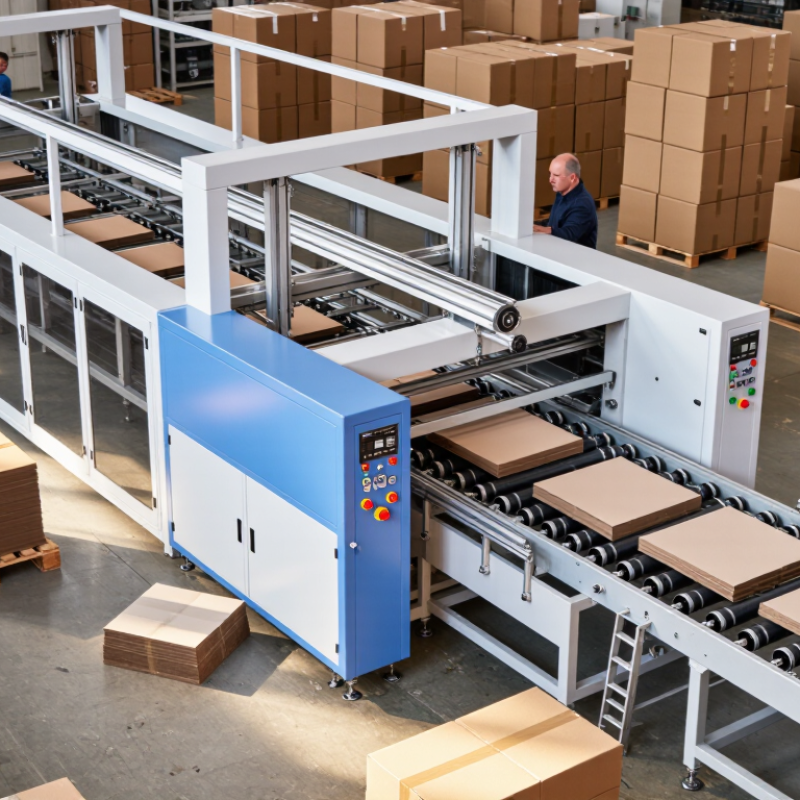
A 2026 corrugated box feeder machine is more than a fast sheet mover. It separates, squares, and delivers blanks consistently to the next process. In a busy plant, that means fewer double feeds, crushed edges, and sudden line stops. The best design combines servo control, vacuum conveying, automatic format adjustment, and real-time sheet detection. Operators should change common carton sizes without reaching repeatedly into guarded areas. That detail matters.
Smithers valued the global corrugated packaging market above US$200 billion in 2023, showing why stable feeding has become a production priority. The International Federation of Robotics recorded 541,302 industrial robot installations worldwide in 2023. This broader automation trend raises expectations for feeder accuracy, data access, and safer human-machine interaction. A modern feeder should record stoppages, feeding errors, speed changes, and maintenance warnings. Useful data is practical data.
Speed alone is a weak definition. A machine running at 200 meters per minute may perform poorly with warped blanks or recycled fiber. Real testing should use the customer’s actual board grades, flute profiles, and carton dimensions. I would also question impressive output claims without waste figures. Energy use, setup time, noise, and cleaning access deserve equal attention. Perfection is unlikely. Reliable repeatability is the realistic target.

How Does a Modern Corrugated Box Feeder Machine Work?
The 2026 best corrugated box feeder machine is not simply the fastest model. It should feed sheets accurately, protect board quality, and match the factory’s production needs. A modern machine begins with a magazine that holds flat corrugated blanks. Adjustable guides center each sheet before feeding starts.
Vacuum belts, rollers, or a combined system then separate and move the blanks. Sensors check sheet position, thickness, and spacing. Servo-driven controls adjust speed with careful timing. The feeder sends each blank toward a printer, folder-gluer, or die-cutter without damaging its edges. In practical use, operators watch for skewed sheets, dust buildup, and slight belt wear. These small issues can create repeated stoppages. No machine is perfect. Good adjustment still matters.
Tips: Keep the board stack level and dry. Clean vacuum holes and rollers every shift. Check guide settings when changing flute types. Record misfeeds, not just output speed. A machine that runs quickly but causes frequent rework may not be the best choice. Operators should also test several board sizes before approving a purchase. One overlooked detail is changeover time. Fast setup can save more hours than a higher top speed. Performance should be measured through feed accuracy, stable output, maintenance access, and operator control. Reliability grows from both sound engineering and disciplined daily checks.
Which Features Matter When Comparing 2026 Box Feeders?
What Is the 2026 Best Corrugated Box Feeder Machine?
Comparing box feeders in 2026 requires more than speed claims. Experienced operators inspect how smoothly each machine handles warped blanks and dusty surfaces. Stable feeding protects print registration and reduces stoppages. A reliable feeder should offer adjustable side guides, responsive vacuum control, and clear roller access. Servo-driven timing can improve placement accuracy when sensors and software communicate properly. Fast is not always better. Excessive speed may expose weak alignment.
Evaluate performance on your own production line. Request sample trials with the smallest and largest blanks you regularly use. Record misfeeds per hour, changeover time, noise, and compressed-air consumption. Check whether operators can adjust settings without special tools.
Safety guards, emergency stops, and maintenance access deserve equal attention. Practical production experience suggests that five extra seconds per cycle may be acceptable if jams decrease. Some comparisons overlook this trade-off.
Tips: Bring dusty and lightly warped samples to the trial. Watch the first ten minutes after startup. Inspect rejected blanks, not only average output. Ask for maintenance intervals and training details in writing. Leave room for doubt. Advertised capacity may depend on ideal board quality.
How Can Businesses Select the Best Model for Their Needs?
What Is the 2026 Best Corrugated Box Feeder Machine?
Selecting the best corrugated box feeder machine starts with your actual production conditions. A suitable model should match box dimensions, board grades, flute types, and daily volume. Measure the smallest and largest blanks carefully. Record their thickness, weight, and surface condition. Do not rely only on the maximum speed shown in a catalog. A machine may reach that speed with simple blanks, but struggle with warped board. Stable feeding matters more than impressive numbers.
In production trials, test the feeder with your most difficult materials. Ask the supplier to run short, medium, and long batches. Watch for skewed sheets, double feeding, slipping, and frequent operator adjustments. Listen for unusual vibration. It often reveals alignment problems early. Check how quickly workers can change guides, belts, and suction settings. Controls should be clear, protected, and easy to learn. Safety guarding and emergency stops also require practical inspection, not just paperwork. A polished demonstration can hide weaknesses.
Calculate the total operating cost over several years. Include electricity, compressed air, maintenance, spare parts, training, and expected downtime. Check whether common wear parts are available locally. Ask for documented service response times and preventive maintenance instructions. I would also request references from facilities using similar board sizes. One overlooked issue is factory space. Leave enough room for access, cleaning, and future adjustments. A spreadsheet can mislead. Real samples, trained operators, and repeated trials usually produce a more reliable decision.
What Maintenance and Safety Practices Ensure Reliable Feeding?
The best 2026 corrugated box feeder is not defined by speed alone. Reliable feeding depends on disciplined maintenance and practical safety controls. Corrugated dust is deceptive. It drifts into photoelectric sensors, vacuum filters, belts, and guide rails. Operators should remove dust daily with approved industrial vacuum equipment, not compressed air that redistributes particles.
A maintenance log should record belt tension, roller wear, suction pressure, sensor response, and misfeed frequency. Inspecting these points at every shift change can reveal gradual performance loss before cartons jam. The U.S. Bureau of Labor Statistics reported 2,607,900 nonfatal workplace injuries and illnesses in private industry during 2023. That figure supports a simple principle: routine checks are cheaper than rushed recovery after an incident. PMMI industry research also continues to identify labor availability and unplanned downtime as major packaging-operation concerns.
Guarding must cover nip points, rotating rollers, and accessible drive components. Operators need documented lockout/tagout procedures before clearing jams or entering the feeder area. Training should include carton-size changes, emergency stops, safe sensor cleaning, and restart verification. The 2024 Liberty Mutual Workplace Safety Index estimated $58.5 billion in serious workplace injury costs from 2022 data, showing why production targets cannot outrank basic controls. A perfect checklist does not exist. We still miss things. Supervisors should review near misses, repeated jams, and maintenance delays monthly, then adjust inspection intervals using real production evidence rather than habit.
| Evaluation Dimension | Recommended 2026 Benchmark | Why It Matters | Verification Method |
|---|---|---|---|
| Feeding speed | Up to 180–250 boxes per minute, depending on blank size, board grade, and feeder configuration | Higher speed improves throughput, but excessive speed can increase skewing, double-feeding, and board damage. | Run a representative production batch for at least 30 minutes and record stoppages, rejects, and actual output. |
| Box blank size range | Typical working range: approximately 120–800 mm blank width and 180–1,200 mm blank length | A broad adjustment range allows one machine to handle multiple packaging formats. | Confirm the smallest and largest production blanks, including minimum and maximum board thickness. |
| Board compatibility | Single-wall and double-wall corrugated board; commonly about 1.5–8 mm thickness | Different flute profiles and board stiffness affect separation, vacuum control, and feed stability. | Test the actual grades used in production, including recycled, coated, warped, and low-friction sheets. |
| Feed accuracy | Typical registration tolerance of approximately ±1–2 mm after correct setup | Consistent positioning is essential for accurate printing, folding, gluing, die-cutting, or downstream packing. | Measure the leading-edge position on a statistically meaningful sample, such as 100 consecutive blanks. |
| Changeover time | Approximately 5–15 minutes for common box sizes when adjustment points are clearly marked | Short changeovers reduce idle time and make the feeder suitable for mixed-size production. | Time the complete changeover, including guide adjustment, trial feeding, and first-piece approval. |
| Control and monitoring | PLC or industrial controller with speed adjustment, fault display, jam detection, and recipe storage | Clear feedback helps operators correct faults quickly and repeat proven setup parameters. | Check whether alarms identify the fault location and whether recipes can be protected from unauthorized changes. |
| Dust management | Accessible cleaning points plus optional local extraction near separation and vacuum components | Corrugated dust can reduce grip, clog vacuum filters, contaminate sensors, and increase wear. | Inspect filters, sensors, belts, and guides after each shift and monitor changes in vacuum or feed performance. |
| Safety systems | Fixed guards, interlocked access doors, emergency stops, restart prevention, and clearly marked isolation points | These controls reduce the risk of entanglement, crushing, unexpected startup, and access to moving parts. | Conduct a documented safety-function test before commissioning and at scheduled intervals. |
| Energy efficiency | Variable-speed drives, efficient motors, automatic standby, and demand-controlled vacuum where applicable | Efficient controls can lower energy use during idle periods and reduce unnecessary mechanical stress. | Compare energy consumption per 1,000 fed blanks at the same speed and board specification. |
| Maintenance or Safety Practice | Recommended Frequency | Required Action | Reliability and Safety Benefit |
|---|---|---|---|
| Clean feed belts, rollers, sensors, and guides | Every shift or whenever dust accumulation is visible | Stop the machine, isolate energy where required, and remove dust with an approved vacuum or lint-free cloth. Avoid blowing dust toward bearings or electrical panels. | Maintains traction and sensor accuracy while reducing contamination and unexpected misfeeds. |
| Inspect belt and roller condition | Weekly; more often in high-dust production | Look for glazing, cracks, uneven wear, contamination, looseness, and damaged bearings. Replace worn parts according to measured condition. | Prevents slipping, skewed blanks, vibration, and sudden component failure. |
| Check guide alignment and separation settings | At every job change and after a jam | Set side guides parallel to the blank path and adjust separation pressure or vacuum to the board grade. | Reduces double-feeding, edge damage, board buckling, and downstream stoppages. |
| Inspect vacuum lines and filters | Weekly; replace or service filters according to pressure-drop readings or the maintenance manual | Check hoses for leaks, clean filter elements, and verify that vacuum levels remain within the machine’s specified range. | Preserves reliable pickup and prevents feed instability caused by restricted airflow. |
| Lubricate approved bearings and moving points | Monthly or according to the manufacturer’s service interval | Use only the specified lubricant and quantity. Do not lubricate sealed components unless instructed. | Controls friction and wear without contaminating belts, board surfaces, or sensors. |
| Test emergency stops and interlocks | At the start of each shift and after electrical or mechanical work | Verify that each emergency stop removes hazardous motion and that guarded access prevents operation when open. Record the result. | Confirms that critical protective functions operate before personnel are exposed to moving equipment. |
| Apply lockout/tagout before clearing jams | Every time hands or tools must enter a hazardous area | Stop the machine, isolate electrical and pneumatic or vacuum energy, release stored energy, and verify zero energy before intervention. | Prevents unexpected startup and movement during jam removal or maintenance. |
| Train operators and document settings | Before independent operation and at least annually thereafter | Train personnel on setup, guarding, emergency response, jam clearing, inspection, and approved operating limits. Record successful recipes and faults. | Reduces setup variation, unsafe shortcuts, repeated faults, and avoidable downtime. |