2026 Best Automated Injection Molding Manufacturers?
Choosing among the 2026 Best Automated Injection Molding Manufacturers requires more than comparing machine prices. The strongest suppliers combine robotics, process monitoring, mold engineering, and dependable after-sales support. Their factories should show more than polished demonstrations. Look for automated cells with visible material handling, servo-driven robots, inspection cameras, and stable cycle times.
John Bozzelli, a respected injection molding educator and founder of RJG, has said, “Molding is a science, not an art.” That principle remains important in Automated Injection Molding. Reliable manufacturers measure pressure, temperature, cooling performance, and part weight. They use these records to reduce variation, not simply to advertise impressive output.
Real experience matters.
A serious supplier should explain how its systems perform during mold changes, material variations, and unexpected downtime. Ask for production evidence from comparable applications. Medical components, automotive housings, and thin-wall packaging demand different levels of precision. One impressive sample cannot prove universal capability.
This guide examines manufacturers through practical criteria. These include automation depth, machine integration, energy efficiency, quality control, technical service, and customization. It also considers operator safety and long-term maintenance. Some rankings may remain imperfect because supplier data is not always equally transparent. That limitation deserves attention.
The best choice is rarely the cheapest quotation. It is the partner that can deliver repeatable parts, clear documentation, responsive support, and measurable improvements over time. Manufacturers making such claims should welcome technical questions. Otherwise, caution is reasonable.
What Defines an Automated Injection Molding Manufacturer in 2026
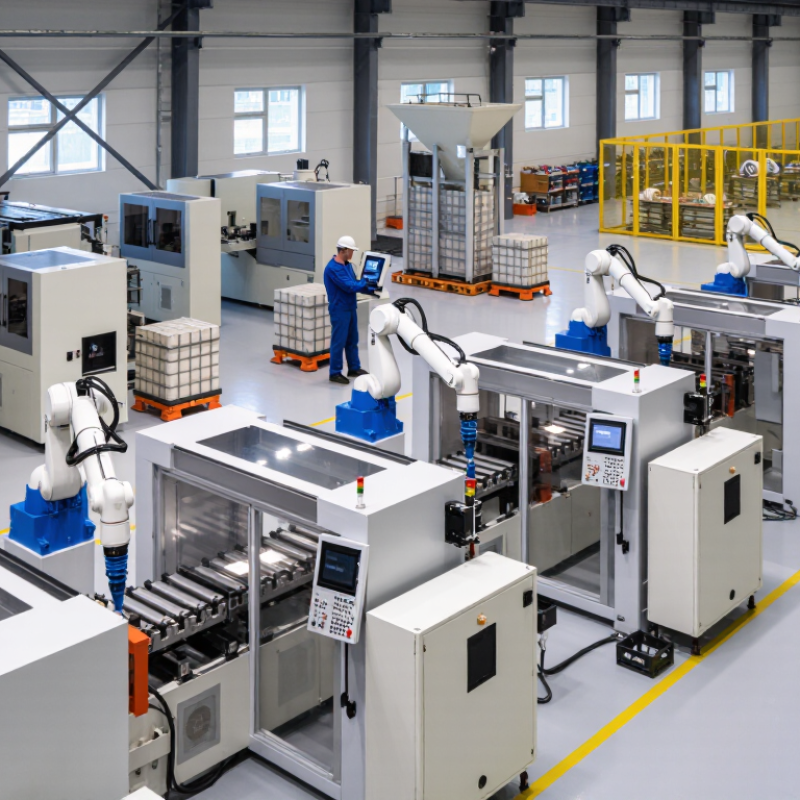
In 2026, an automated injection molding manufacturer is more than a factory with robotic arms. It connects machine data, mold control, material handling, inspection, and operator decisions in one traceable workflow. A qualified supplier should show cycle-time records, defect trends, and maintenance history, not only attractive production photos. The real test is consistency: identical parts, stable dimensions, and documented responses when a sensor detects pressure drift. That evidence builds trust.
Practical automation begins with process knowledge. Experienced engineers monitor resin drying, barrel temperature, injection pressure, cooling time, and mold wear. They also test how equipment performs during shift changes and material batches. A useful digital system can identify abnormal patterns before scrap increases. A dashboard is not proof. The manufacturer should connect data with corrective action, training records, and clear quality checks. Secure data access and regular software updates also matter in modern production environments.
Still, no system is perfect. A robot can repeat a mistake very efficiently. One overlooked manual adjustment may affect thousands of parts. Reliable manufacturers admit these risks and verify automated results with physical samples, calibrated tools, and independent reviews. Their teams can explain failures without hiding behind technical language. That openness reflects real experience, although even strong processes deserve continued questioning.
2026 Best Automated Injection Molding Manufacturers? - What Defines an Automated Injection Molding Manufacturer in 2026
| Evaluation Dimension | 2026 Benchmark | What an Automated Manufacturer Should Demonstrate | Recommended Evidence | Priority |
|---|---|---|---|---|
| Machine Connectivity | Real-time machine data capture | Injection molding machines, robots, dryers, temperature controllers, and material systems are connected to a centralized production-monitoring platform. | Live dashboards, machine-status history, alarm records, and documented data-integration architecture. | Essential |
| Robotic Part Handling | Automated removal and transfer | Servo or articulated robots remove parts, control placement, separate runners, and transfer components to inspection or packaging stations. | Automation-cell layout, cycle-time study, robot payload information, and sample production video. | Essential |
| Automated Quality Inspection | In-line or near-line inspection | Vision systems, sensors, gauges, or coordinate-measurement equipment detect dimensional, cosmetic, assembly, and labeling defects. | Inspection plans, measurement-system records, defect images, control charts, and traceable inspection results. | Essential |
| Process Repeatability | Stable, validated process windows | Critical parameters such as fill time, pressure, temperature, cooling time, and screw position are monitored and controlled against approved limits. | Process-validation reports, capability studies, parameter recipes, and change-control records. | Essential |
| Overall Equipment Effectiveness | Measured OEE with improvement actions | Production teams track availability, performance, and quality separately rather than reporting output alone, with documented corrective actions for losses. | OEE reports, downtime Pareto charts, planned-maintenance records, and continuous-improvement logs. | High |
| Material Management | Closed-loop material traceability | Resin lots, drying conditions, regrind percentages, feeding parameters, and material movements are digitally recorded. | Lot-traceability records, dryer logs, barcode or RFID workflows, and material-certification files. | Essential |
| Mold Changeover | Standardized and repeatable setup | Quick-connect utilities, preset process recipes, digital setup instructions, and standardized work reduce manual changeover variation. | Changeover-time records, setup checklists, mold-maintenance history, and first-piece approval data. | High |
| Predictive Maintenance | Condition-based monitoring | Machine health, vibration, temperature, lubrication, cycle counts, and historical failures are used to schedule maintenance before breakdowns occur. | Maintenance-management-system reports, sensor alerts, spare-parts planning, and mean-time-between-failure records. | High |
| Production Traceability | Digital genealogy for every production lot | Finished parts can be linked to machine, mold, cavity, material lot, process recipe, operator or system event, inspection result, and shipment record. | Electronic batch records, barcode workflows, audit trails, and retrieval tests for historical lots. | Essential |
| Energy Management | Energy measured per machine or production cell | Electricity and, where applicable, compressed-air or cooling demand are monitored to identify high-consumption equipment and improvement opportunities. | Energy dashboards, kWh-per-kilogram or kWh-per-part metrics, efficiency projects, and utility-meter records. | High |
| Workforce Capability | Automation, process, and data skills | Technicians and engineers are trained to manage robots, machine interfaces, mold processes, statistical controls, troubleshooting, and cybersecurity procedures. | Training matrix, competency assessments, standard operating procedures, and escalation workflows. | High |
| Cybersecurity and Access Control | Controlled industrial-network access | Production systems use role-based permissions, backups, software-change controls, network segmentation, and incident-response procedures. | Access logs, backup tests, patch-management records, network diagrams, and cybersecurity policies. | High |
| Sustainability and Circularity | Documented resource and waste reduction | Manufacturers measure scrap, regrind, energy, water, packaging, and recycled-content usage while maintaining product-quality requirements. | Material-balance reports, waste records, recycled-content declarations, energy targets, and customer-specific sustainability data. | Medium |
| Scalability | Replicable automated production cells | Automation standards, modular equipment, common data structures, and validated recipes allow capacity to expand without rebuilding the entire operating model. | Capacity plans, automation standards, line-balancing studies, pilot-to-production records, and ramp-up results. | High |
| Customer Reporting | Transparent, data-based performance communication | Customers receive consistent information on delivery performance, quality trends, corrective actions, traceability, and engineering changes. | Sample quality reports, delivery dashboards, corrective-action reports, and engineering-change notifications. | High |